| |
Cakewalks in the
Ragtime Era
Featuring Mississippi Rag (1897)
by William Krell and other Cakewalks and Earlier
Rags
By Ted Tjaden
(originally published June 2006 and
updated periodically)
Sheet music available on this page:
|
See below to download or
view (for free) over 160 cakewalk
compositions
|
Recommended reading:
|
Morgan, Thomas. From Cakewalks to
Concert Halls: An Illustrated History
of African American Popular Music from
1895 to 1930. Washington, DC:
Elliott & Clark Pub, 1992.
|
Cakewalks and cakewalk music were an important and
likely necessary precursor in the late 1800's to the
development of classic ragtime piano music. Although
cakewalks and ragtime piano are technically distinct
styles of music, they are often lumped together due to
their similarities in origin and influences. Set out
below on this page are the following links with more
information on cakewalks in the ragtime era, including
(free) links to 170 pieces of cake walk sheet music:
1) Introduction to Cake Walks
in the Ragtime Era
2) Recordings of Cakewalks
3) Online Cake Walk Sheet Music
4) Bibliography
1) Introduction to Cake Walks
in the Ragtime Era [top]
Although the American cakewalk dates back to the
early days of slavery, the cakewalk as a distinct
music and dance style had its formal beginning in the
1870's and reached its peak of popularity at the end
of the 19th century and early 20th century. Unlike
classic piano ragtime, cakewalk music was meant to be
danced to and often performed by a small orchestra or
band. Although cakewalks were generally lightly
syncopated, their melodies and harmonies were
generally not as sophisticated as those found later in
the classic rags of Joplin, Scott and Lamb.
It is thought that cakewalks were once called the
"chalk-line walk," which "was a dance done by couples
along a straight path, balancing buckets of water on
their heads" (Haskins 1990:11).
The form of dance evolved into a "cake" walk based on
the fact that white slave owners awarded a "cake" to
the best dancers among their slaves:
The cakewalk originated as a slave dance contest in
the antebellum South. White slave owners were fond
of awarding cakes to the best slave dancers at
special social gatherings (Morgan
and Barlow 1992:26).
The notion that prize winners would be awarded a cake
is believed to be the origin of the sayings "that
takes the cake" and it was a "piece of cake."
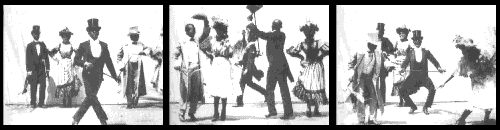
As can be seen in the video below,
cakewalking involved exaggerated steps with high kicks
involved believed in part to be a "send up" by black
slaves of the elitist mannerisms of their slave
owners:
The dance was invented as a satirical parody of the
formal European dances preferred by white slave
owners, and featured exaggerated imitations of the
dance ritual, combined with traditional African
dance steps. One common form of cakewalk dance
involved couples (one male and one female, with
their arms linked at the elbows) lined up in a
circle, dancing forward alternating a series of
short hopping steps with a series of very high
kicking steps. Costumes worn for the cakewalk often
included large, exaggerated bowties, suits, canes,
and top hats. (from the
Wikipedia entry for "cakewalk")
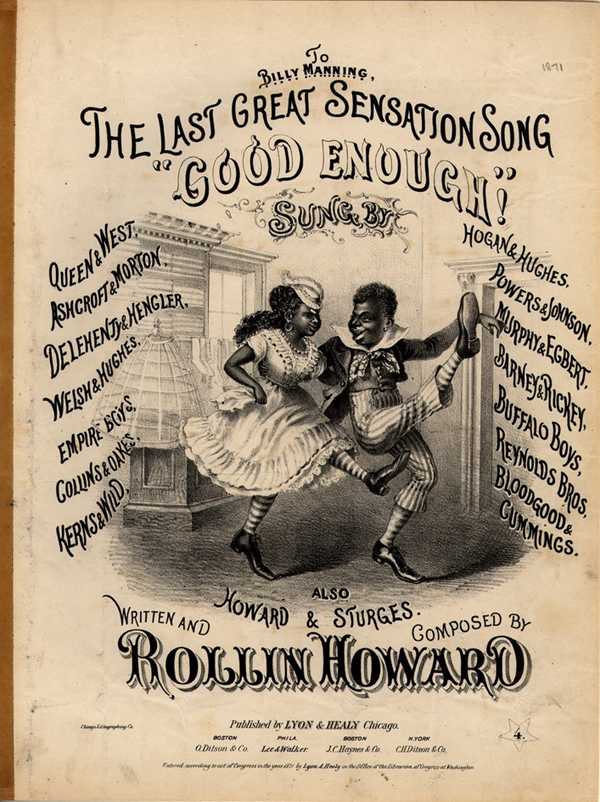
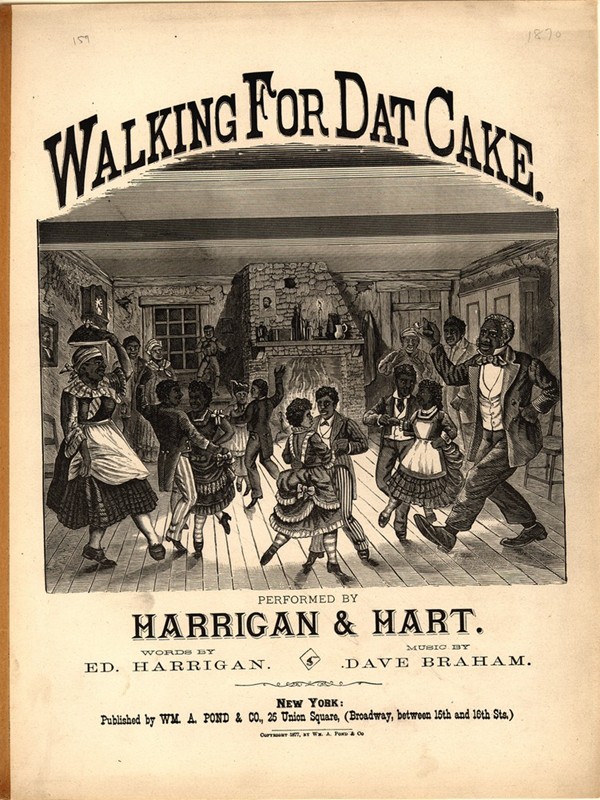
Two very early published cakewalks are Good
Enough! (1871) and Walking For Dat Cake
(1877):
Jasen and Jones (2000:xxviii)
identify Opelika Cakewalk from 1892 as the
first composition published with "cakewalk" in the
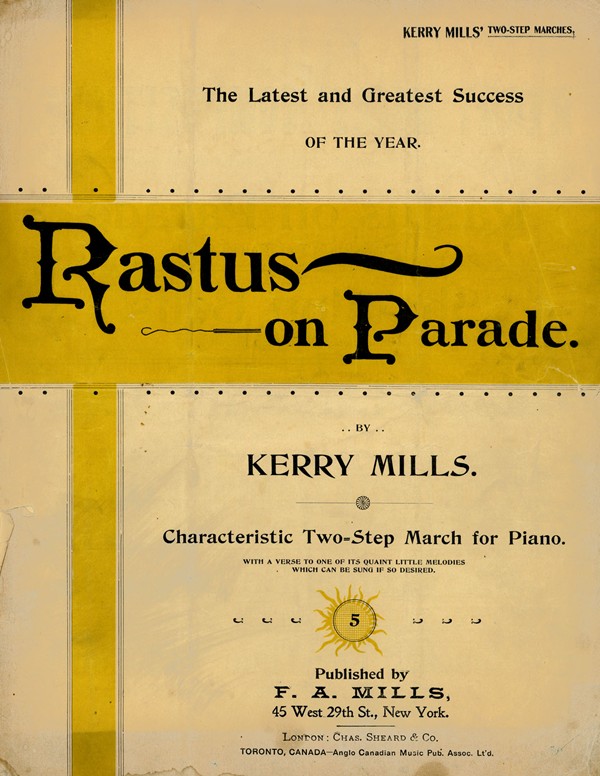
title, although Jasen (1997:iii) identified Rastus
on Parade (1895) (below)
by Kerry Mills as starting the cakewalk craze and also
establishing the cakewalk music structure of beginning
in a minor key and finishing in a major key. The
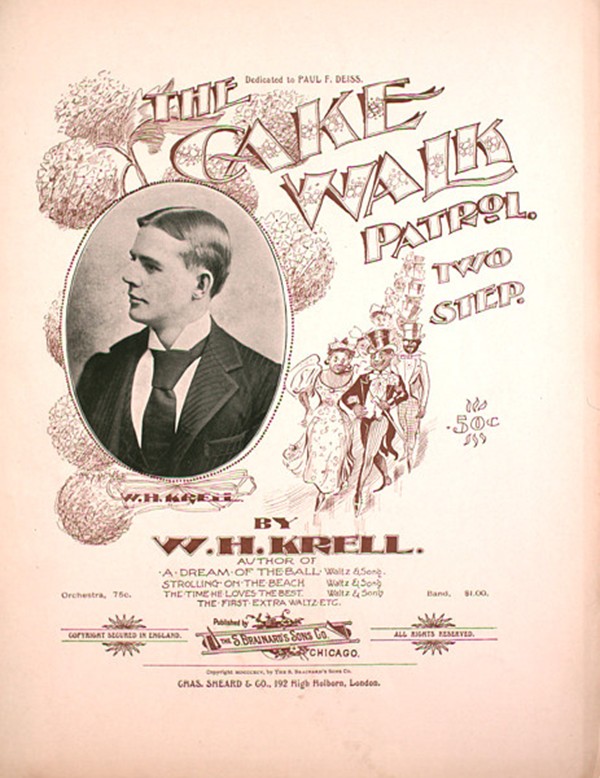
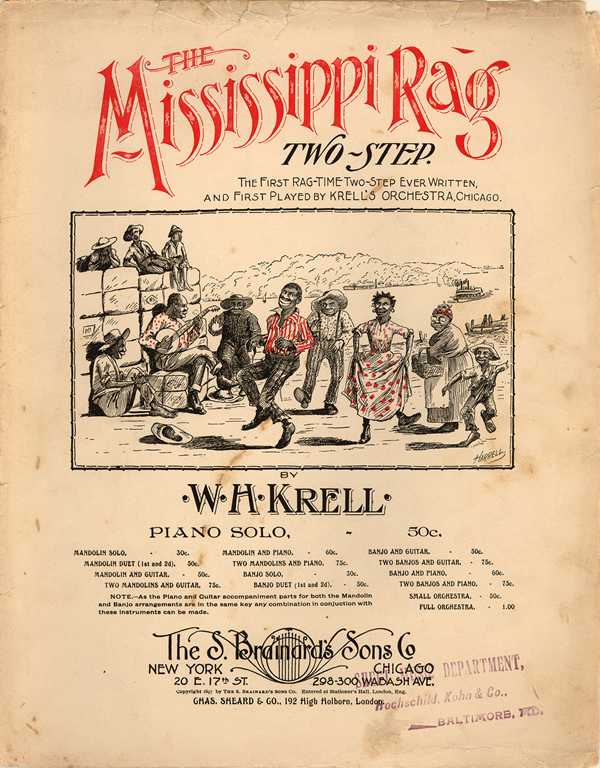
Mississippi Rag (1897) (below)
was the first piece of instrumental music published
with the word "rag" in the title. Its composer was
William H. Krell, a (white) band leader. The first rag
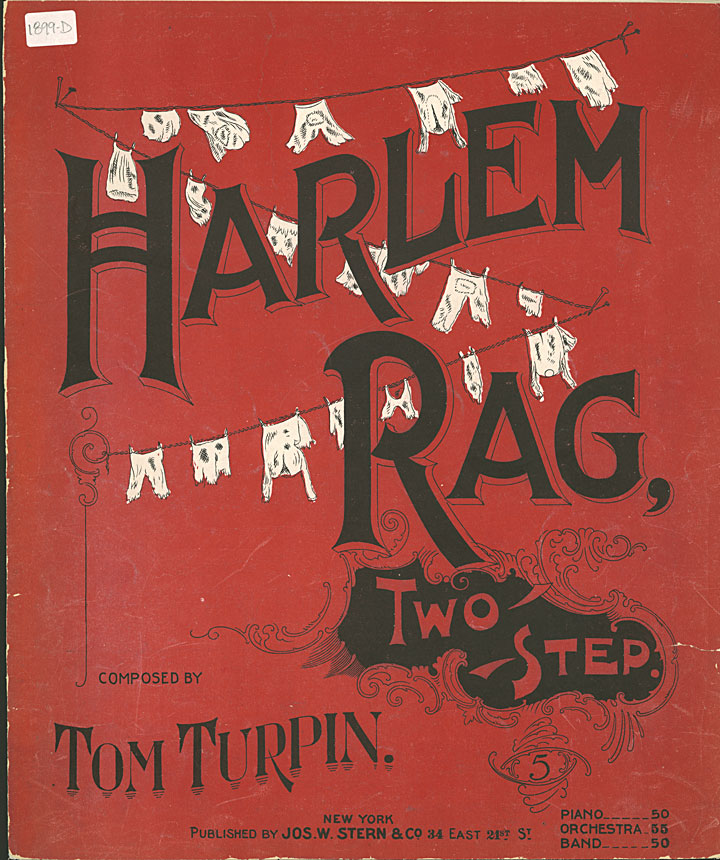
published by a black composer, the Harlem Rag,
by way of contrast, was published later in 1897 by Tom
Turpin, a well-known saloon owner from St Louis. There
is some irony in The Mississippi Rag being the
first instrumental rag published in print since the
piece is really a "cakewalk" and not a classic rag.
And even though The Mississippi Rag and
Harlem Rag have their place in history as the
first instrumental "rags" published, it has been
pointed out, however, that ragtime was certainly known
and played before 1897 (Gammond
1975:39).
The potential confusion or mislabeling of rags as
cakewalks and vice versa arises in part because both
forms of music are syncopated and have an
"intoxicating" effect. Some rags included "cakewalk"
in the title even though there were closer being a rag
than a cakewalk (e.g., Scott Joplin's Swipesy Cake
Walk, which is a rag); alternatively, the
Mississippi Rag includes "rag" as part of its
title, although it is a cakewalk. This
labeling was likely done, in part, by the publisher to
better promote the piece, depending on which form of
music was more in vogue at the time.
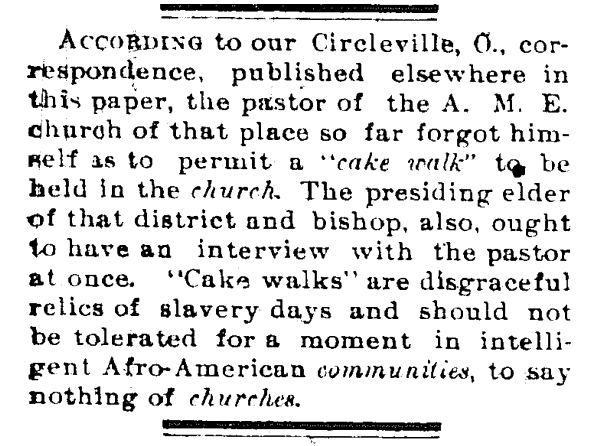
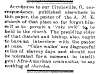
It seems that cakewalks were not without
controversy over the issue of whether it
placed African-Americans in a
stereo-typical light. In an 1893 edition
of the Cleveland
Gazette (see story to the
right), a church pastor is chastised for
allowing a cakewalk to occur in his
church since cakewalks were "disgraceful
relics of slavery days and should not be
tolerated for a moment in intelligent
Afro-American communities, to
say nothing of churches."
|
Source:
Ohio History
Connection
|
The effects of the cakewalk craze (and classic
ragtime) did not escape Canadian listeners and
composers where there was a minor boom itself in this
sort of music. Typical of the Canadian version of
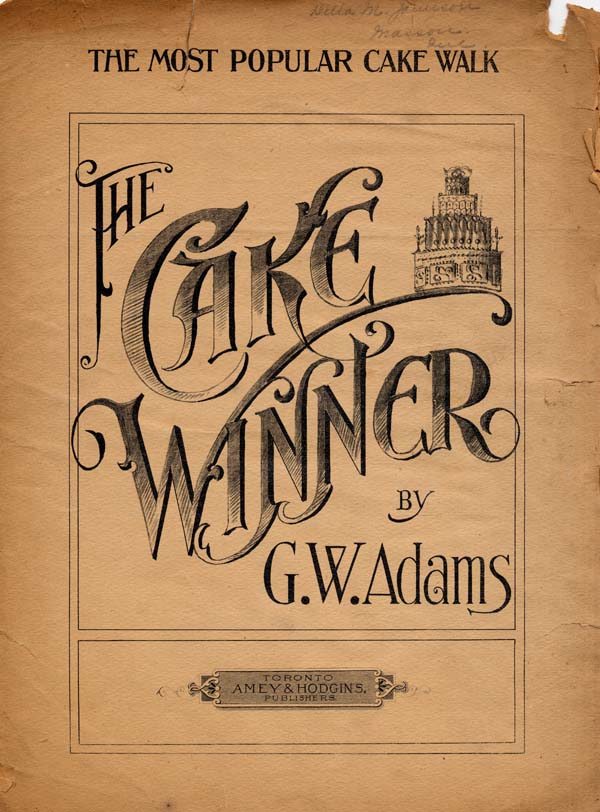
cakewalk music would be The Cake Winner
(1909) by GW Adams (below),
mentioned here in The
Canadian Encyclopedia. The
earliest reference I could find in the Globe newspaper
(Toronto) was an August 1, 1890, story (page 8) under
the title "Colored People Jubilate Today":
This is Emancipation Day, and a number of our
coloured citizens will jubilate in a benefitting
manner at Berlin, in company with brethren from
Hamilton, Chatham, Windsor, St. Catharines and other
places . . . . There was an opening ball last night
and this evening there will be a grand concert and
cake walk.
A July 3, 1896, story in the Globe (page 2)
describes a "sports meet" in Quebec where there is
mention of a cake walk as entertainment at the event.
Finally, an August 21, 1899, story in the Globe describes
a mass cakewalk at a summer party at the "cottage"
north of Toronto of what I believe to be the summer
home of Sir
Henry Mill Pellatt:
Mr. and Mrs. Pellatt's annual at-home at Southwood
Hall, Orillia, came off on
Friday, August 11th. Mrs. Pellatt was desirous of
introducing some new feature on the occasion and
decided upon holding a "cake-walk." It was felt that
this would be at the same time a novelty to the
people of Orillia, and particularly gratifying to
the national pride of the summer visitors, many of
whom are from the Southern States.... At about 5:30
the Orillia Band, whose services had been secured
for the occasion, broke into an energetic burst....
A detour among the shrubberies brought the
procession in full view at the bottom of the lawn
and the dancers advanced up the tennis court, two
and two, in the cake walk step, to the ragtime music
of the band.
The popularity of cakewalks spread even beyond North
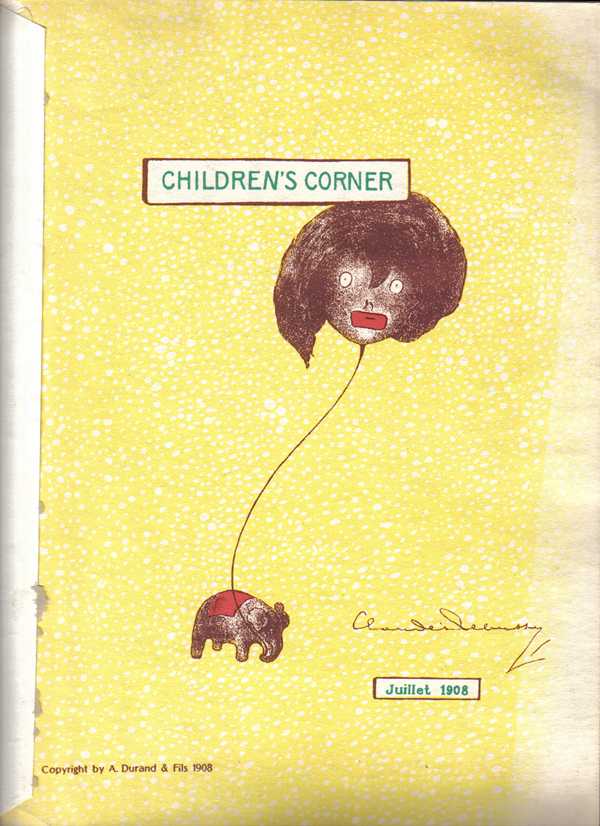
America to Europe where even Claude Debussy wrote Golliwog's
Cakewalk (1908) (below),
a "take" on the cakewalk from a classical composer's
point of view. Despite their simple nature, many
cakewalks are enjoyable and fun to play and listen to.
Ultimately, however, the cakewalk craze gradually
subsided as classic ragtime gained in popularity; in
addition, new dance crazes, such as variations on the
fox trot, were introduced prior to and during World
War I and eclipsed the cakewalk, which by that time,
must have seemed very dated and quaint.
Jasen and Jones (2000:xxix) sum up
cakewalks in these terms:
In many of the best rags, especially those by
Joplin and Lamb, there is a harmonic richness which
gives them a hint of melancholy that is without
counterpart in the cakewalk. The cakewalk was
neither designed for introspection nor capable of
it. It offers liveliness and nothing else.
For more information on cakewalks, there are a number
of websites that discuss the cakewalk in more detail -
see:
- Basinstreet.com. "The Cakewalk 1897-1915: The
Evolution From the Quadrille, March to Ragtime"
(available online: basinstreet.com/cake-walk/).
2) Recordings of Cakewalks [top]
I can highly recommend the following CD by the Lake
Arrowhead Early Jazz Band which contains 23 cakewalks
played in the style of a small orchestra or military
band:
- Lake Arrowhead Early Jazz Band. The
Cakewalk, 1897-1915. Stomp Off Records
1365. Purchase
details (includes positive reviews by Jack
Rummel and Eddie Cook).
3) Online Cake Walk Sheet
Music [top]
Set out in the table below are links to the sheet
music and sheet music covers to 171 cakewalks or
ragtime-era compositions with the word "cakewalk" in
the title. The list of compositions below is not
exhaustive; I have not included every cakewalk song
(i.e., cakewalks with lyrics) and I have also not
included the more racially offensive compositions.
Beneath the table is a list of 10
cakewalks that I have not been able to source online.
To find sheet music for cakewalks not listed below,
check out the various
online sources of ragtime sheet music.
Online Sheet Music
for Cakewalks
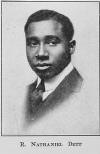 |
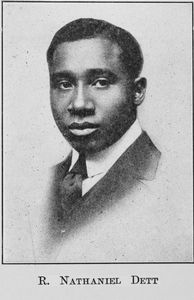
After the Cakewalk. Nathaniel
Dett. Toronto, ON: Whaley, Royce & Co,
1900.
[view sheet
music] [top]
|
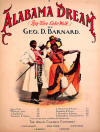 |
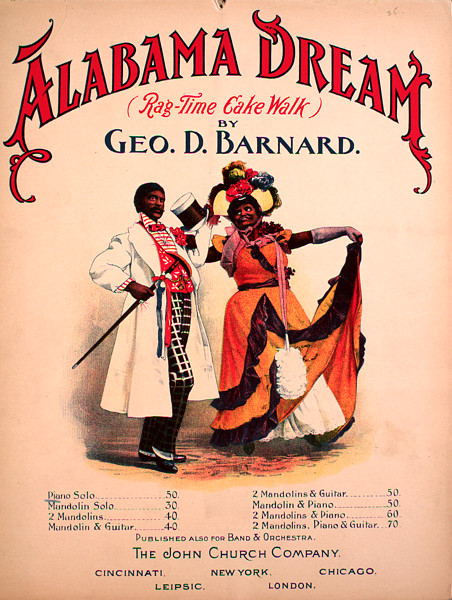
Alabama Dream (Rag-Time Cake Walk).
George D Barnard. Cincinnati, OH: The John
Church Company, 1899.
[view
sheet music]
Source: Lester
S Levy Sheet Music Collection
[top]
|
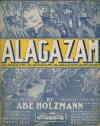 |
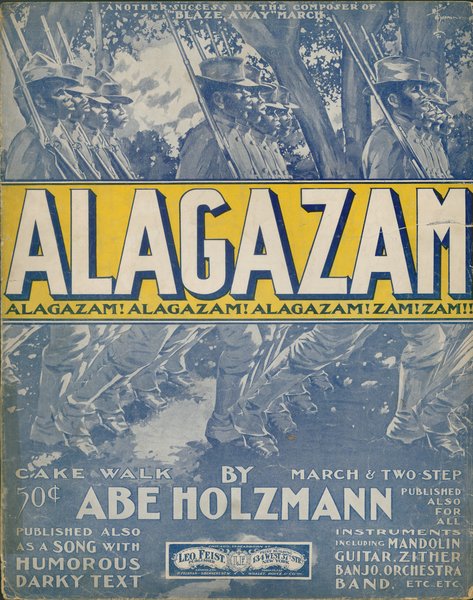
Alagazam! Cake Walk, March, and Two Step.
Abe Holzmann. New York: Leo Feist, 1902.
[view
sheet music]
Source: IN Harmony:
Sheet Music from Indiana [top]
|
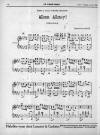 |
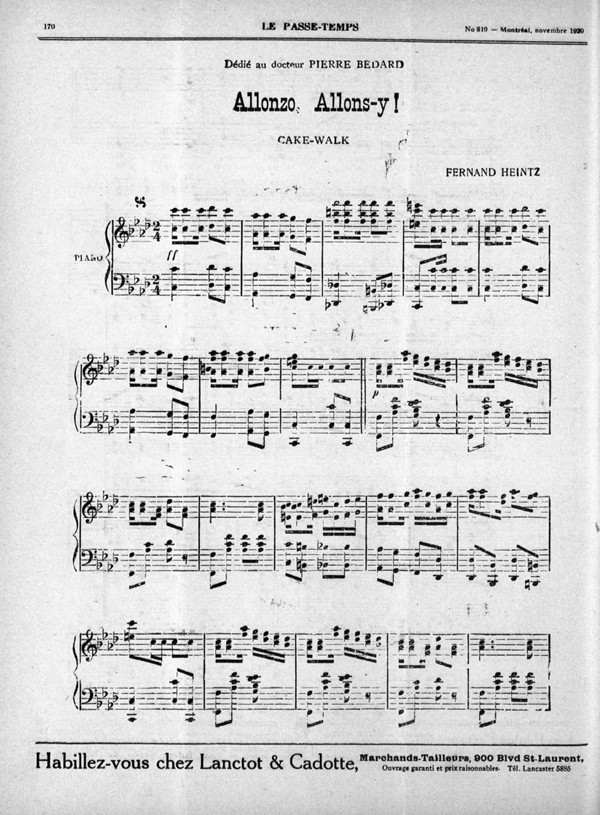
Allonzo, Allons-y! Cakewalk.
Fernand Heintz. 1903.
[view sheet
music]
Source: Le
Passe Temps (Vol. 9, no 214 (6
juin 1903) at 157-59) as digitized by the
National Library of Québec [top]
|
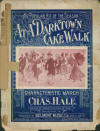 |
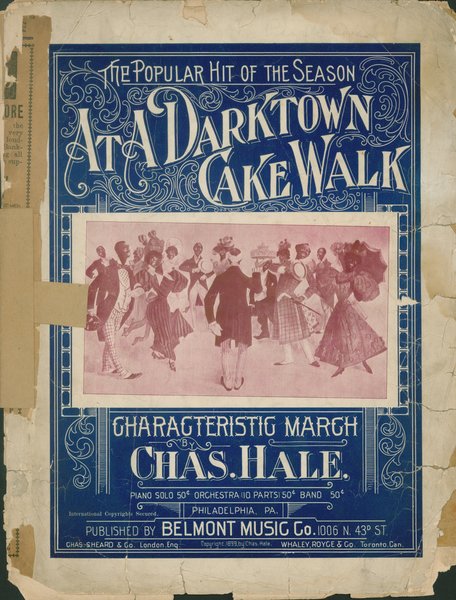
At A Da*ktown Cakewalk. Charles
Hale. Philadelphia, PA: Belmont Music Co,
1899.
[view
sheet music]
Source: IN Harmony:
Sheet Music from Indiana [top]
|
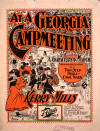 |
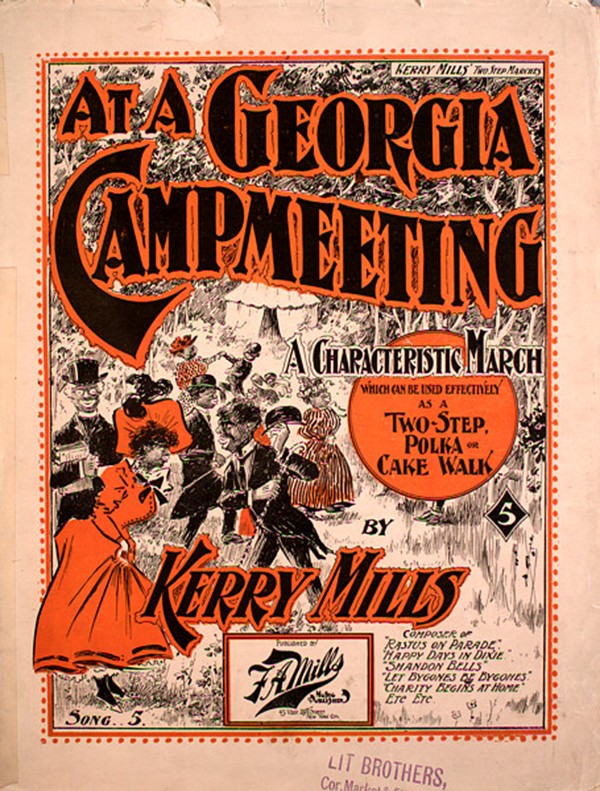
At A Georgia Camp Meeting: A
Characteristic March Which Can be Used
Effectively as a Two-Step Polka or Cake
Walk. Kerry Mills. New York: FA
Mills, 1897.
[view
sheet music]
Source: Lester S Levy Sheet
Music Collection [top]
|
 |
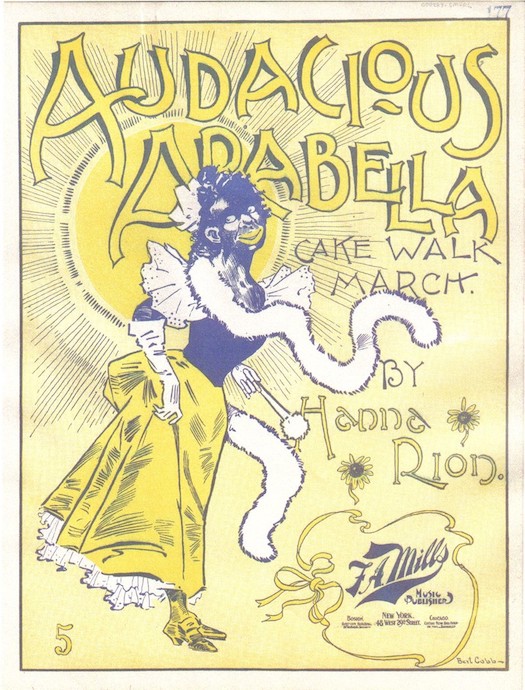
Audacious Arabella: Cake Walk March.
Hanna Rion. New York: FA
Mills, 1900.
[view sheet
music]
Source: Photocopy from Center
for Popular Music [top]
|
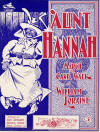 |
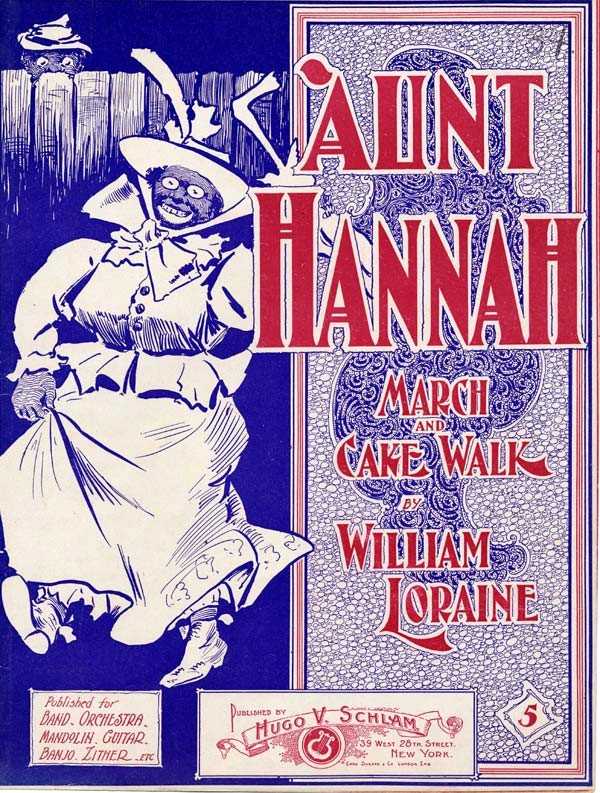
Aunt Hannah: March and Cake Walk.
William Loraine. New York: Hugo V Schlam,
1900.
[view
sheet music]
Source: The
E Azalia Hackley Collection, Detroit
Public Library [top]
|
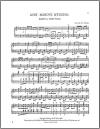 |
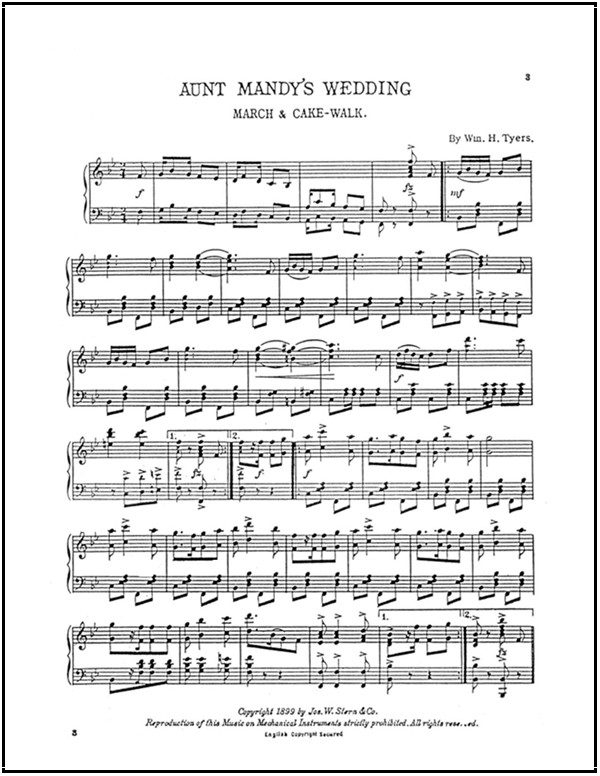
Aunt Mandy's Wedding: March & Cake
Walk. Wm H Tyers. New York: Jos
W Stern, 1899.
[view
sheet music]
Source: Photocopy provided
by Dave Kerr (England) [top]
|
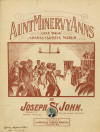 |
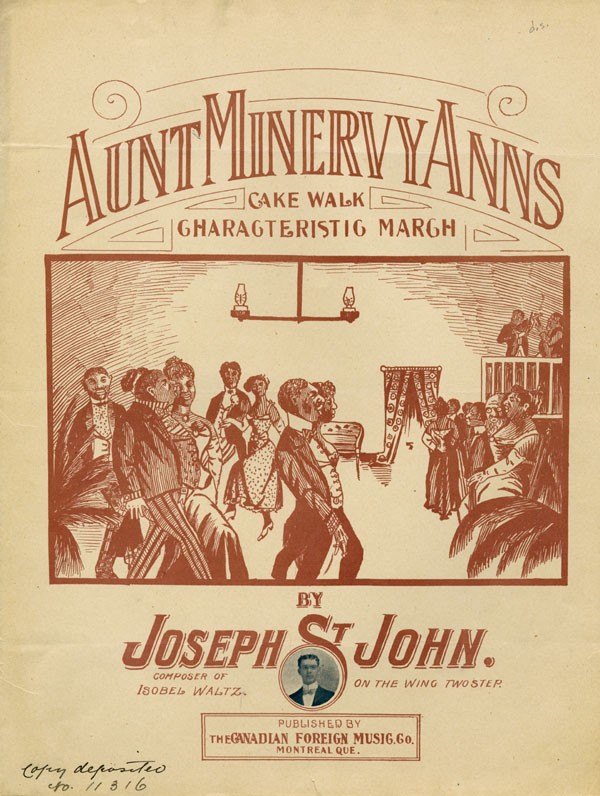
Aunt Minervy Anns: Cake Walk and
Characteristic March. Joseph St
John. Montreal, QC: Canadian Foreign Music
Co, 1900.
[view
sheet music]
Source: Library
and Archives Canada [top]
|
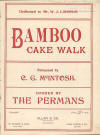 |
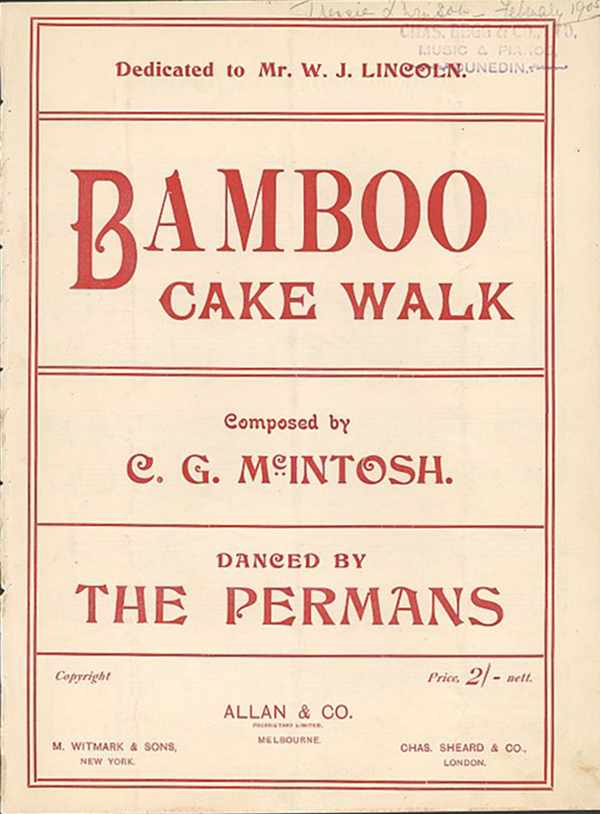
Bamboo Cake Walk. CG McIntosh.
Melbourne: Allan & Co, 1905.
[view
sheet music]
Source: National Library
of Australia Digital Collections [top]
|
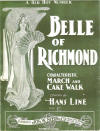 |
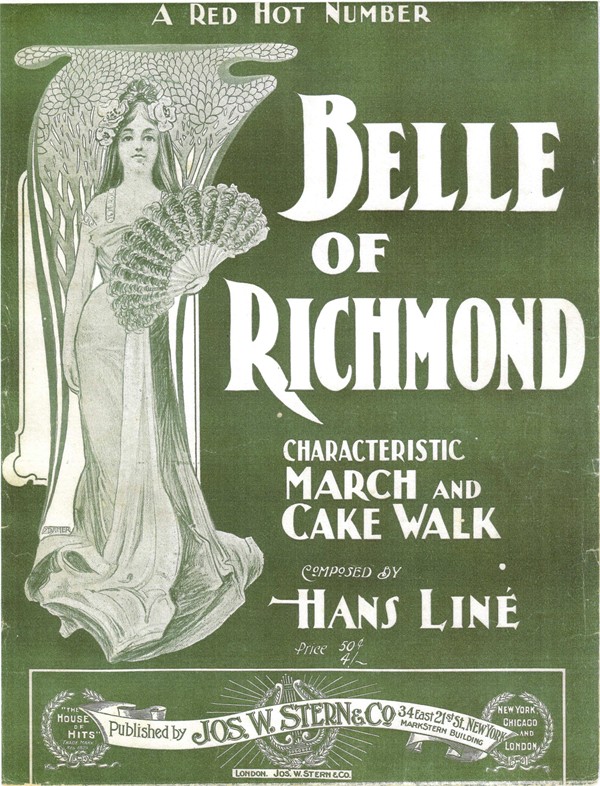
Belle of Richmond: Characteristic March
and Cake Walk. Hans Liné. New
York: Jos W Stern & Co, 1902.
[view
sheet music]
Source: Photocopy from the New
York State Library [top]
|
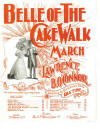 |
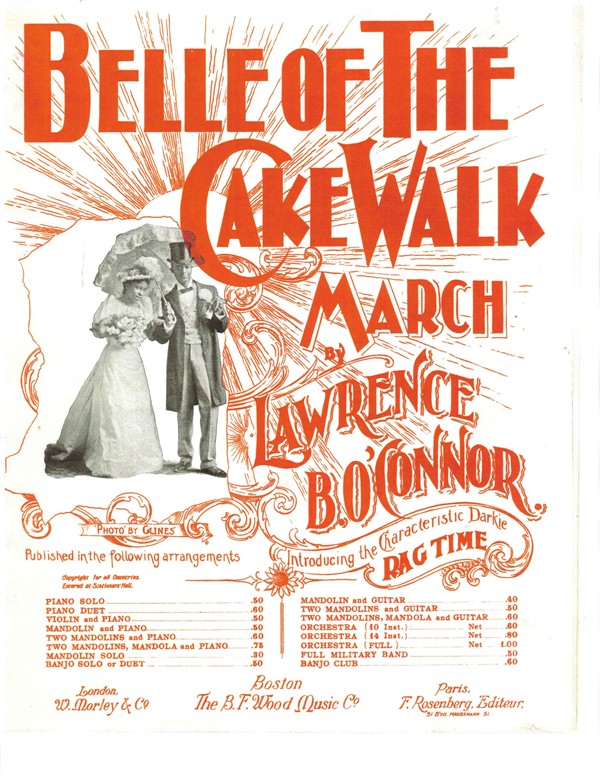
Belle of the Cake Walk: March.
Lawrence B O'Connor. Boston, MA: BF Wood
Music Co, 1897.
[view
sheet music]
Source: Photocopy from the New
York State Library [top]
|
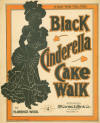 |
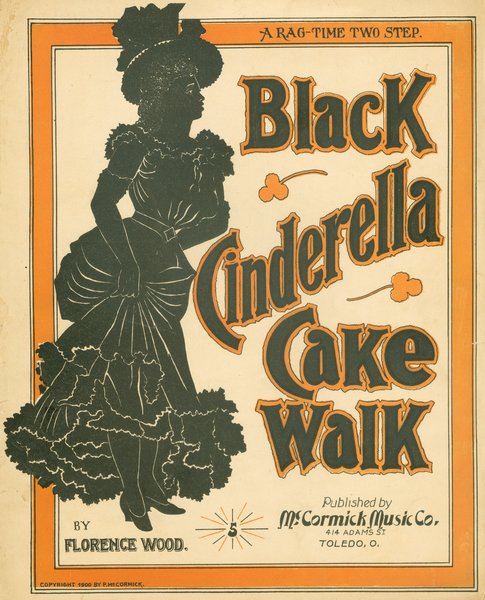
Black Cinderella Cake Walk.
Florence Wood. Toledo, OH: Peter McCormick,
1900.
[view
sheet music]
Source: IN Harmony:
Sheet Music from Indiana [top]
|
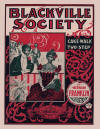 |
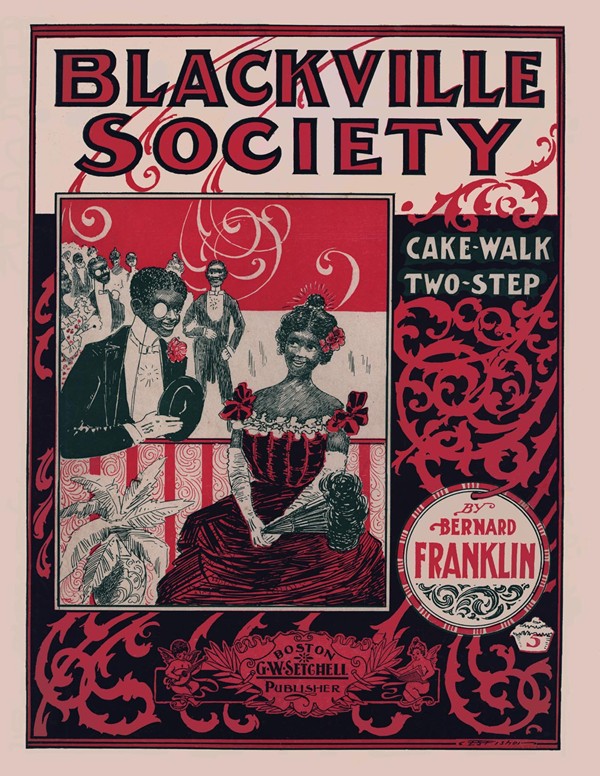
Blackville Society Cake Walk and Two
Step. Bernard Franklin. Boston,
MA: GW Setchell, 1899.
[view sheet music]
Source: Charles H
Templeton Sheet Music Collection (MSU)
[top]
|
|
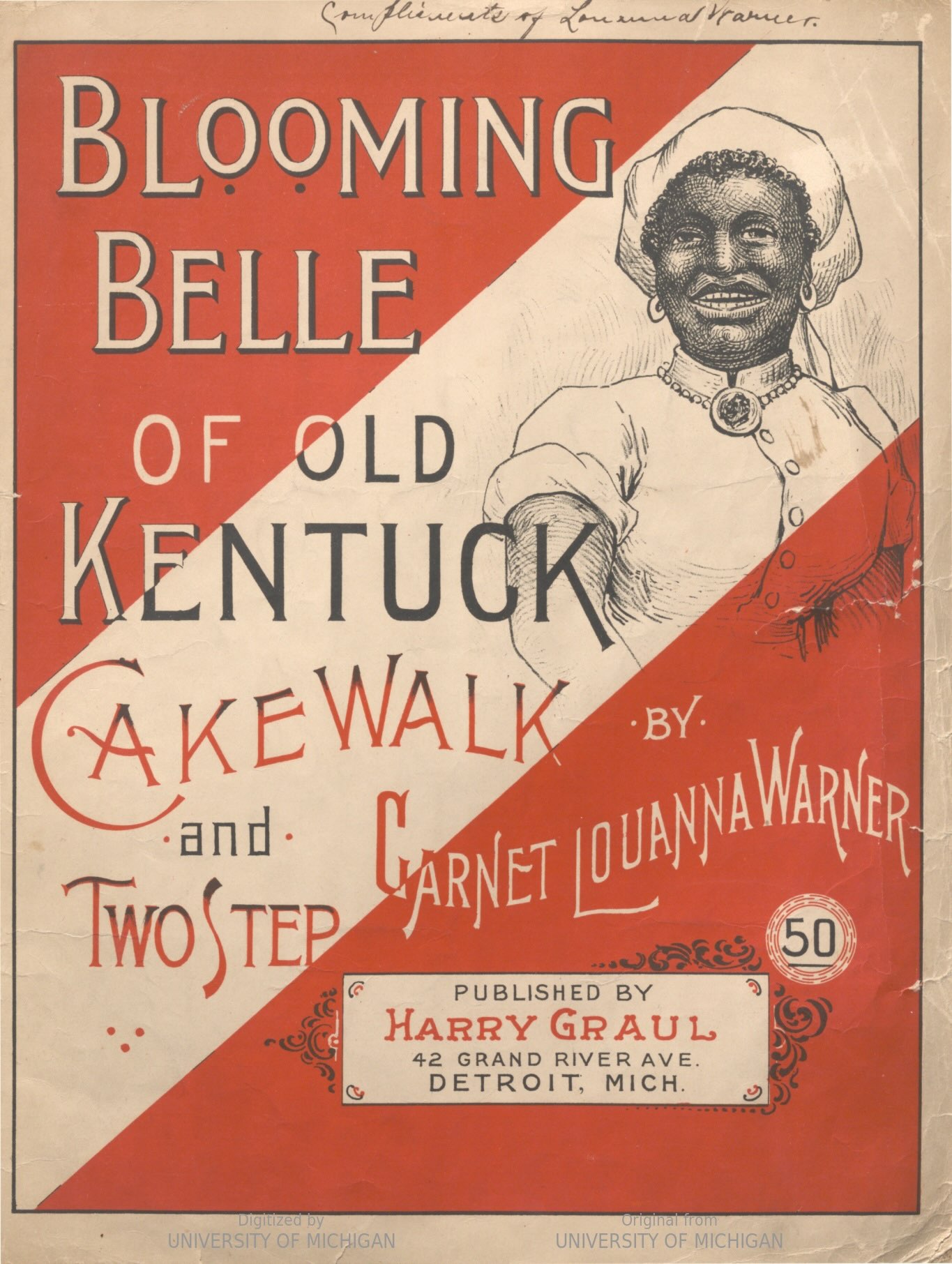
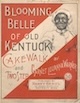
Blooming Belle of Old Kentucky: Cakewalk
& Two-Step. Detroit, MI: Harry
Graul, 1899.
[view
sheet music]
Source: Hathi
Trust [top]
|
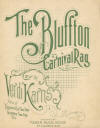 |
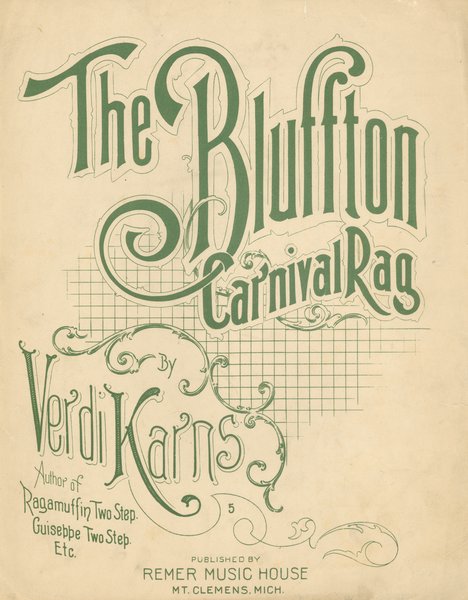
Bluffton Carnival Rag: Cake Walk.
Verdi Karns. Bluffton, IN: Verdi Karns,
1899.
[view
sheet music]
Source: IN Harmony:
Sheet Music from Indiana [top]
|
|
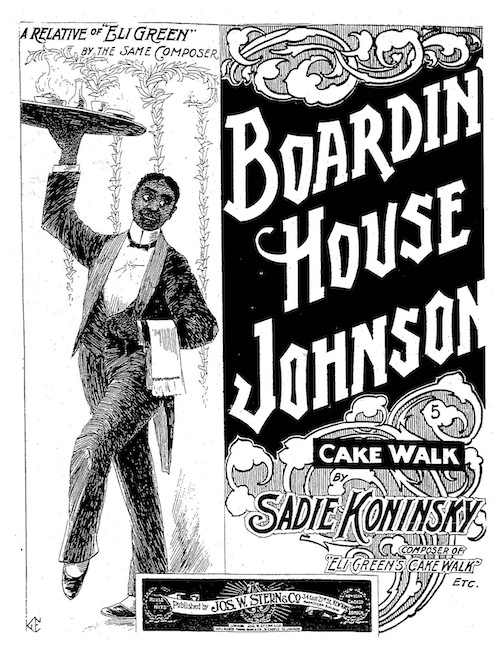
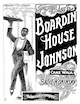
Boardin' House Johnson: Cake Walk.
Sadie Koninsky. New York: Joseph W Stern,
1899.
[view sheet music] [top]
|
|
|
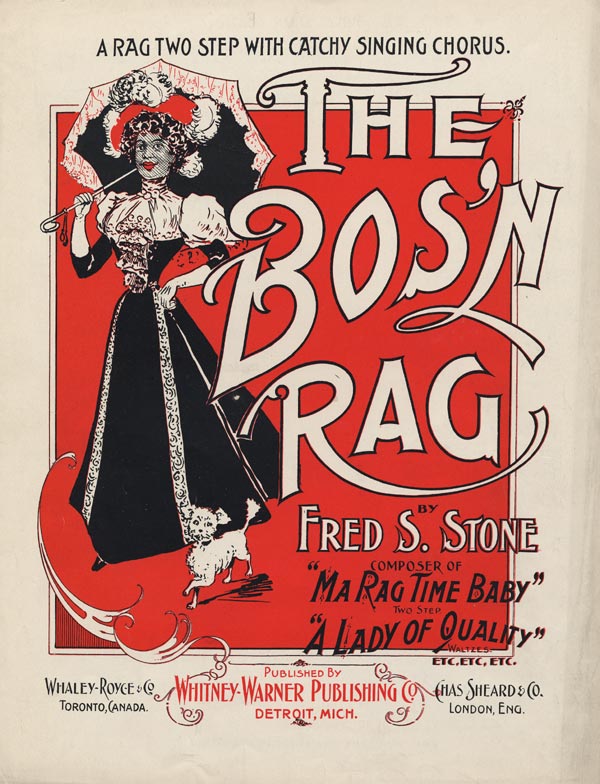
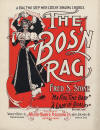
The Bos'n Rag: Cake Walk. Fred S
Stone. Detroit, MI: Whitney Warner Pub Co,
1899.
[view
sheet music]
Source: The
E Azalia Hackley Collection, Detroit
Public Library [top]
|
|
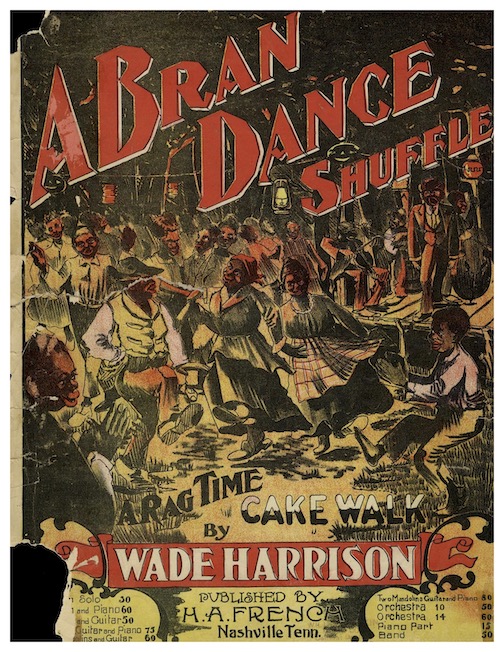
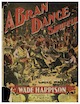
A Bran Dance Shuffle:
A Rag Time Cake Walk. Wade
Harrison. Nashville, TN: H.A. French, 1902.
[view sheet music]
Source: Digital copy provided by Peter Persoff [top]
|
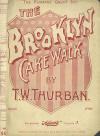 |
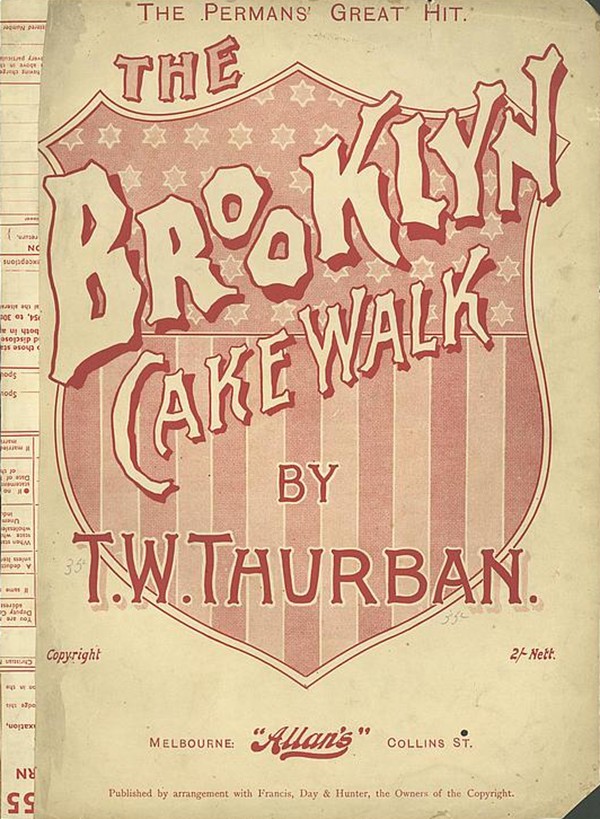
The Brooklyn Cake Walk (also known
as The Permans' Brooklyn
Cake Walk). TW Thurban.
Melbourne: Allan's, 1899.
[view
sheet music]
Source:
National
Library of Australia Digital
Collections [top]
|
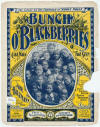 |
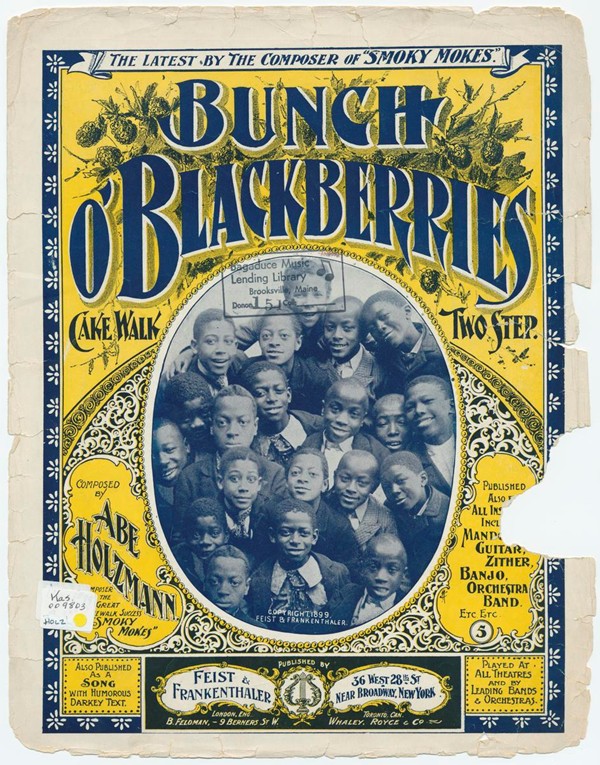
Bunch O' Blackberries: Cake-Walk &
Two-Step. Abe Holzmann. New
York: Feist & Frankenthaler, 1899.
[view
sheet music]
Source: Maine Music Box
[top]
|
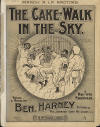 |
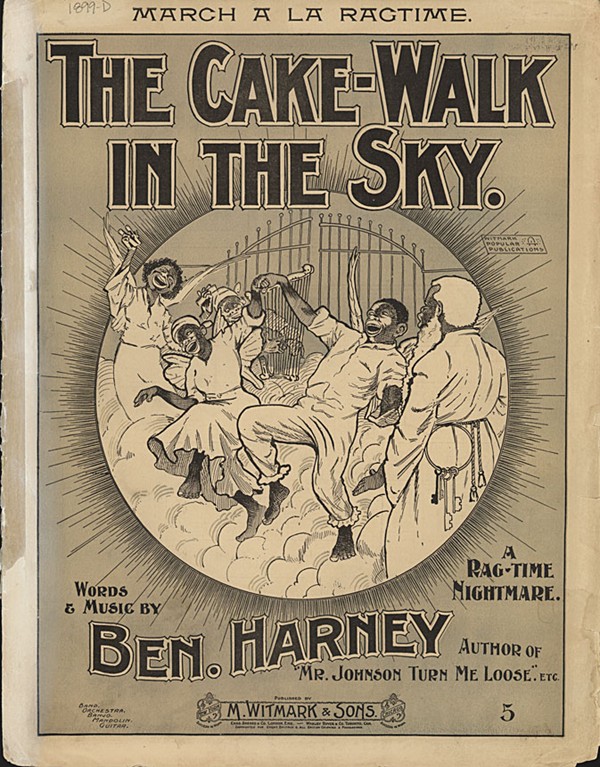
The Cake-Walk in the Sky. Ben
Harney. New York: M Witmark & Sons,
1899.
[view sheet music]
Source:
University of
Colorado Digital Sheet Music
Collection [top]
|
|
The Cake-Walkers. J Howard
Johnston. Chicago, IL: The S Brainards’ Sons
Co, 1899.
[view sheet music]
Source: University
of South Florida Digital Commons
[top]
|
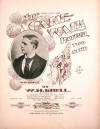 |
The Cake Walk Patrol: Two Step.
WH Krell. Chicago, IL: The S Brainard's Sons
Co, 1895.
[view
sheet music]
Source: Lester
S Levy Sheet Music Collection
[top]
|
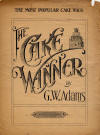 |
The Cake Winner. GW Adams.
Toronto, ON: Amey & Hodgins, 1899.
[view
sheet music]
Source: Library
and Archives Canada [top]
|
 |
Campbell Cakewalk. Brun Campbell
(transcribed by Richard A Egan, Jr).
Sheet music available in Richard A Egan, Jr,
ed, Brun Campbell: The Music of
"The Ragtime Kid" (St Louis,
MO: Morgan Publishing, 1993).
|
 |
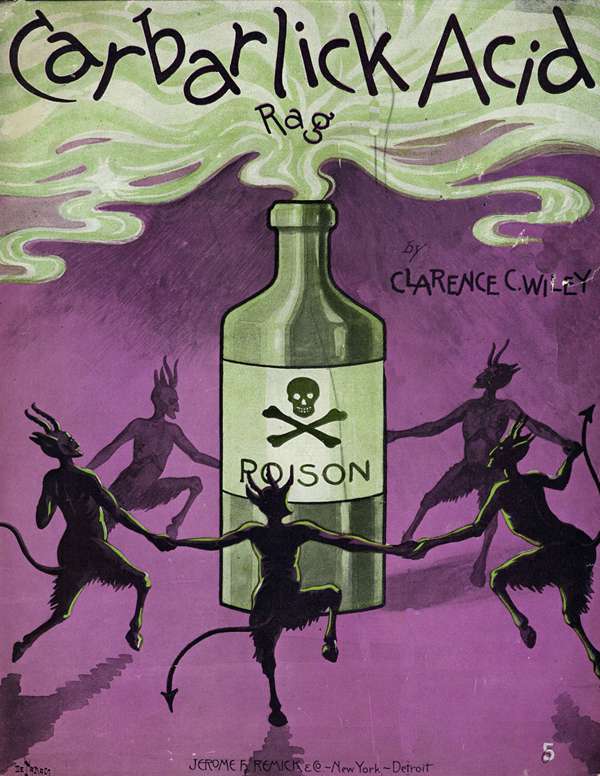
Car-Barlick-Acid Rag: Two-Step-Cake Walk.
Clarence C Wiley. Detroit, MI: Jerome H
Remick & Co, 1905.
[view sheet music]
Source:
Charles H
Templeton Sheet Music Collection
(MSU)
[top]
|
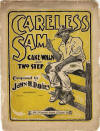 |
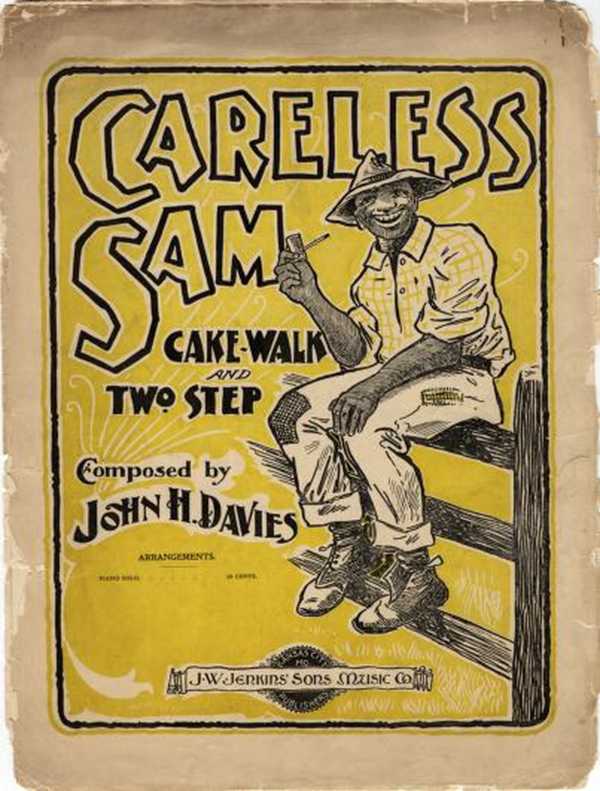
Careless Sam: Cake Walk & Two Step.
John H Davies. Kansas City, MO: JW Jenkins'
Sons Music Company, 1900.
[view sheet music]
Source: Kansas City Sheet
Music Collection [top]
|
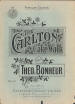 |
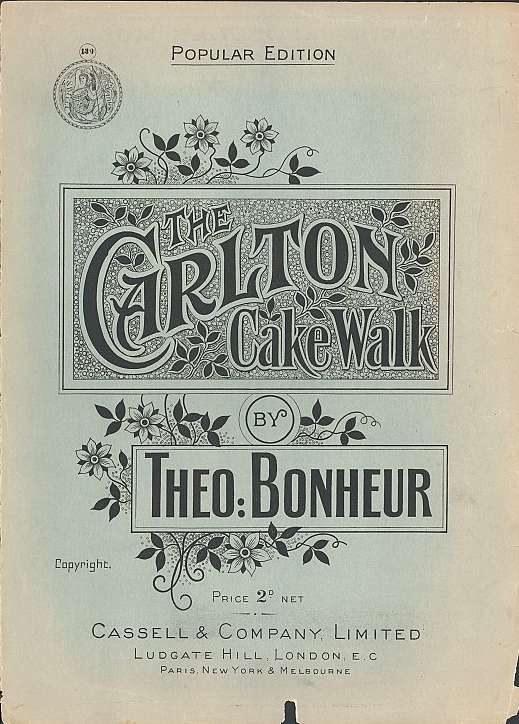
Carlton Cake Walk. Theo Bonheur.
Melbourne: Cassell & Co, [189-].
[view
sheet music]
Source:
National
Library of Australia Digital
Collections [top]
|
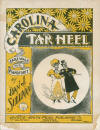 |
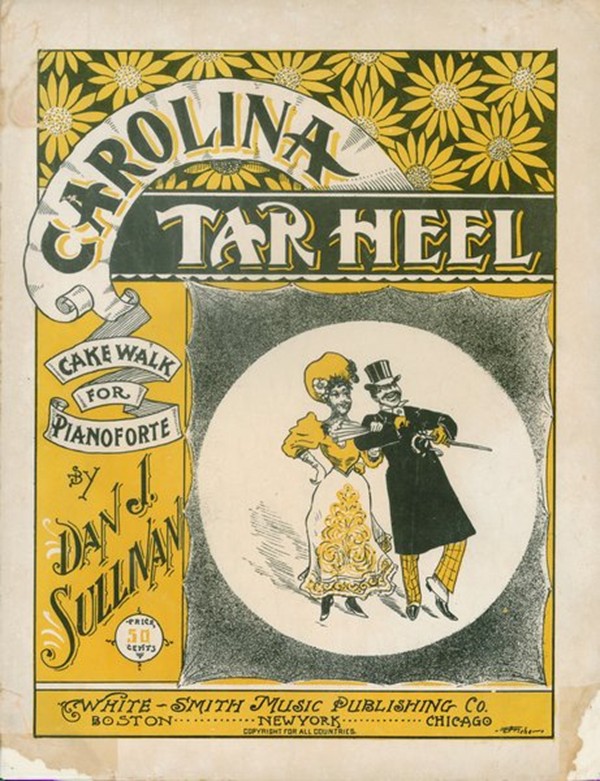
Carolina Tar Heel Cake Walk. Dan
Sullivan. New York: White-Smith Music Pub
Co, 1898.
[view
sheet music]
Source: IN Harmony:
Sheet Music from Indiana [top]
|
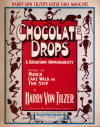 |
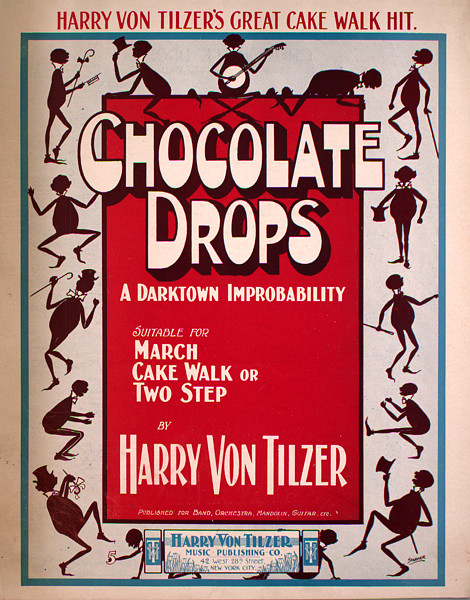
Chocolate Drops: A Da*ktown Improbability.
Suitable for March, Cake Walk or Two Step.
Harry Von Tilzer. New York: Harry Von Tilzer
Music Publishing Co, 1902.
[view
sheet music]
Source: Lester
S Levy Sheet Music Collection
[top]
|
 |
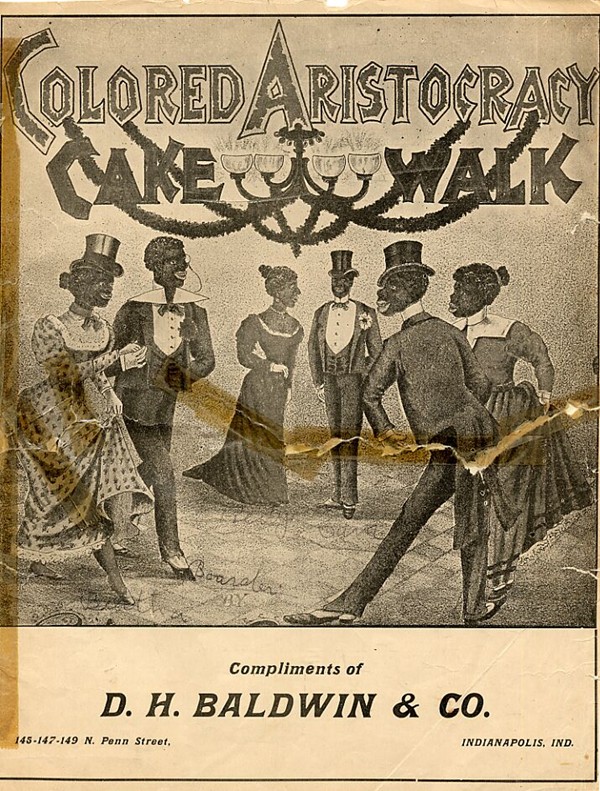
Colored Aristocracy: Cake
Walk. Gus W Bernard.
Indianapolis, IN: DH Baldwin, 1899.
[view
sheet music]
Source: University
of South Carolina Sheet Music Collection
[top]
|
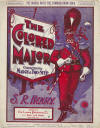 |
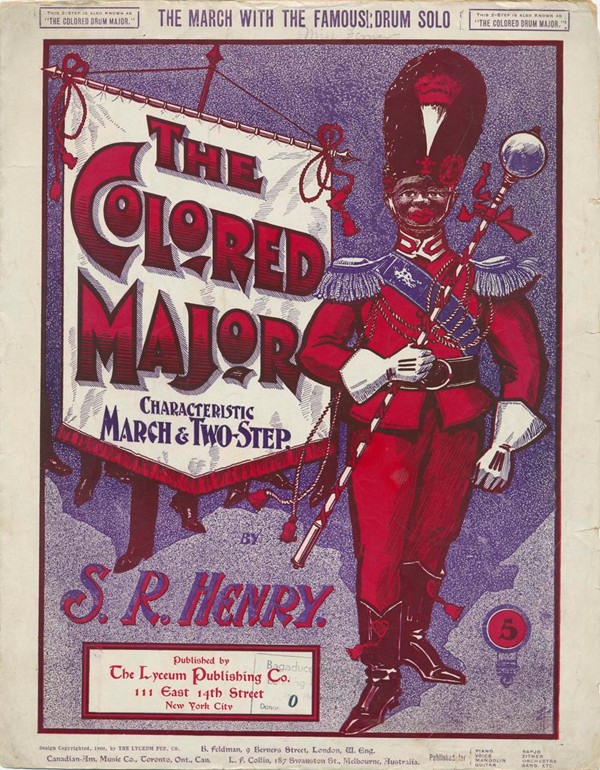
The Colored Major: Characteristic March
And Two. Stephen R Henry. New
York: The Lyceum Publishing Co, 1900.
[view
sheet music]
Source: Maine Music Box
[top]
|
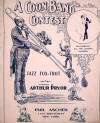 |
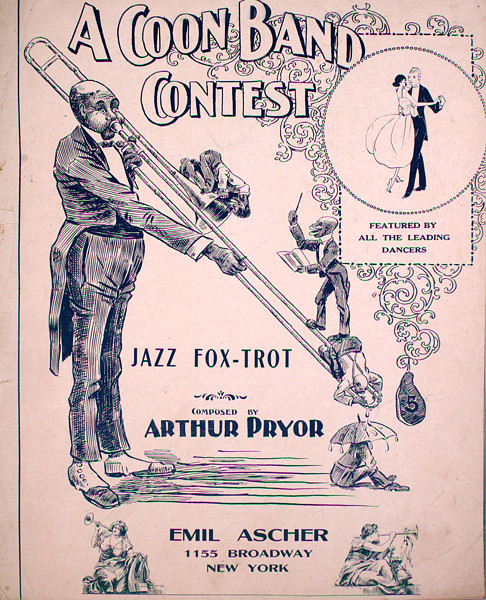
A C**n Band Contest: Jazz Fox-Trot.
Arthur Pryor. New York: Emil Ascher, 1918.
[view
sheet music]
Source: Lester
S Levy Sheet Music Collection
[top]
|
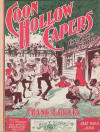 |
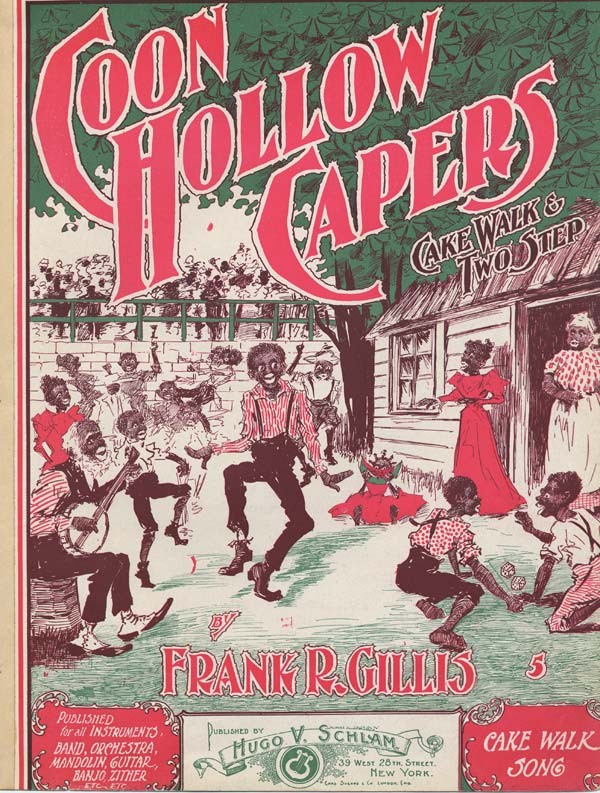
C**n Hollow
Capers: Cake Walk & Two Step.
Frank R. Gillis. New York: Hugo Schlam,
1900.
[view
sheet music]
Source: The
E Azalia Hackley Collection, Detroit
Public Library [top]
|
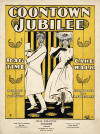 |
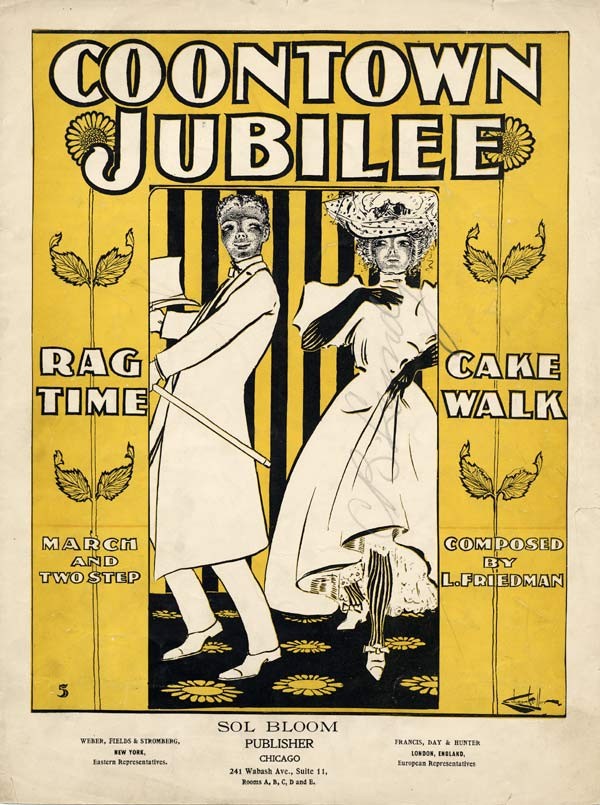
C**ntown Jubilee: Rag Time Cake Walk,
March and Two Step. Leo
Friedman. Chicago, IL: Sol Bloom, 1898.
[view
sheet music]
Source: The
E Azalia Hackley Collection, Detroit
Public Library [top]
|
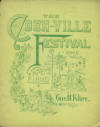 |
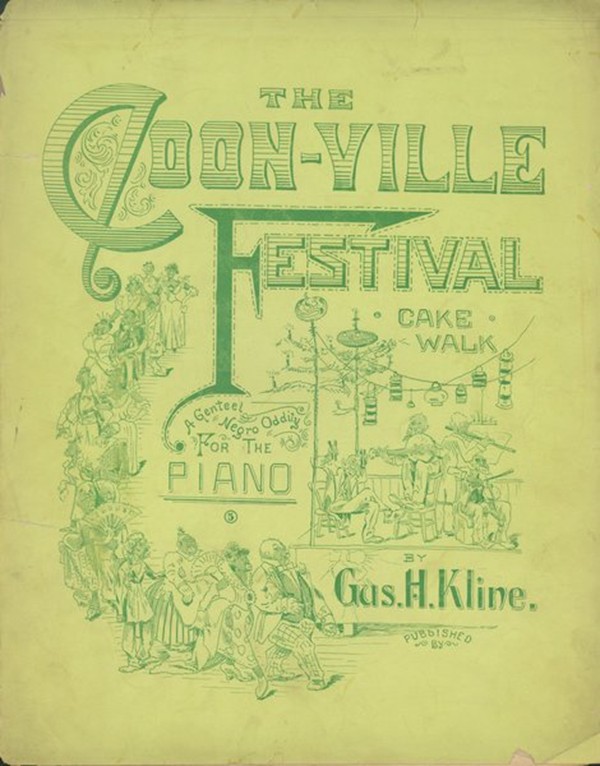
C**n-ville Festival Cakewalk.
Gus H. Kline. Chicago, IL: G.H. Kline, 1898.
[view
sheet music]
Source: IN Harmony:
Sheet Music from Indiana [top]
|
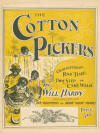 |
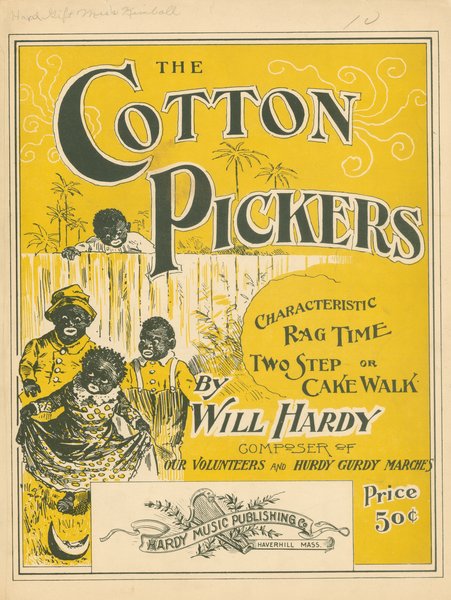
The Cotton Pickers: Characteristic Rag
Time, Two Step or Cake Walk.
Will Hardy. Haverhill, MA: Hardy Music
Publishing Co, 1899.
[view
sheet music]
Source: IN Harmony:
Sheet Music from Indiana [top]
|
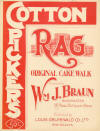 |
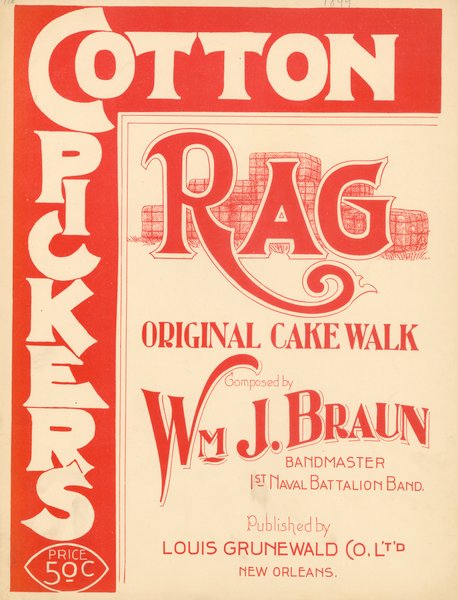
Cotton Pickers Rag: Original Cake Walk.
Wm J Braun. New Orleans, LA: Louis Grunewald
Co Ltd, 1899.
[view
sheet music]
Source: IN Harmony:
Sheet Music from Indiana [top]
|
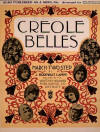 |
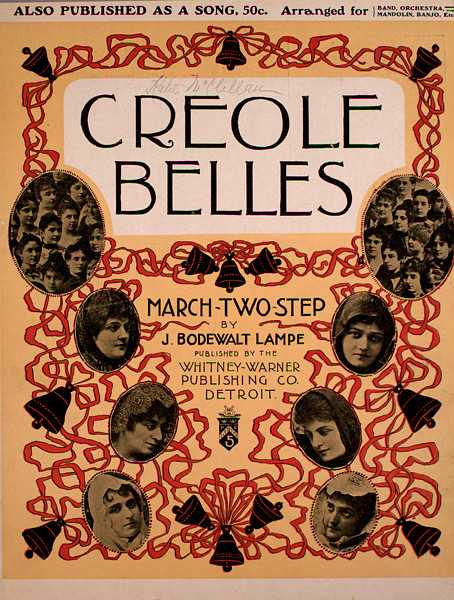
Creole Belles: March-Two-Step. J
Bodewalt Lampe. Detroit, MI: Whitney-Warner
Publishing Co, 1900.
[view
sheet music]
Source: Lester
S Levy Sheet Music Collection
[top]
|
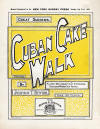 |
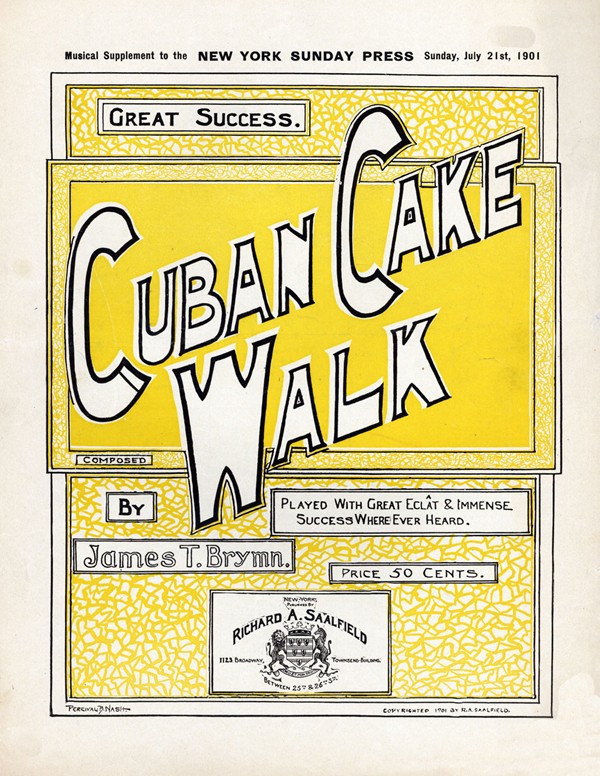
Cuban Cake Walk. James T Brymn.
New York: Richard Saalfield, 1901.
[view sheet music]
Source:
Charles H
Templeton Sheet Music Collection
(MSU)
[top]
|
 |
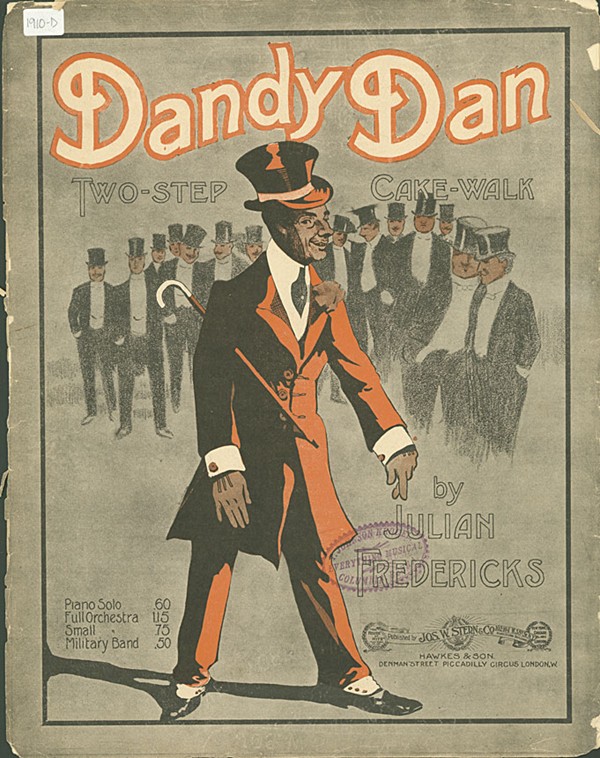
Dandy Dan: Two-Step & Cake-Walk.
Julian Fredericks. New York: Jos W Stern
& Co, 1909
[view sheet music]
Source:
University of
Colorado Digital Sheet Music
Collection [top]
|
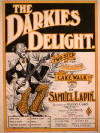 |
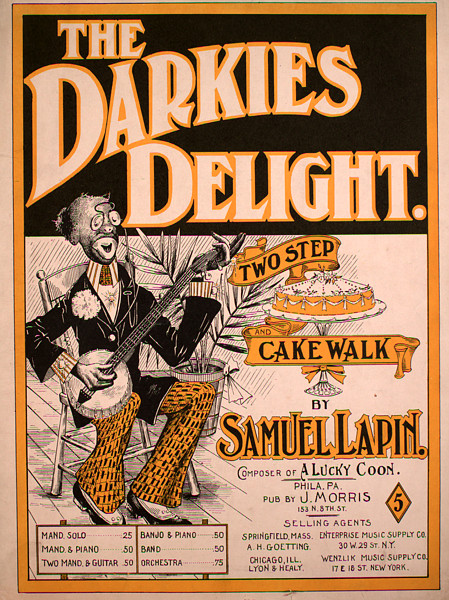
The Da*kies Delight: Two Step and
Cakewalk. Samuel Lapin.
Springfield, MA: AH Goetting, 1899.
[view
sheet music]
Source: Lester
S Levy Sheet Music Collection
[top]
|
 |
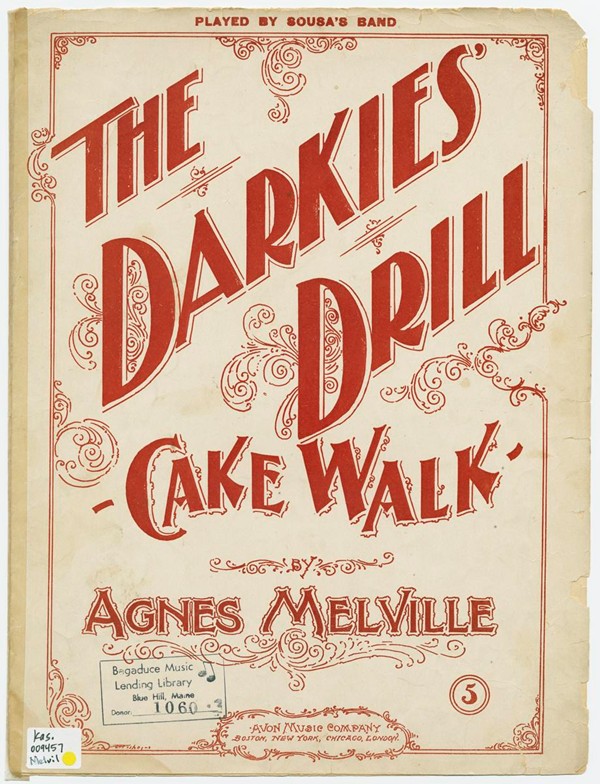
The Da*kie's Drill: Cake Walk.
Agnes Melville. Boston, MA: Avon Music
Company, 1902
[view
sheet music]
Source: Maine Music Box
[top]
|
 |
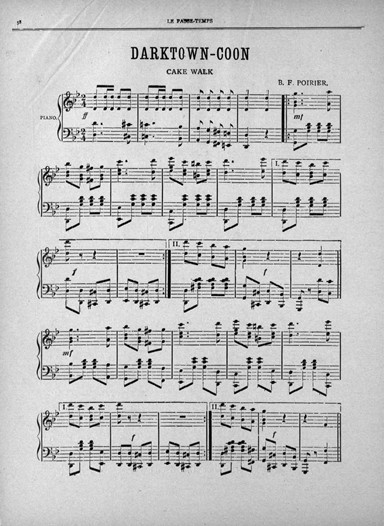
Da*ktown C**n: Cake Walk. Benoit
F Pourier. 1904.
[view sheet
music]
Source: Le
Passe Temps (Vol. 12, no 305
(1 décembre 1906) at 538-41) as digitized
by the National
Library of Québec [top]
|
|
A Da*ktown
Diversion: Two-Step. GL Lowell.
Chicago, IL: S Brainards’ Sons, 1899.
[view
sheet music]
Source: University
of South Florida Digital Commons [top]
|
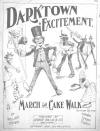 |
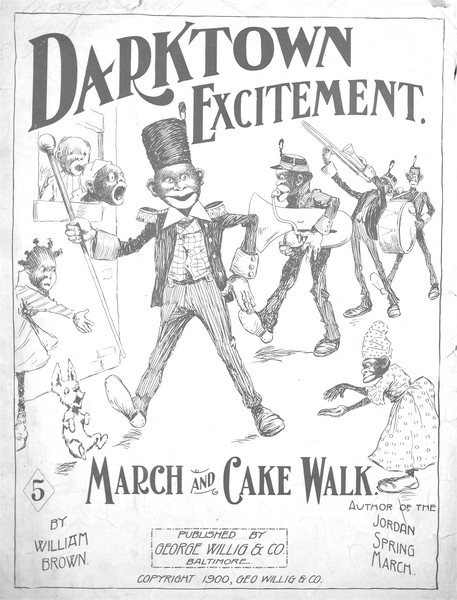
Da*ktown Excitement: March and Cake Walk.
William Brown. Baltimore, MD: George Willig
& Co, 1900.
[view
sheet music]
Source: Lester
S Levy Sheet Music Collection
[top]
|
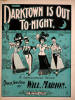 |
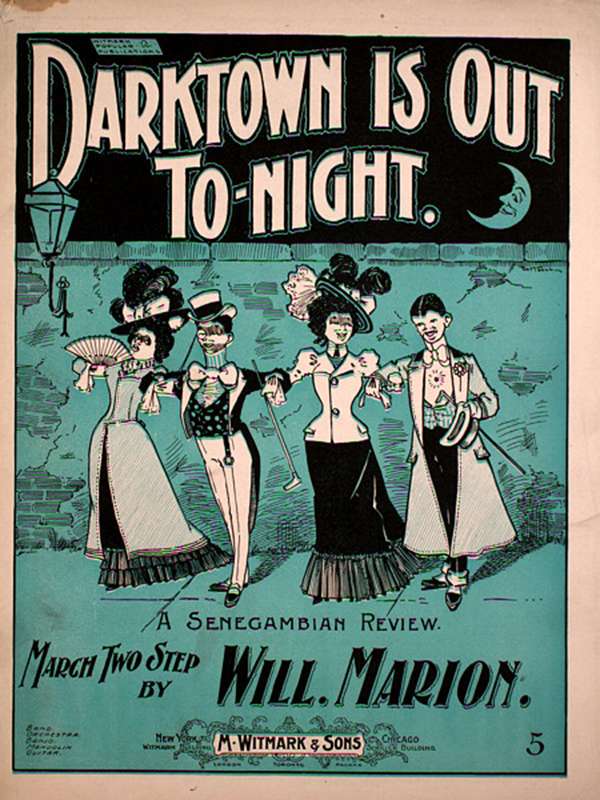
Da*ktown Is Out To-Night: A Senegambian
Review. March Two-Step. Will
Marion. New York: M. Witmark & Sons,
1899.
[view
sheet music]
Source:
Charles H
Templeton Sheet Music Collection (MSU)
[top]
|
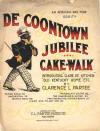 |
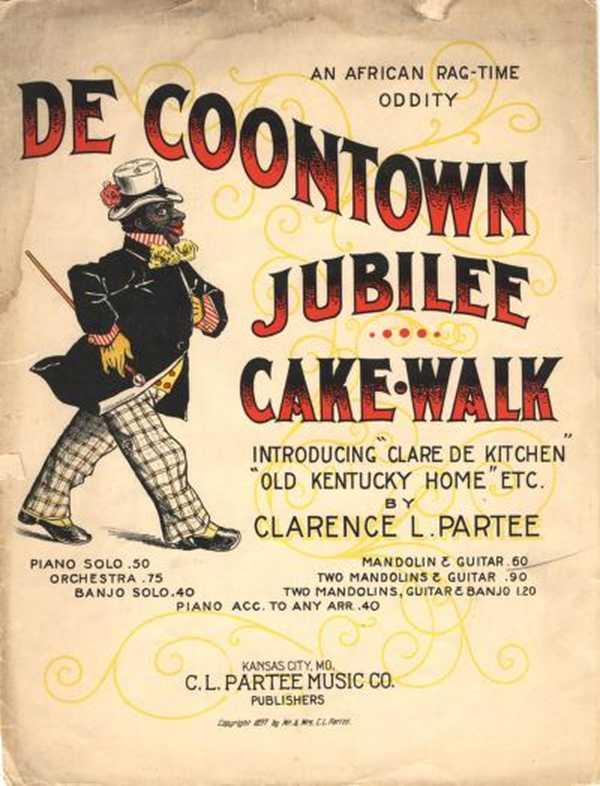
De C**ntown Jubilee: Cake Walk: An
African Ragtime Oddity. Clarence
L Partee. Kansas City, MO: CL Partee Music
Co, 1897.
[view sheet music]
Source: Kansas City
Sheet Music Collection
[top]
|
 |
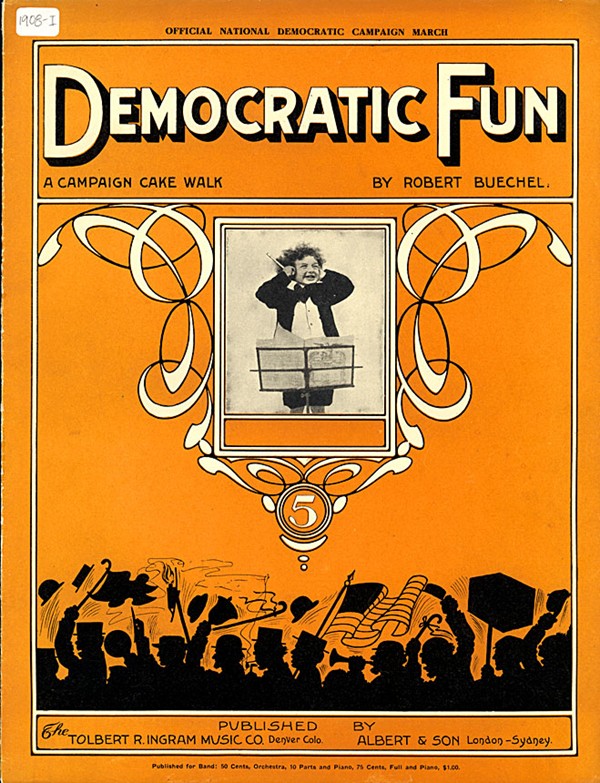
Democratic Fun: A Campaign Cake-Walk.
Robert Buechel. Denver, CO: Tolbert R Ingram
Music Co, 1908.
[view sheet music]
Source:
University of
Colorado Digital Sheet Music
Collection [top]
|
 |
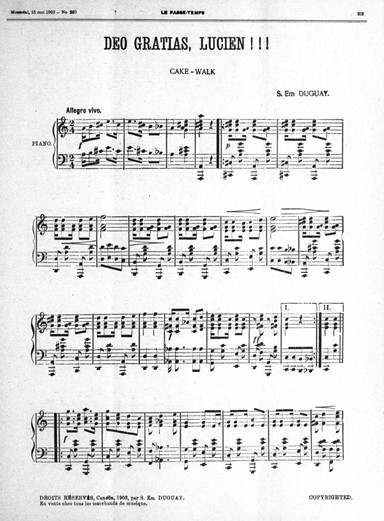
Deo Gratias: Lucien!!! Cake-Walk.
Samuel Emmanuel Duguay. 1903.
[view sheet
music]
Source: Le
Passe Temps (Vol. 9, no 222
(26 septembre 1903) at 287) as digitized
by the National Library of Québec [top]
|
 |
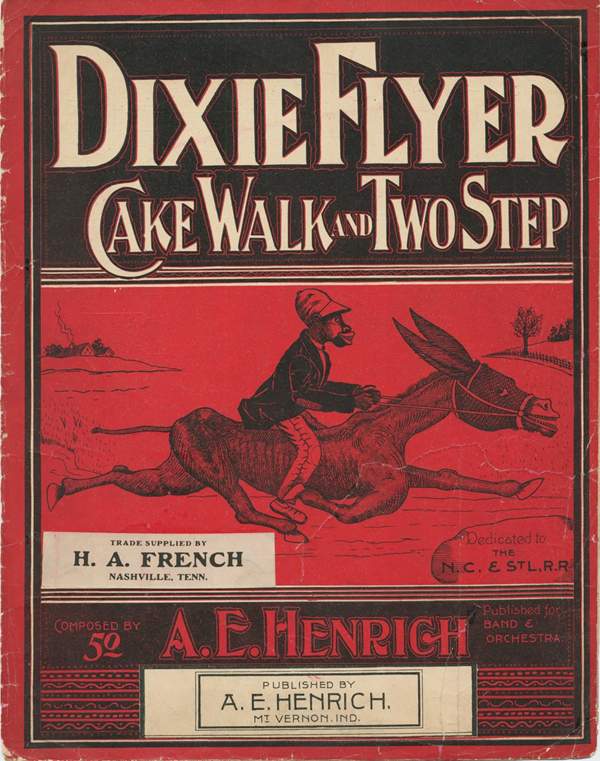
Dixie Flyer: Cakewalk and Two Step.
AE Henrich. Mt. Vernon, IN: AE Henrich,
1901.
[view
sheet music]
Source: IN Harmony:
Sheet Music from Indiana [top]
|
 |
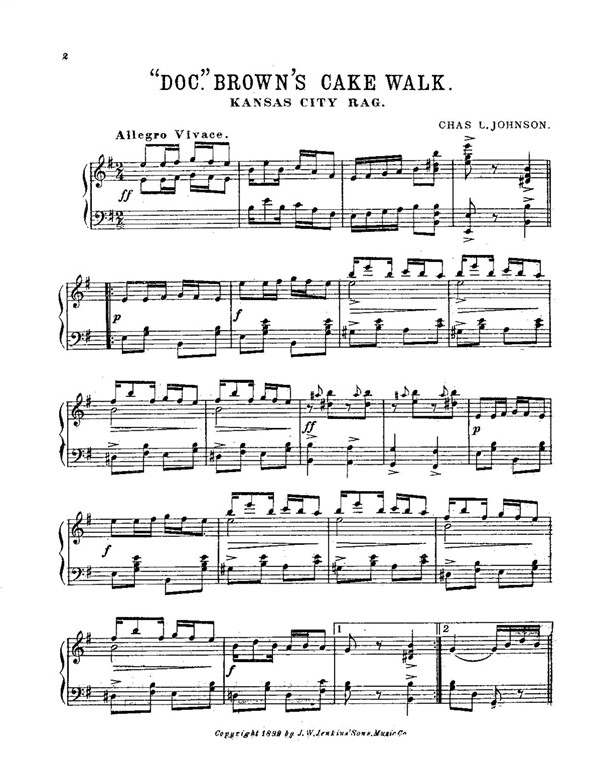
Doc Brown's Cake Walk: Kansas City Rag.
Charles L Johnson. Kansas City, MO: JW
Jenkins' Sons, 1899.
[view sheet
music]
Source: Personal copy [top]
|
 |
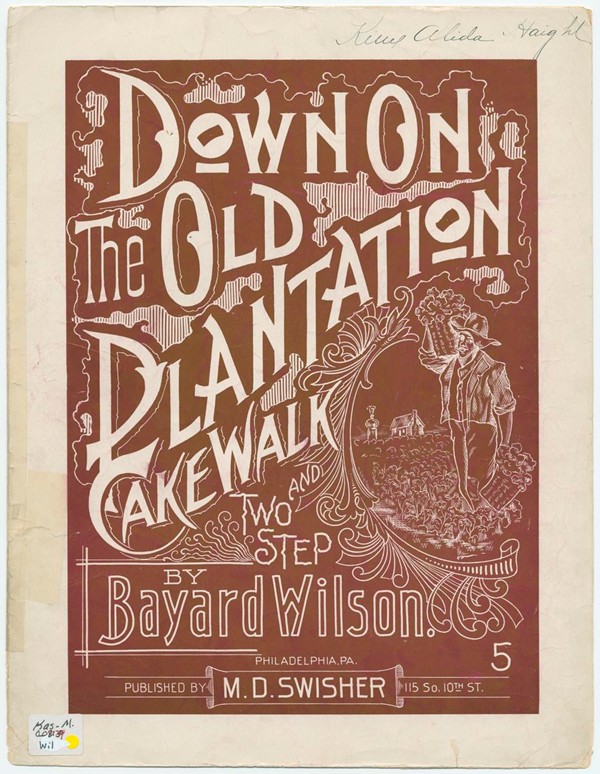
Down on The Old Plantation: Cake-Walk.
Bayard Wilson. Philadelphia, PA: MD Swisher,
1899.
[view
sheet music]
Source: Maine Music Box
[top]
|
|
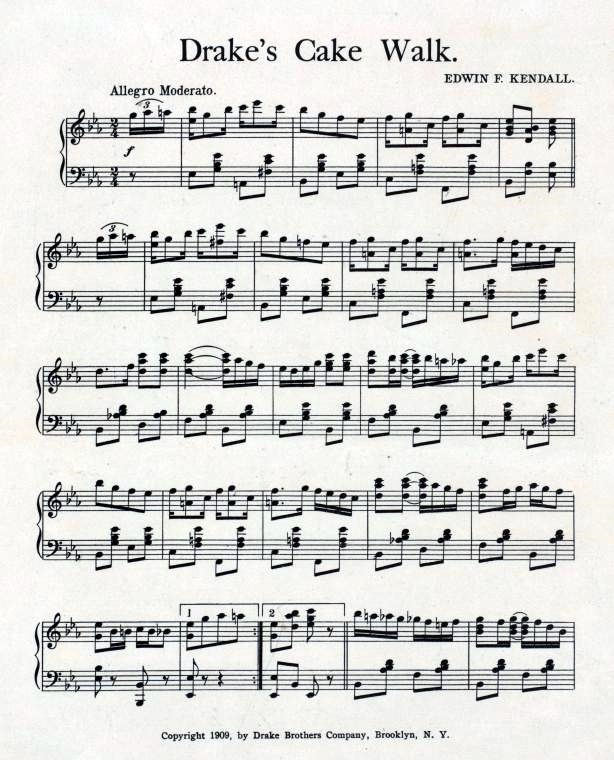
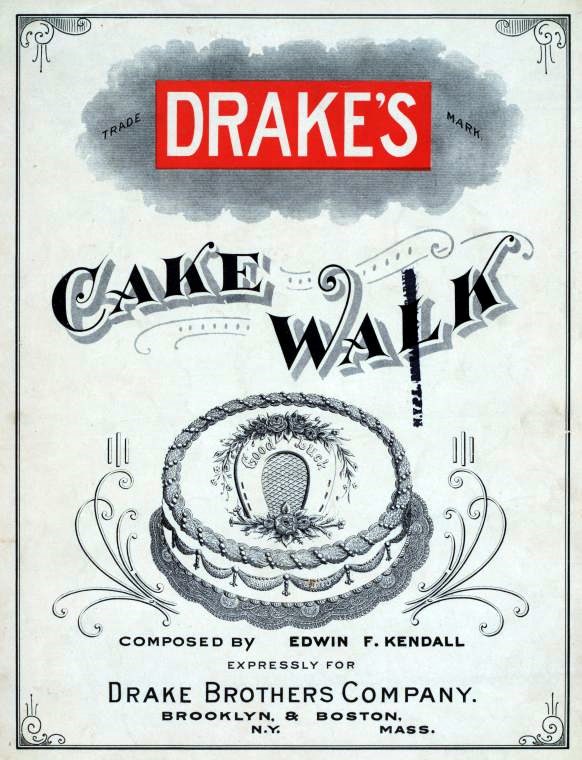
Drake’s Cake Walk.
Edwin F Kendall. Brooklyn, NY: Drake Brothers
Company, 1909.
[view sheet music]
Source: Digital copy
provided by Peter Persoff [top]
|
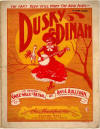 |
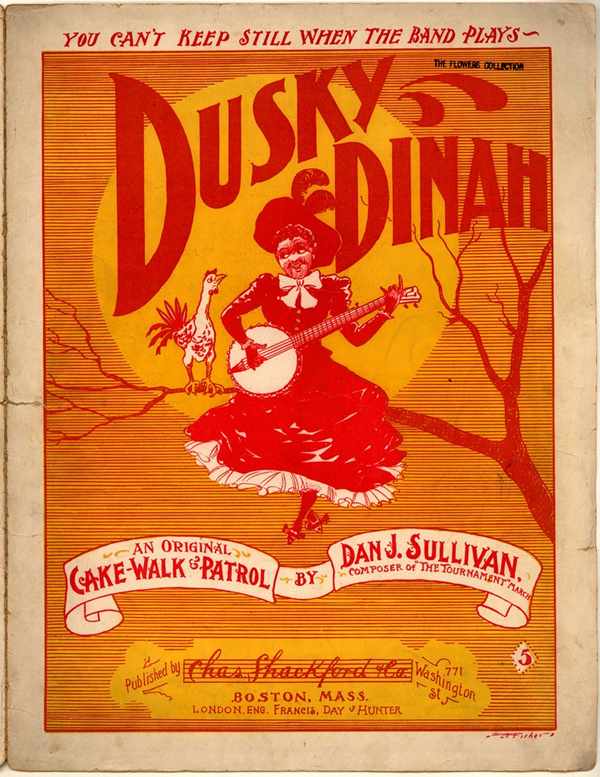
Dusky Dinah: Cake-walk and Patrol.
Dan J Sullivan. Boston, MA: Chas Shackford,
1899.
[view
sheet music]
Source:
Historic
American Sheet Music, 1850-1920 (from
Duke University) [top]
|
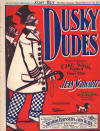 |
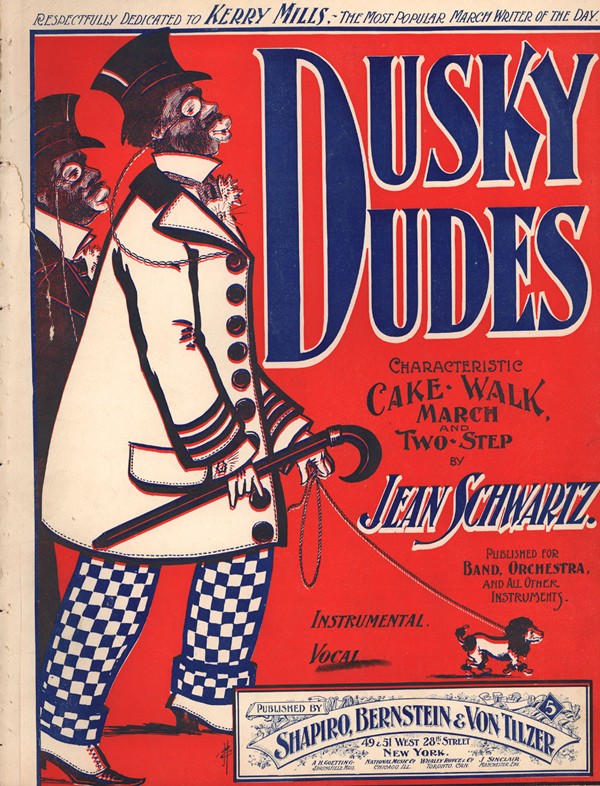
Dusky Dudes. Jean Schwartz
(lyrics by Will Heelan). New York: Shapiro,
Bernstein & Von Tilzer, 1899.
[view
sheet music]
Source:
African-American
Sheet Music, 1850-1920 (from Brown
University)
[top]
|
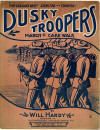 |
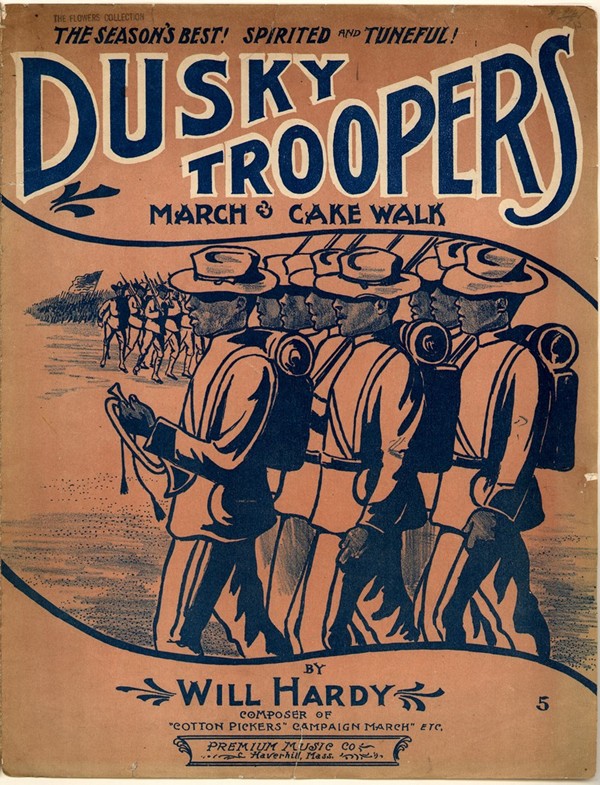
Dusky Troopers March & Cake Walk.
Will Hardy. Havervill, MA: Premium Music,
1900.
[view sheet music]
Source:
Historic
American Sheet Music, 1850-1920
(from Duke University) [top]
|
|
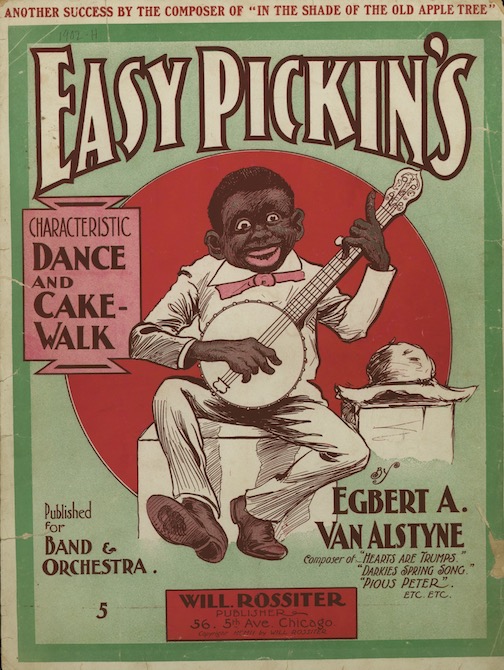
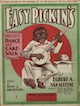
Easy Pickin’s: Characteristic Dance and
Cake-Walk. Egbert A Van Alstyne.
Chicago: Will Rossiter, 1902.
[view
sheet music]
Source: University of Colorado Digital
Sheet Music Collection [top]
|
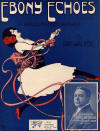 |
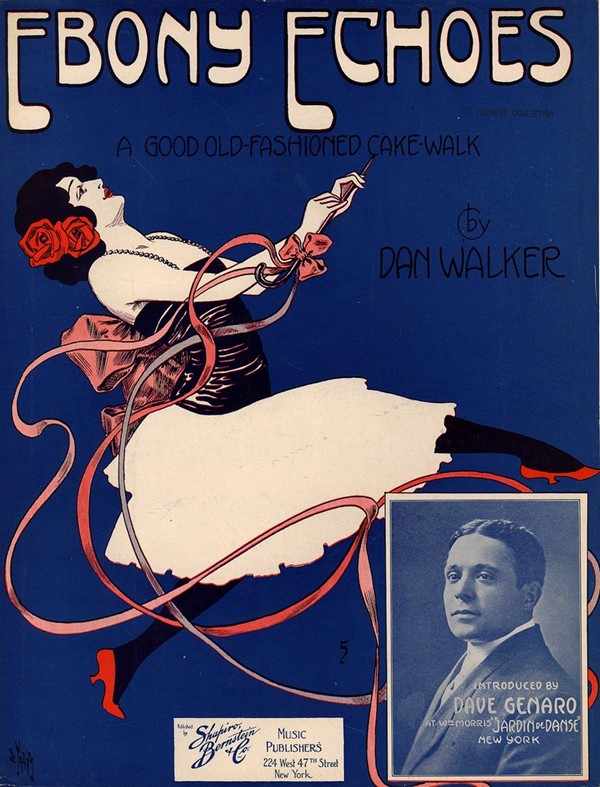
Ebony Echoes: A Good Old-Fashioned
Cake-Walk. Dan Walker. New York:
Shapiro, Bernstein & Co, 1915.
[view sheet music]
Source:
Historic
American Sheet Music, 1850-1920 (from
Duke University) [top]
|
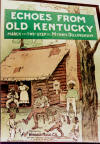 |
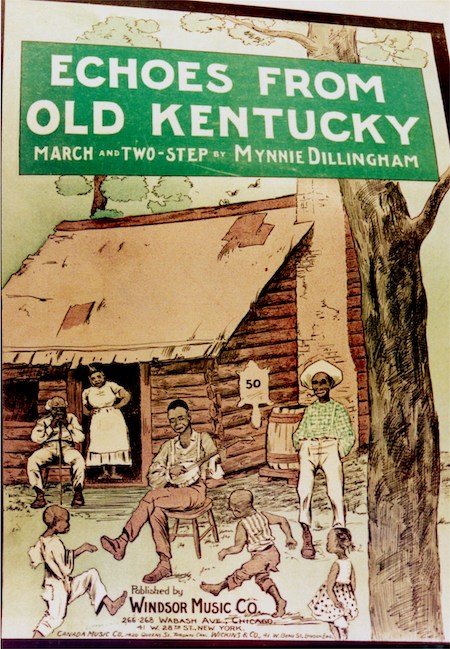
Echoes From Old Kentucky: March,
Two-Step and Cake Walk. Mynnie
Dillingham. Sydney: Alberts, 1901.
[view
sheet music]
Source: Digital copy
provided by Peter Persoff [top]
|
|
Echoes from Old Mobile. Walter E
Petry. Chicago, IL: S Brainards’ Sons,
1899.
[view
sheet music]
Source: University
of South Florida Digital Commons [top]
|
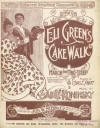 |
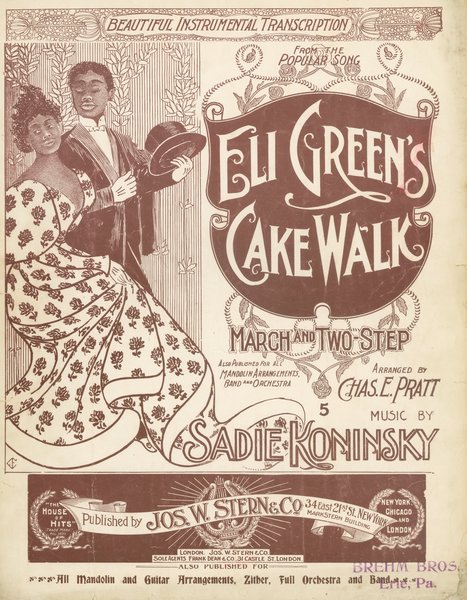
Eli Green's Cake Walk: March & Two
Step. Sadie Koninsky. New York:
Jos W Stern & Co, 1898.
[view
sheet music]
Source: IN Harmony:
Sheet Music from Indiana [top]
|
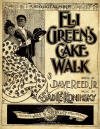 |
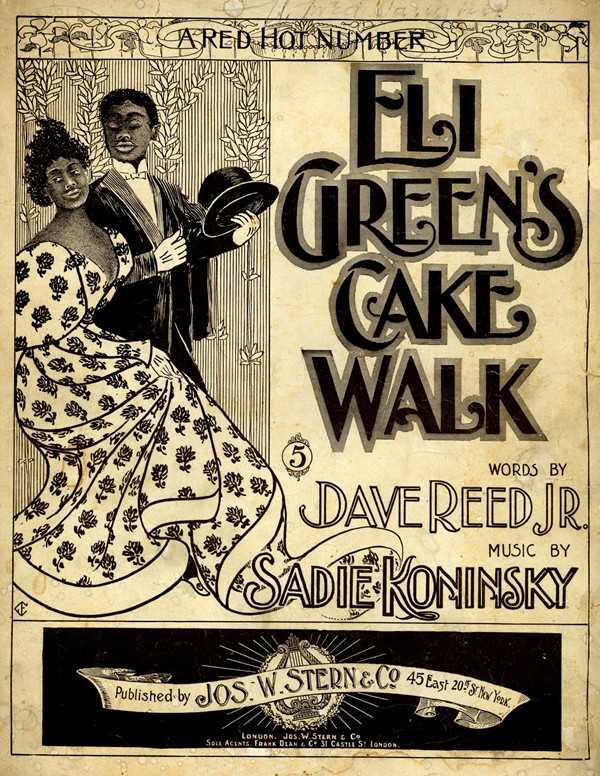
Eli Green's Cake Walk (song).
Sadie Koninsky (words by Dave Reed). New
York: Jos W Stern & Co, 1896.
[view sheet music]
Source:
Charles H
Templeton Sheet Music Collection (MSU)
[top]
|
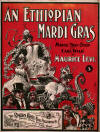 |
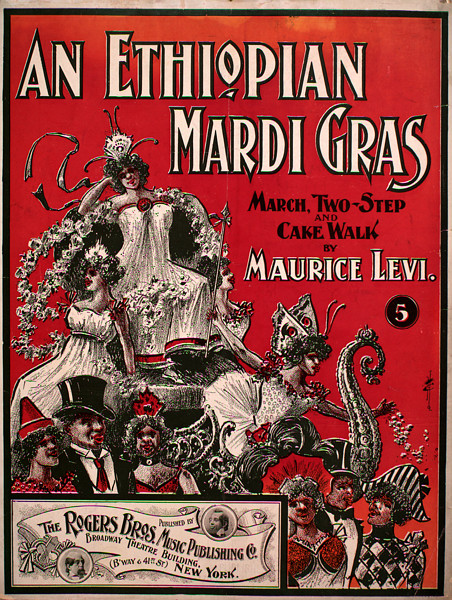
An Ethiopian Mardi Gras. March, Two-Step
and Cake Walk. Maurice Levi. New
York: The Rogers Bros Music Publishing Co,
1899.
[view
sheet music]
Source: Lester
S Levy Sheet Music Collection
[top]
|
|
A Florida Cracker: Rag Two-Step.
Ellis Brooks. Chicago, IL: S Brainards’ Sons,
1899.
[view
sheet music]
Source: University
of South Florida Digital Commons
[top]
|
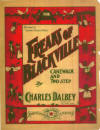 |
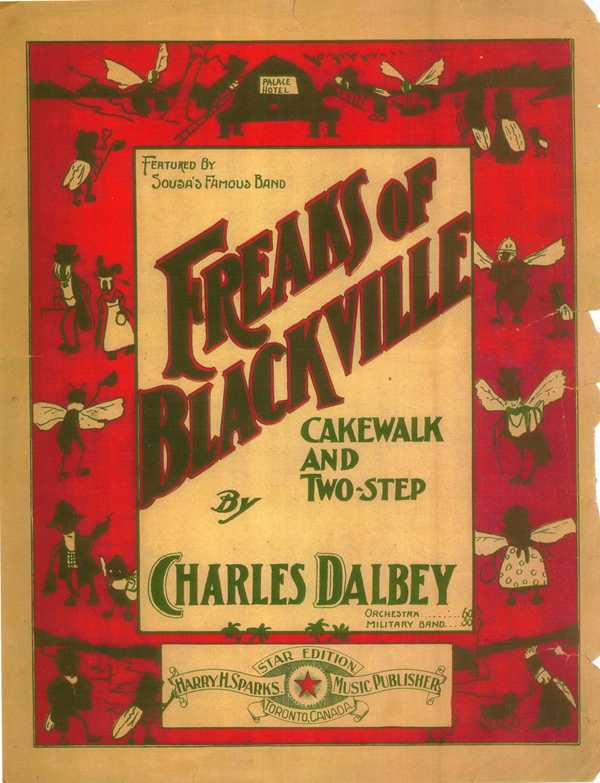
Freaks of Blackville: Cakewalk and
Two-Step. Charles [Clarence?] W
Dalbey. Toronto: Harry H Sparks, 1899.
[view sheet
music]
Source: Personal copy [top]
|
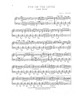 |
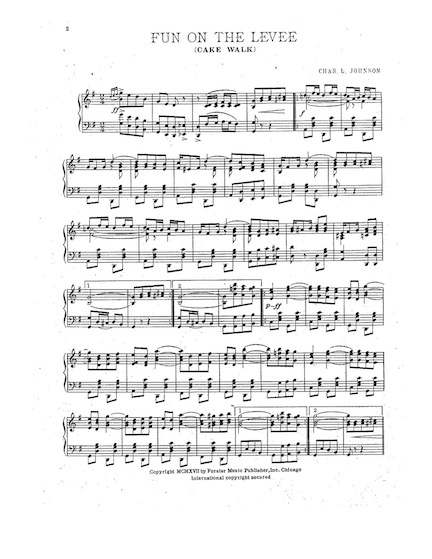
Fun on the Levee: Cake Walk.
Charles L. Johnson. Chicago: FJA Forster Music
Publisher, 1917.
[view sheet music] [top]
|
 |
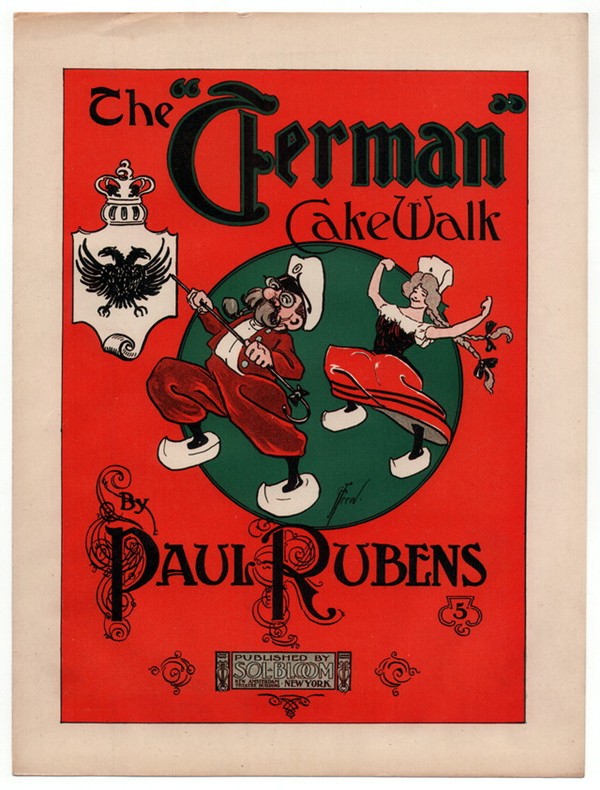
The German Cake Walk. Paul
Rubens. New York: Sol Bloom, 1903.
[view
sheet music]
Source: Library
of Congress Sheet Music Collection
(Music, Theatre and Dance) [top]
|
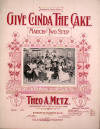 |
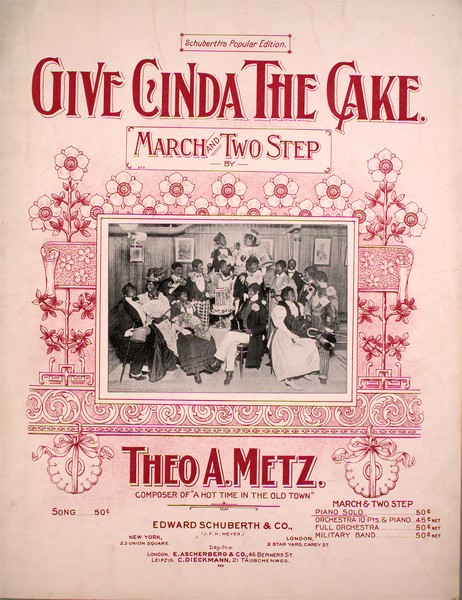
Give Cinda the Cake: March and Two Step.
Theo Metz. New York: Edward Schuberth &
Co, 1898.
[view
sheet music]
Source: Lester
S Levy Sheet Music Collection
[top]
|
 |
Golliwog's Cakewalk. Claude
Debussy (1908).
[view sheet
music] [top]
|
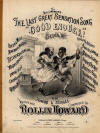 |
Good Enough!. Rollin Howard.
Chicago, IL: Lyon & Healy, 1871.
[view sheet music]
Source:
Historic
American Sheet Music, 1850-1920 (from
Duke University) [top]
|
 |
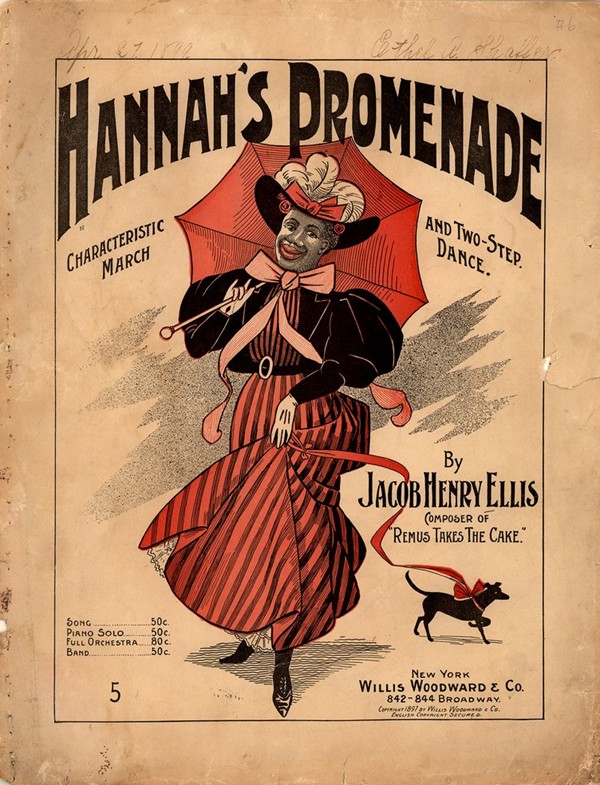
Hannah's Promenade: Characteristic March
and Two-Step Dance. Jacob Henry
Ellis. New York: Willis Woodward, 1897.
[view
sheet music]
Source: International
Music Score Library Project (IMSLP)
[top]
|
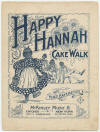 |
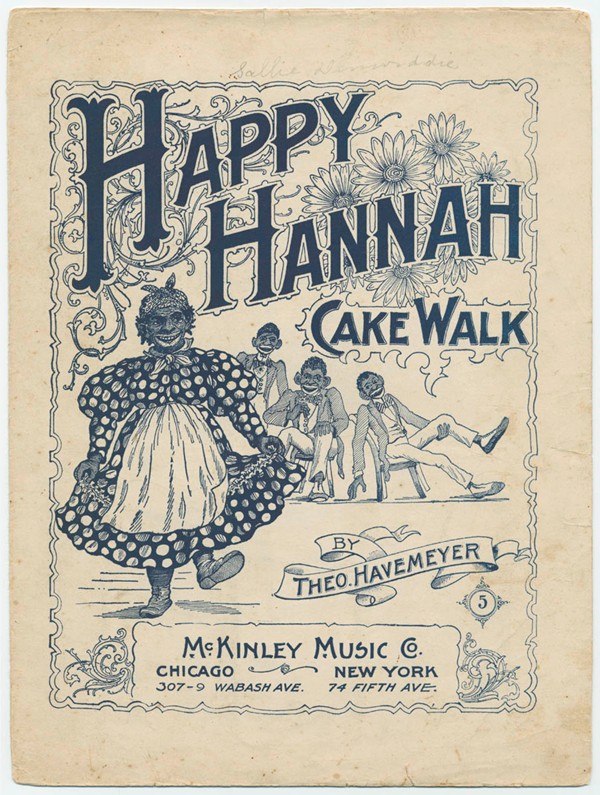
"Happy Hannah": Cake Walk. Theo
Havermeyer. Chicago, IL: McKinley Music Co
Place Pub, 1898.
[view
sheet music]
Source: Maine Music Box
[top]
|
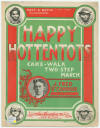 |
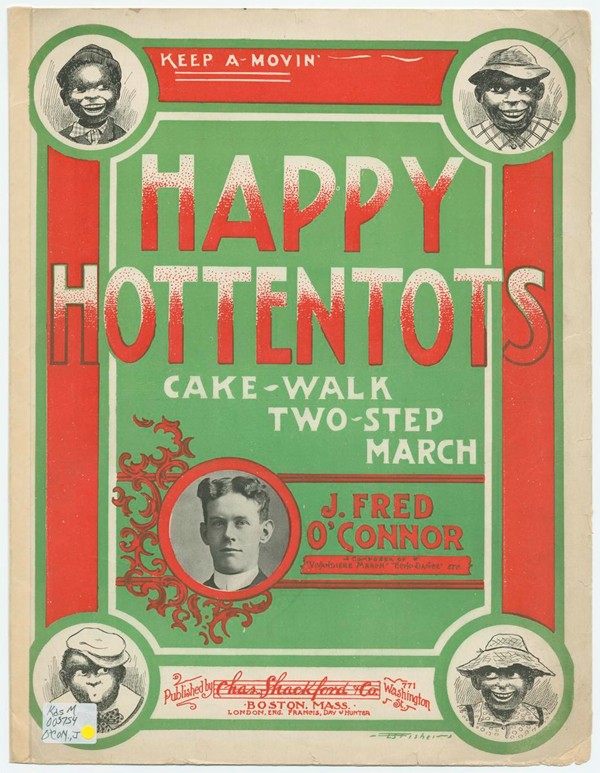
Happy Hottentots: Cake-Walk. J
Fred O'Connor. Boston, MA: Chas Shackford
& Co, 1900.
[view
sheet music]
Source: Maine Music Box
[top]
|
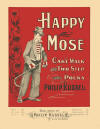 |
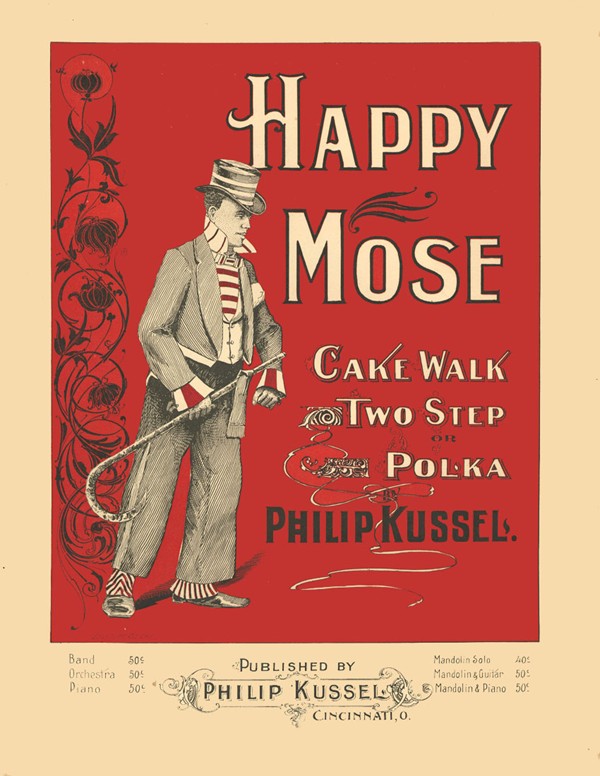
Happy Mose Cake-Walk and Two-Step.
Phil Kussel. Cincinnati, OH: Philip Kussel,
1899.
[view sheet music]
Source:
Charles
H Templeton Sheet Music
Collection (MSU)
[top]
|
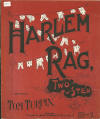 |
Harlem Rag. Tom Turpin (revised
and arr by WH Tyers). New York: Jos W Stern
& Co, 1899.
[view sheet music]
Source:
Library of Congress [top]
|
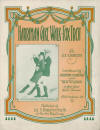 |
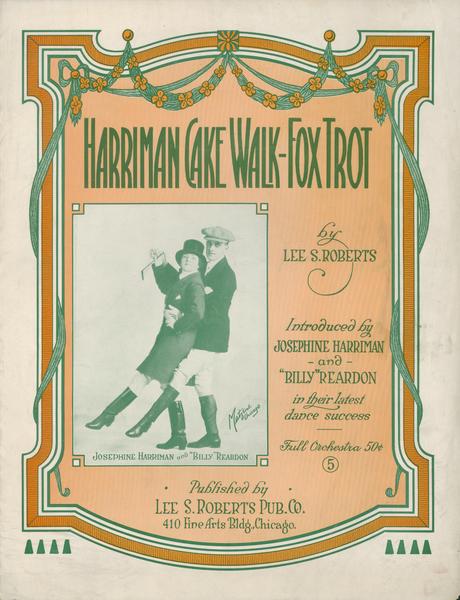
Harriman Cake Walk - Fox Trot.
Lee S Roberts. Chicago, IL: Lee S Roberts
Pub Co, 1915.
[view
sheet music]
Source: IN Harmony:
Sheet Music from Indiana [top]
|
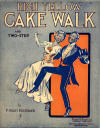 |
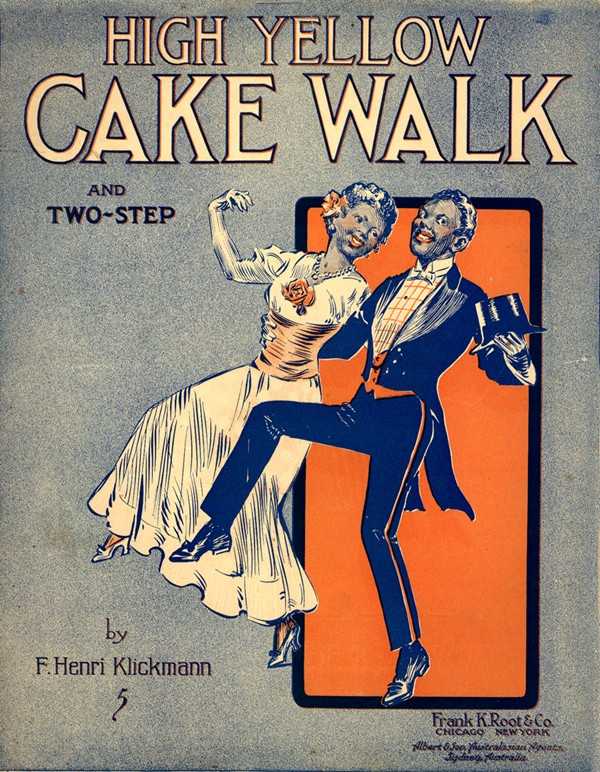
High Yellow Cake Walk and Two-Step.
F Henri Klickmann. Chicago, IL: Frank K Root
& Co, 1915.
[view sheet music]
Source:
Charles
H Templeton Sheet Music
Collection (MSU)
[top]
|
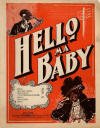 |
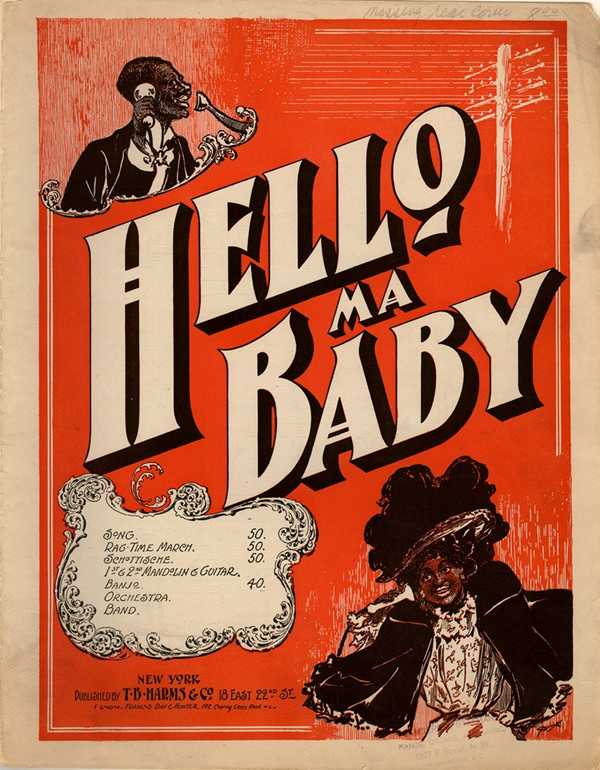
Hello My Baby! Joseph Howard
(lyrics by Ida Emerson). New York: TB Harms,
1899.
[view sheet music]
Source:
Historic
American Sheet Music, 1850-1920 (from
Duke University) [top]
|
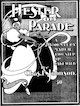 |
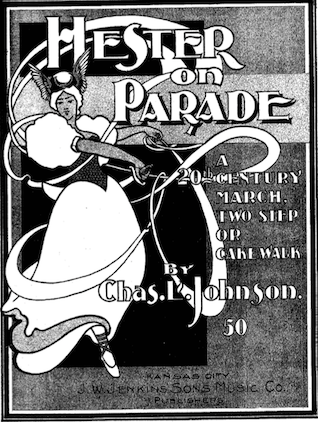
Hester on Parade. Charles L
Johnson. Kansas City, MO: J.W. Jenkins Sons
Music Co., 1899.
[view sheet music] [top]
|
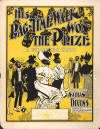 |
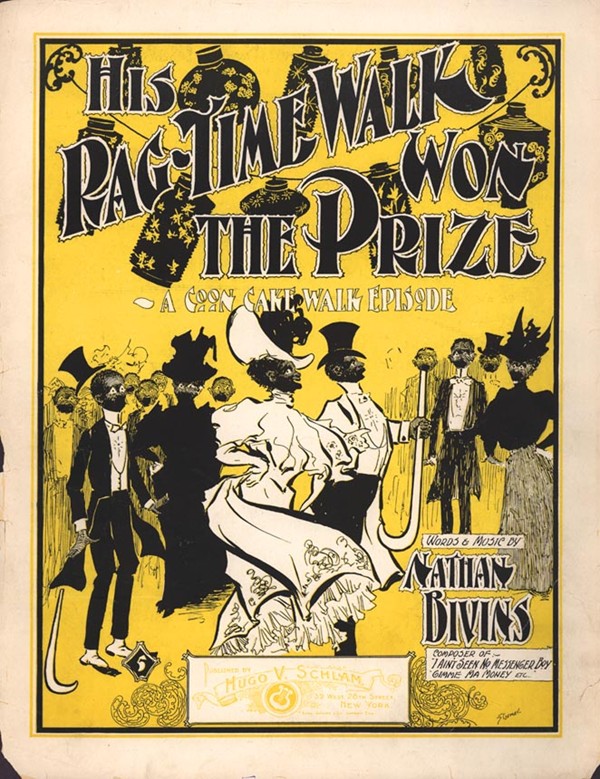
His Rag-Time Walk Won the Prize.
Nathan Bivins. New York: Hugo Schlam, 1899.
[view
sheet music]
Source:
African-American
Sheet Music, 1850-1920 (from Brown
University)
[top]
|
 |
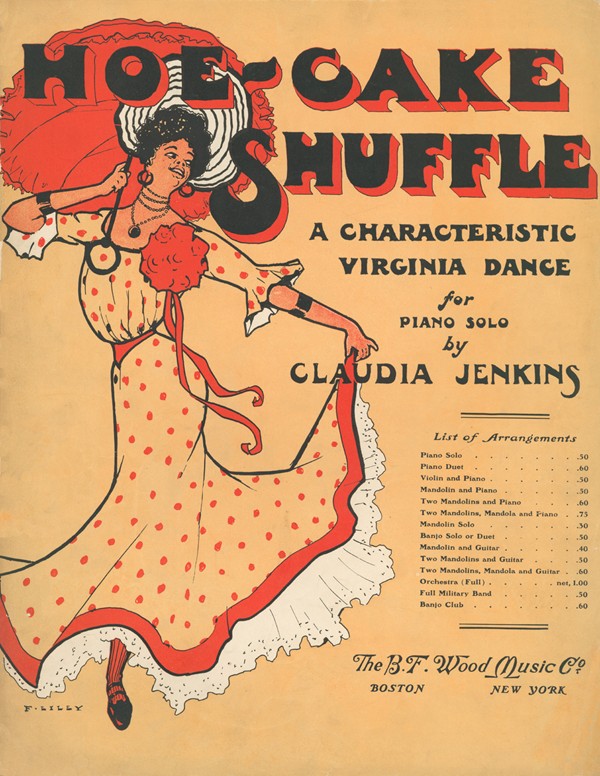
Hoe-Cake Shuffle: A Characteristic
Virginia Dance. Claudia Jenkins.
Boston, MA: BF Wood Music Co, 1903.
[view sheet music]
Source:
Charles
H Templeton Sheet Music
Collection (MSU)
[top]
|
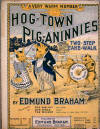 |
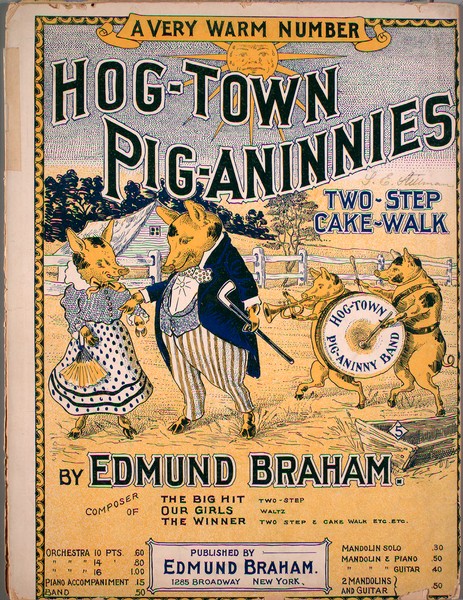
Hog-Town Pig-Aninnies: Two-Step Cake-Walk:
A Very Warm Number. Edmund Braham.
New York: Edmund Braham, 1899.
[view
sheet music]
Source: Lester
S Levy Sheet Music Collection
[top]
|
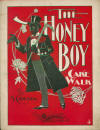 |
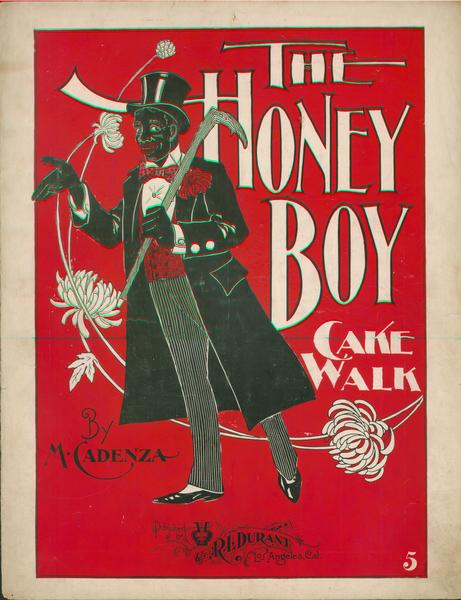
Honey Boy: Cake Walk. M Cadenza.
Los Angeles: RL Durant, 1901.
[view
sheet music]
Source: IN Harmony:
Sheet Music from Indiana [top]
|
|
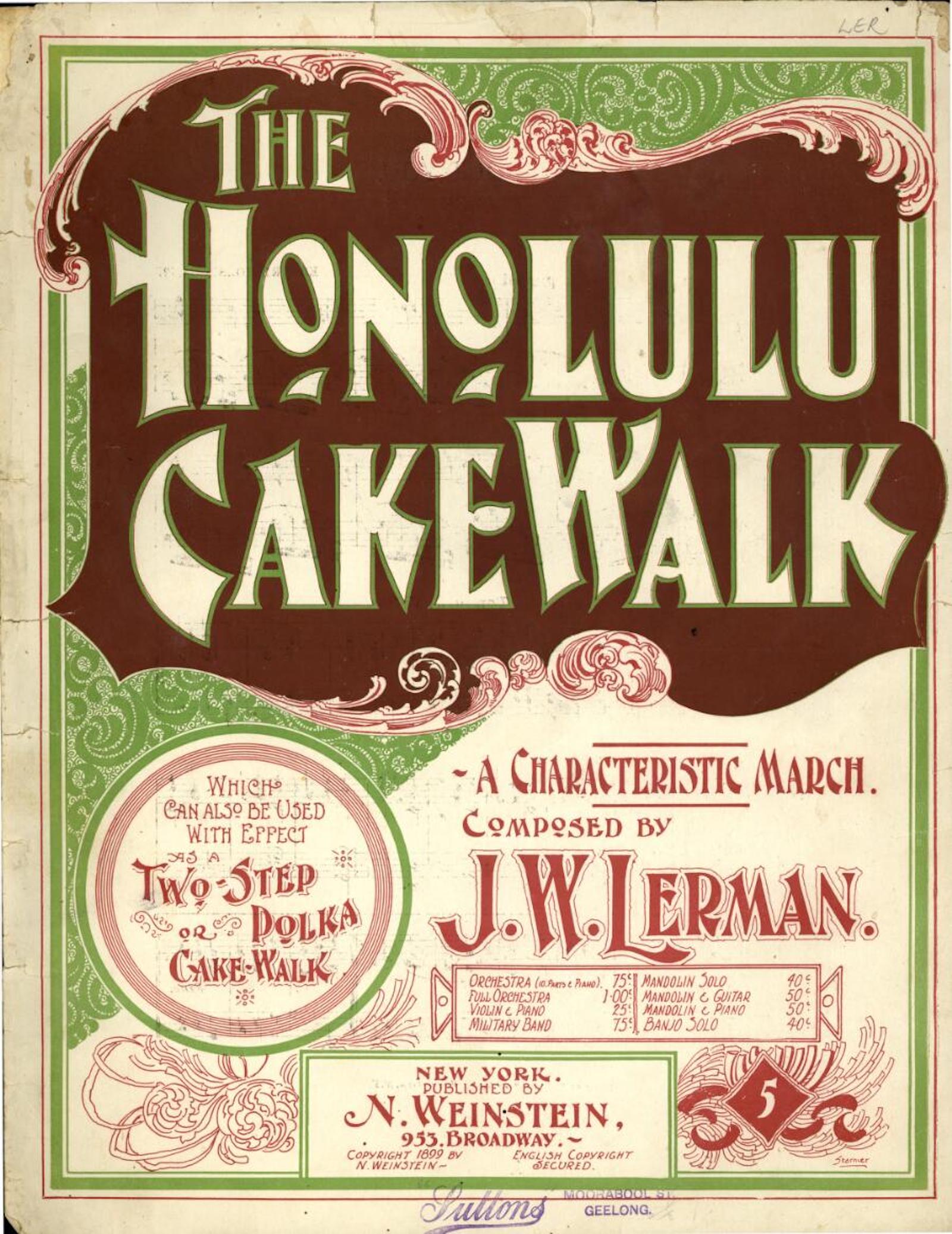
The
Honolulu Cake Walk: A Characteristic March.
JW Lerman. New York: N. Weinstein, 1899.
[view
sheet music]
Source: National
Library of Australia Digital
Collections [top]
|
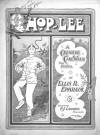 |
Hop-Lee: A Chinese Cake Walk for Piano.
Ellis Ephraim. Baltimore, MD: PJ Lammers,
1901.
[view
sheet music]
Source: Lester
S Levy Sheet Music Collection
[top]
|
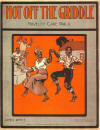 |
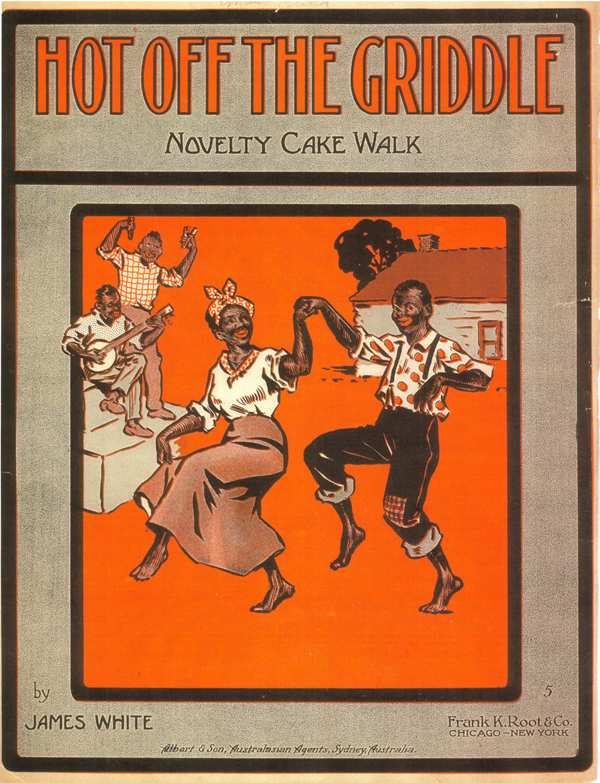
Hot Off the Griddle: Novelty Cakewalk.
James White. Chicago, IL: Frank K Root,
1915.
[view
sheet music]
Source: Personal copy [top]
|
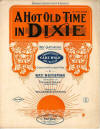 |
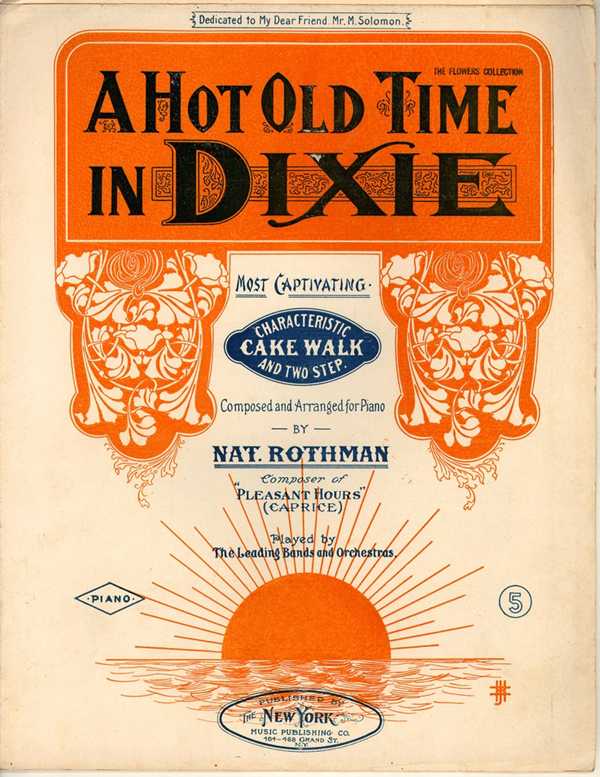
A Hot Old Time in Dixie. Nat
Rothman. New York: New York Music Publishing
Co, 1904.
[view sheet music]
Source:
Historic
American Sheet Music, 1850-1920 (from
Duke University) [top]
|
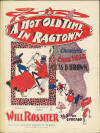 |
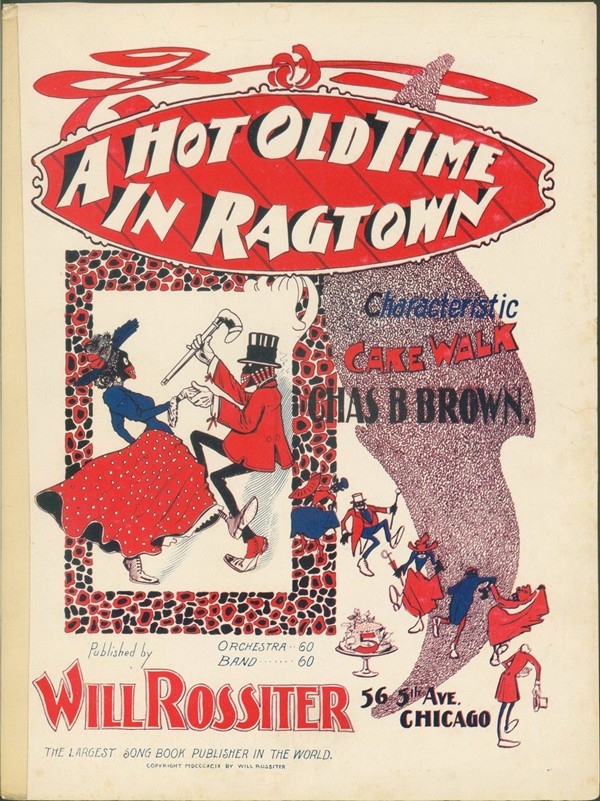
A Hot Old Time in Ragtown:
Characteristic Cakewalk. Charles
B Brown (arranged by Lewis Reiterman).
Chicago, IL: Will Rossiter, 1899.
[view
sheet music]
Source: IN Harmony:
Sheet Music from Indiana top]
|
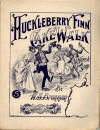 |
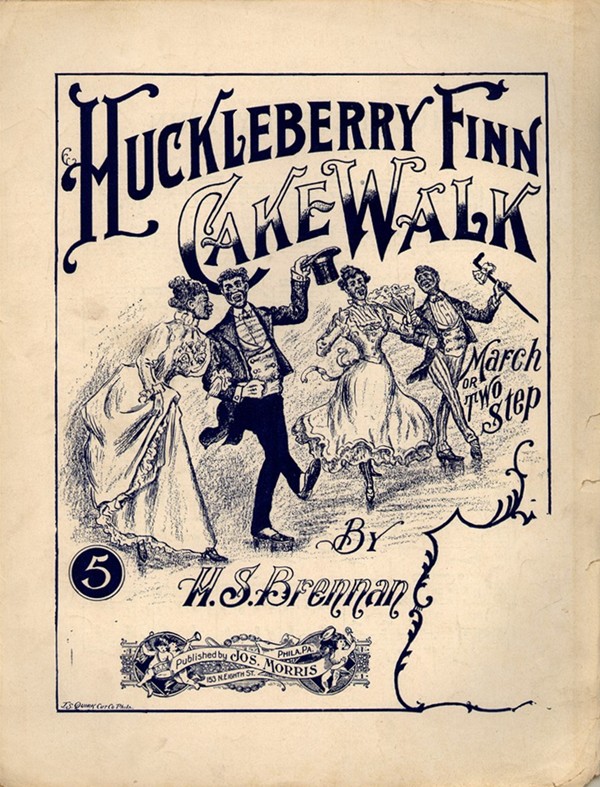
Huckleberry Finn Cake Walk Two-Step.
HS Brennan. Philadelphia, PA: Jos Morris,
1900.
[view
sheet music]
Source:
Historic
American Sheet Music, 1850-1920 (from
Duke University) [top]
|
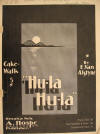 |
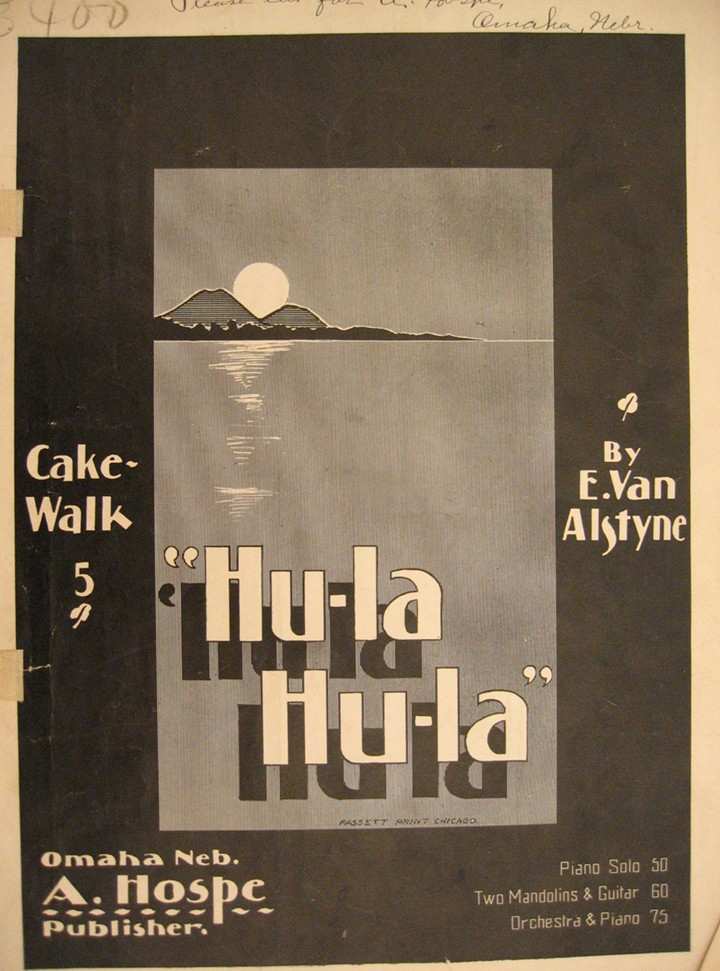
Hu-la Hu-la Cake Walk. Egbert
van Alstyne. Omaha, NB: A Hospe, 1899.
[view sheet
music] [listen to 1915 recording
by John Philip Sousa]
Source: Digital copy
provided by Peter Persoff [top]
|
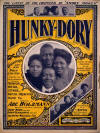 |
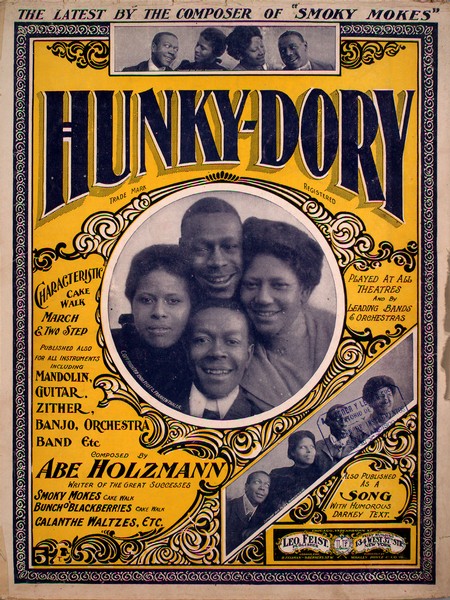
Hunky-Dory: Characteristic Cake Walk,
March, and Two Step. Abe Holzmann.
New York: Leo Feist, 1900.
[view
sheet music]
Source: Lester
S Levy Sheet Music Collection
[top]
|
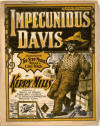 |
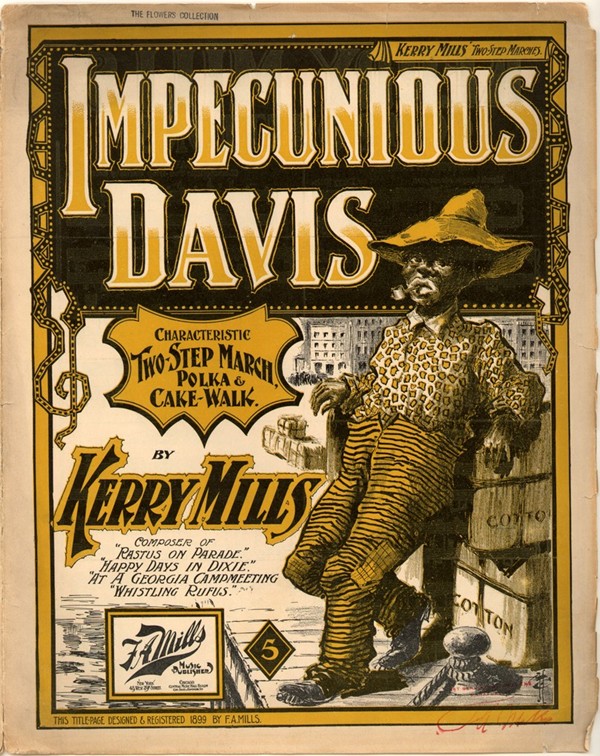
Impecunious Davis: Characteristic
Two-Step, March and Cake-Walk.
Kerry Mills. New York: FA Mills, 1899.
[view sheet music]
Source:
Historic
American Sheet Music, 1850-1920 (from
Duke University) [top]
|
 |
In Dahomey: Cakewalk Smasher.
Percy Grainger. (circa 1903-1909).
[view sheet music] [listen
to performance by Marc-André Hamelin] [top]
|
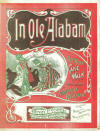 |
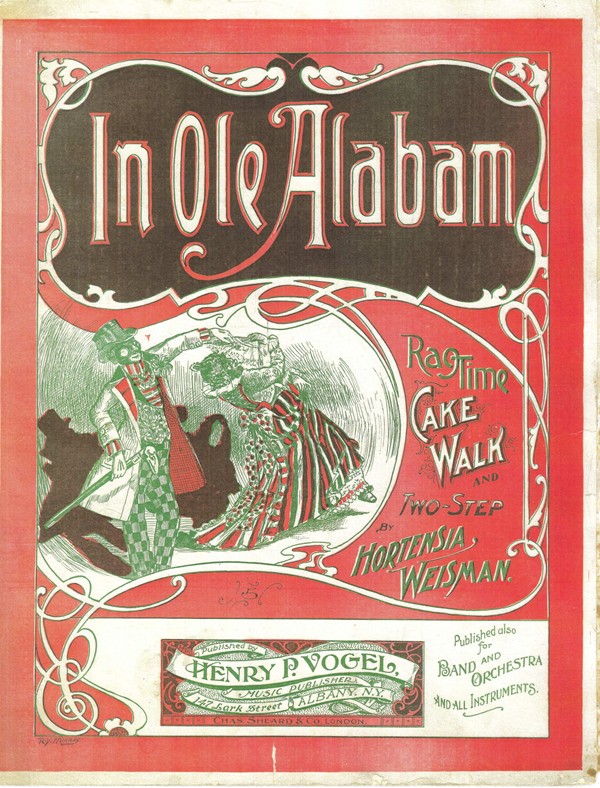
In Ole Alabam: Rag Time Cake Walk and
Two-Step. Hortensia Weisman.
Albany, NY: Henry P Volgel, 1900.
[view
sheet music]
Source: Photocopy from the New
York State Library [top]
|
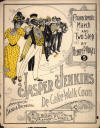 |
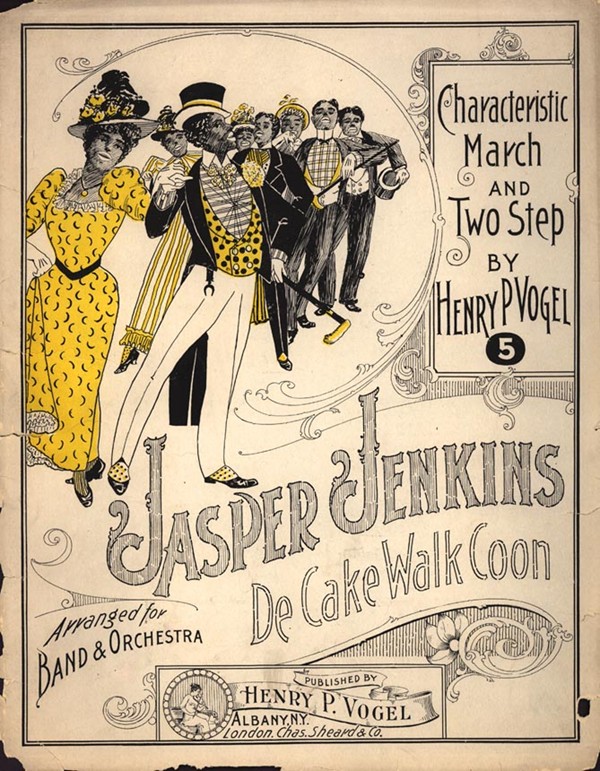
Jasper Jenkins: Characteristic Two-Step.
Henry Vogel. Albany, NY: Henry Vogel, 1898.
[view
sheet music]
Source:
African-American Sheet
Music, 1850-1920 (from Brown
University) [top]
|
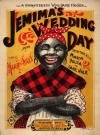 |
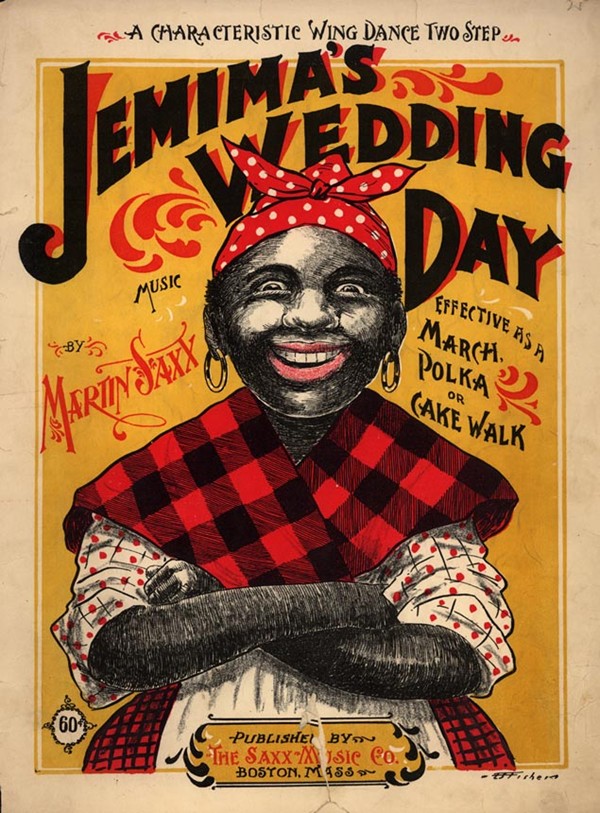
Jemima's Wedding Day: Cake Walk.
Martin Saxx (words by Jere O'Halloran).
Boston, MA: Saxx Music Co, 1899.
[view
sheet music]
Source:
Historic
American Sheet Music, 1850-1920 (from
Duke University)
[top]
|
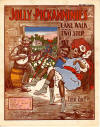 |
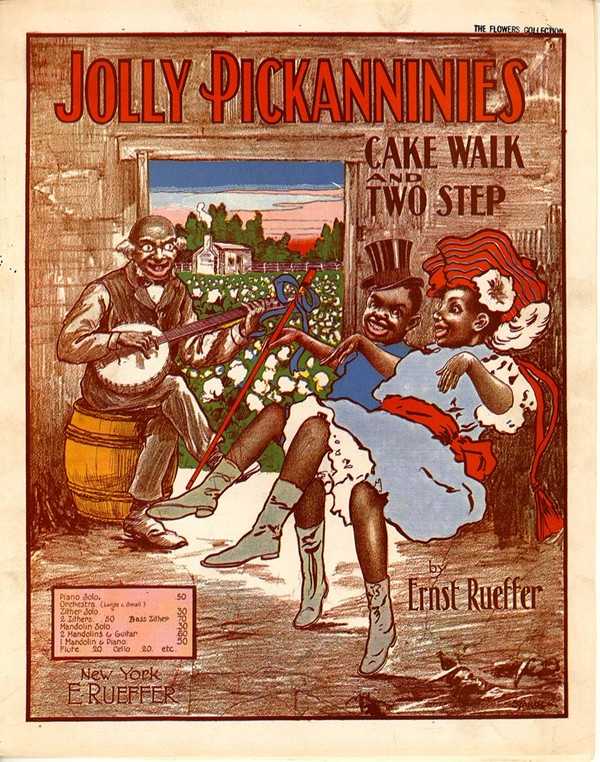
Jolly Pick*nninies:
Cake Walk and Two Step. Ernst
Rueffer. New York: E Rueffer, 1905.
[view sheet music]
Source:
Historic
American Sheet Music, 1850-1920 (from
Duke University) [top]
|
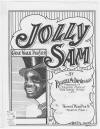 |
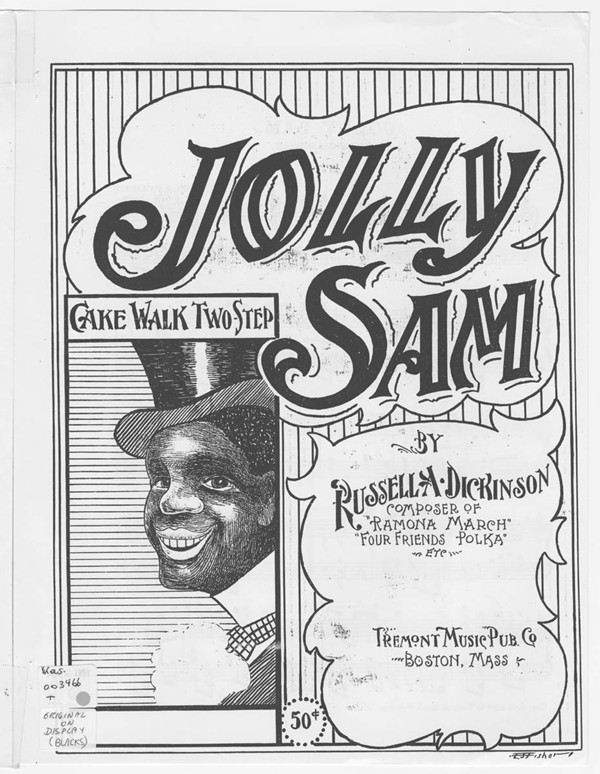
Jolly Sam: March & Cake Walk.
Russell Dickinson. Boston, MA: Tremont Music
Pub Co, 1899.
[view
sheet music]
Source: Maine Music Box
[top]
|
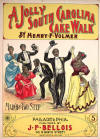 |
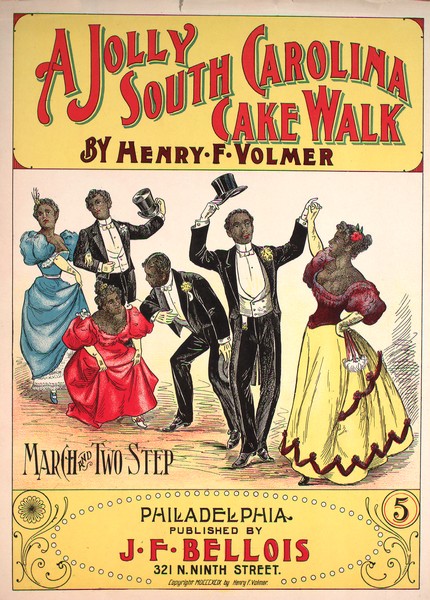
A Jolly South Carolina Cake Walk: March
and Two Step. Henry Volmer.
Philadelphia, PA: JF Bellois, 1899.
[view
sheet music]
Source: Lester
S Levy Sheet Music Collection
[top]
|
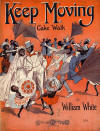 |
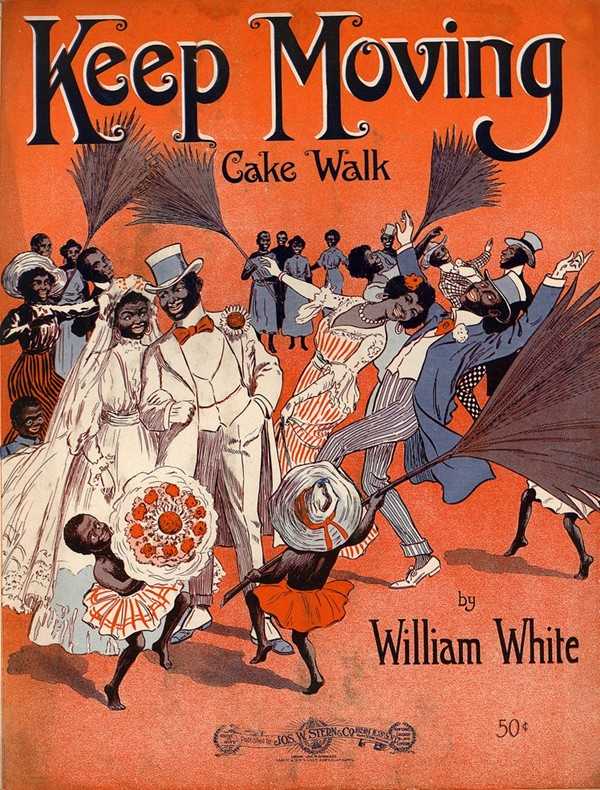
Keep Moving Cake Walk. William
White. New York: Jos W Stern, 1915.
[view sheet music]
Source:
Historic
American Sheet Music, 1850-1920 (from
Duke University) [top]
|
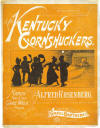 |
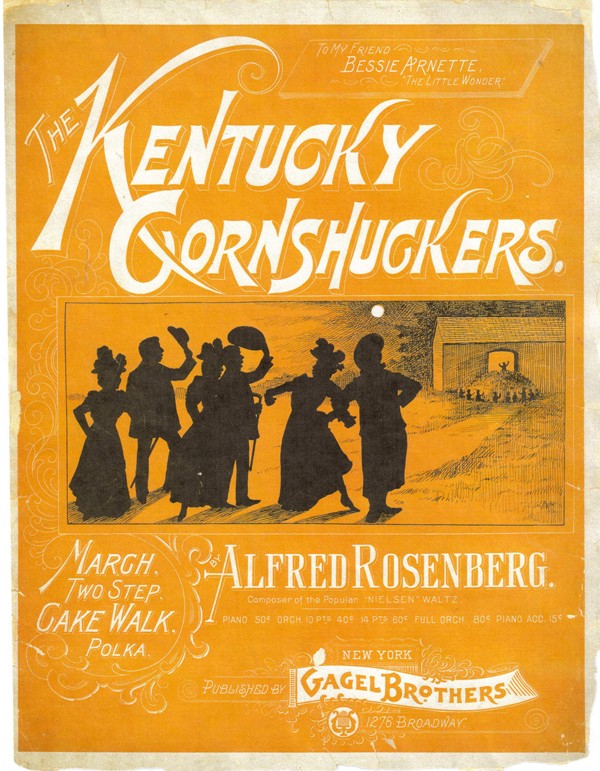
The Kentucky Cornshuckers: Two Step
March and Cake Walk. Alfred
Rosenberg. New York: Gagel Bros, 1899.
[view
sheet music]
Source: Photocopy from the New
York State Library [top]
|
|
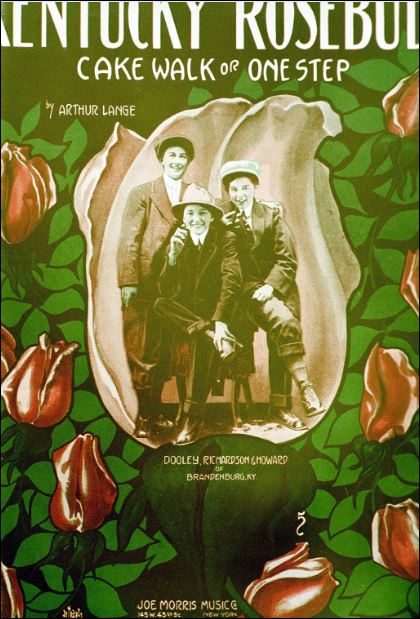
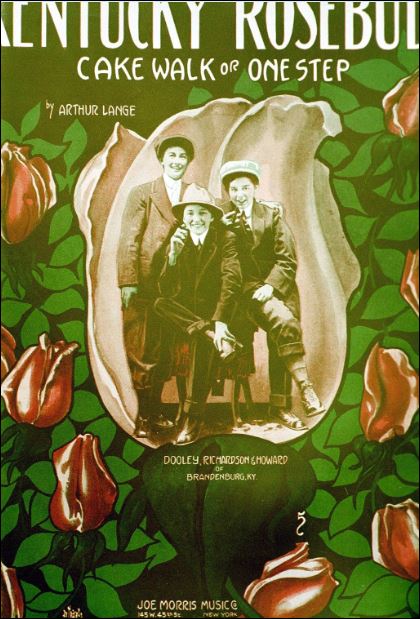
Kentucky Rosebuds: Cake Walk or One Step.
Arthur Lange. New York: Joe Morris Music,
1915.
[view
sheet music]
Source: Photocopy provided
by a reader [top]
|
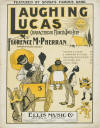 |
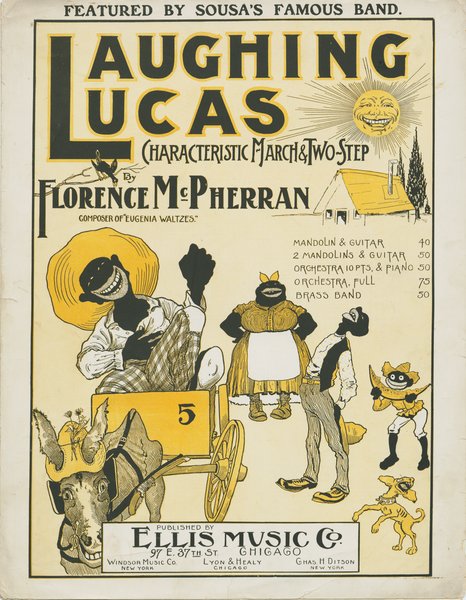
Laughing Lucas: Characteristic March and
Two-Step. Florence McPherran.
Chicago, IL: Ellis Music Co, 1901.
[view
sheet music]
Source: IN Harmony:
Sheet Music from Indiana [top]
|
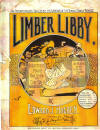 |
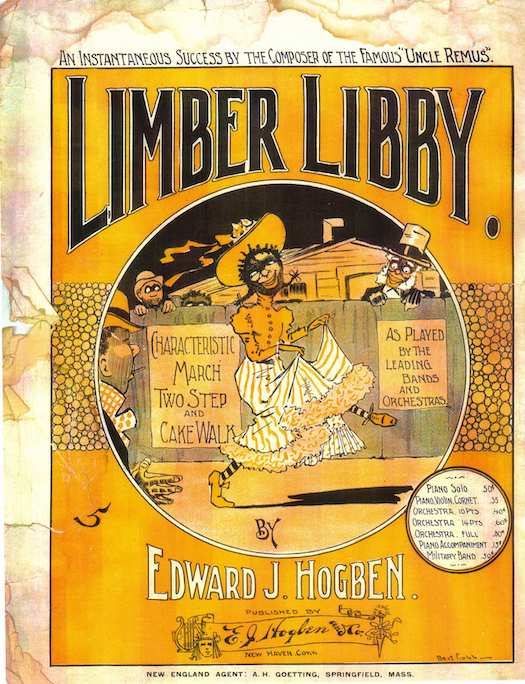
Limber Libby: Characteristic March, Two
Step and Cake Walk. Edward
Hogben. New Haven, CT: Edward J Hogben,
1900.
[view
sheet music]
Source: Copy from University
of Toronto Music Library [top]
|
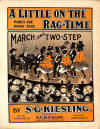 |
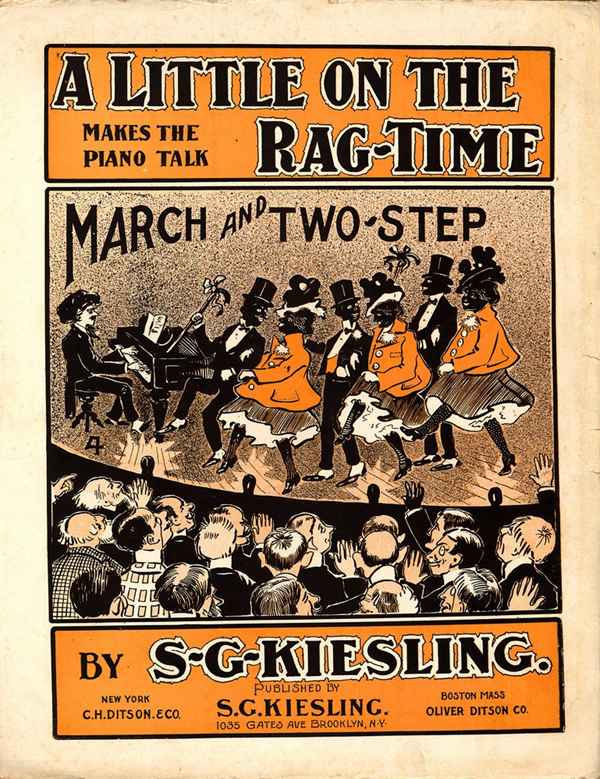
A Little on the Rag-Time (Makes the
Piano Talk): Cake walk, March and
Two-Step. SG Kiesling. New York:
CH Ditson, 1900.
[view sheet music]
Source:
Historic
American Sheet Music, 1850-1920 (from
Duke University) [top]
|
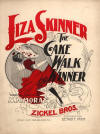 |
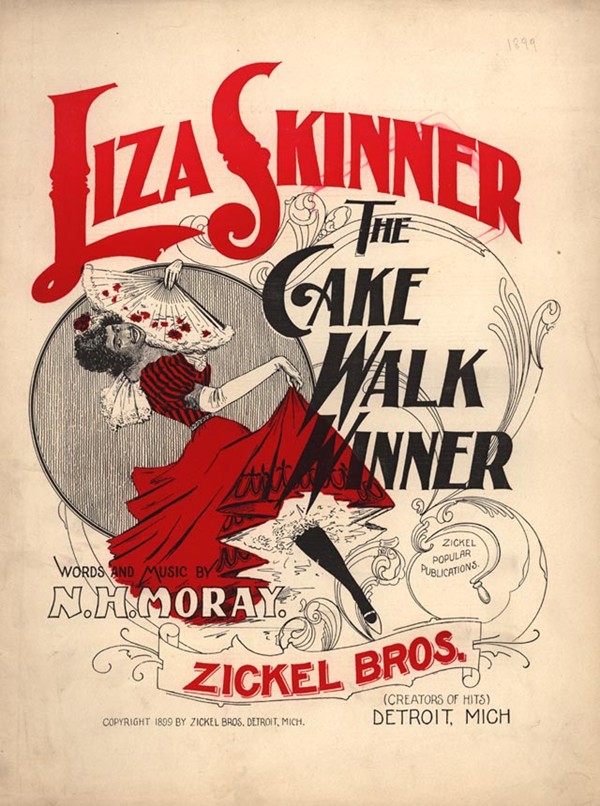
Liza Skinner: De Cake-Walk Winner.
NH Moray. Detroit, MI: Zickel Bros, 1899.
[view
sheet music]
Source:
African-American Sheet
Music, 1850-1920 (from Brown
University) [top]
|
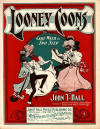 |
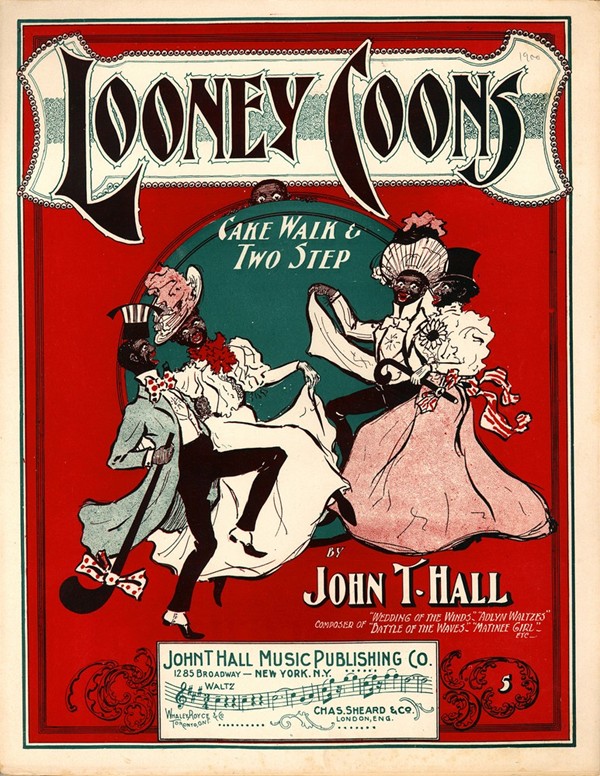
Looney C**ns: Cake Walk & Two Step.
John T. Hall. New York: John T. Hall Music
Publishing Co, 1900.
[view
sheet music]
Source:
Historic
American Sheet Music, 1850-1920 (from
Duke University) [top]
|
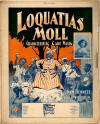 |
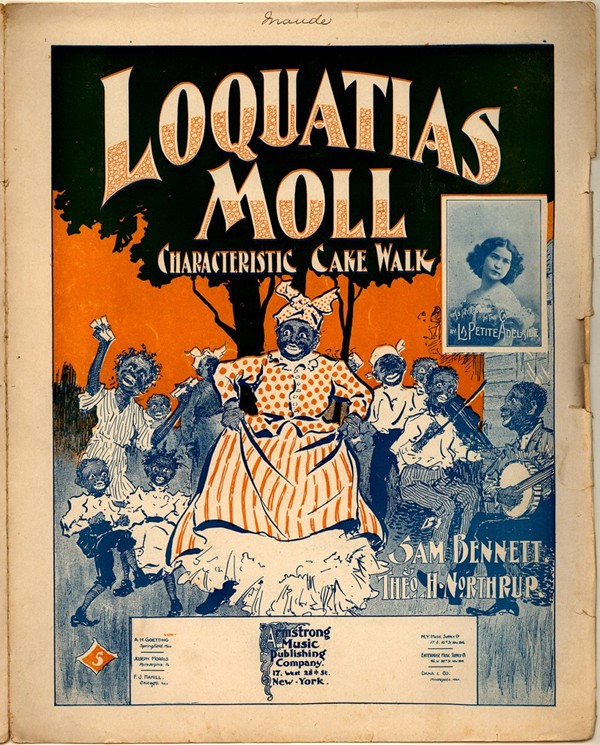
Loquatias Moll: Characteristic Cake Walk.
Sam Bennett and Theodore Northrup. New York:
Armstrong Music, 1900.
[view sheet music]
Source:
Historic
American Sheet Music, 1850-1920
(from Duke University)
[top]
|
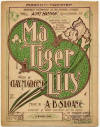 |
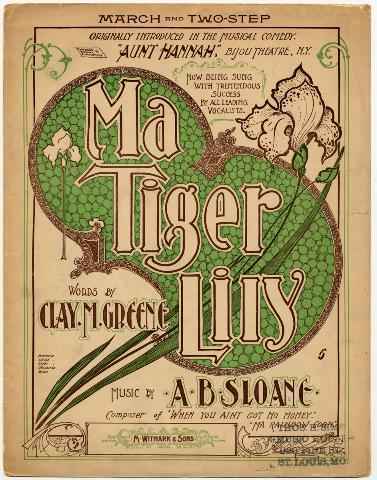
Ma Tiger Lily. AB Sloane. New
York: M Witmark & Sons, 1900.
[view sheet music]
Source: Lester
S Levy Sheet Music Collection
[top]
|
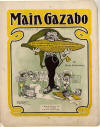 |
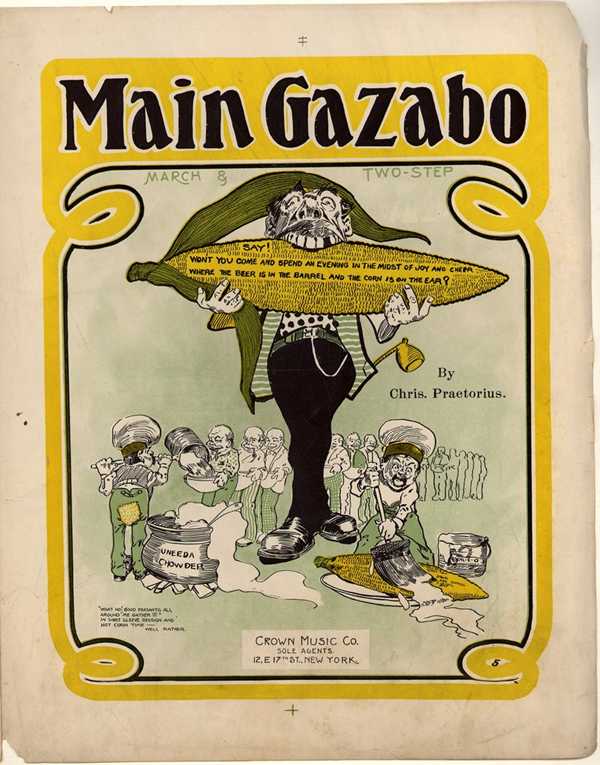
The Main Gazabo at a Corn Party: Cake
Walk. Chris Praetorius. New
York: Crown Music, 1903.
[view sheet music]
Source:
Historic
American Sheet Music, 1850-1920
(from Duke University) [top]
|
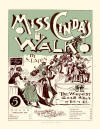 |
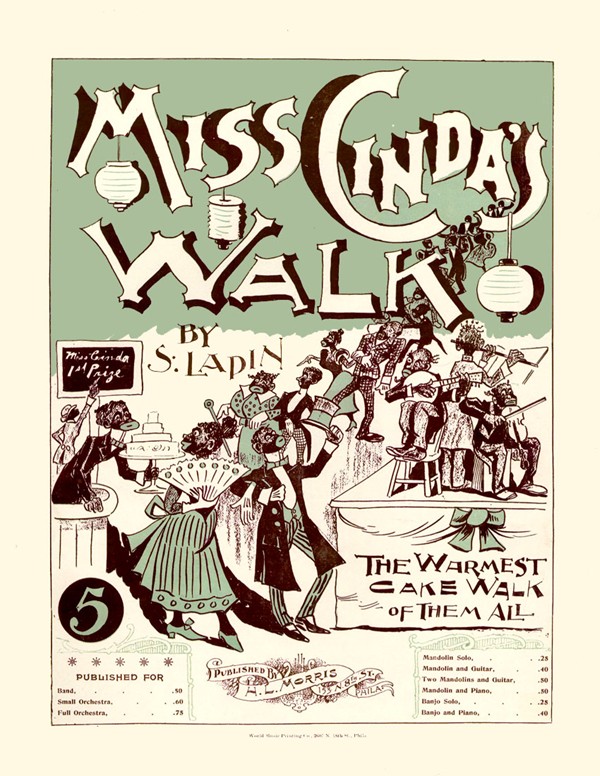
Miss Cinda's Walk Two-Step and Cake-Walk.
Samuel Lapin. Philadelphia, PA: HL Morris,
1899.
[view sheet music]
Source:
Charles
H Templeton Sheet Music
Collection (MSU)
[top]
|
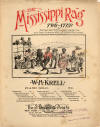 |
Mississippi Rag. William
Krell. New York: S Brainard's Sons, 1897.
[view sheet music]
Source:
Historic
American Sheet Music, 1850-1920 (from
Duke University)
[top]
|
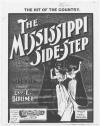 |
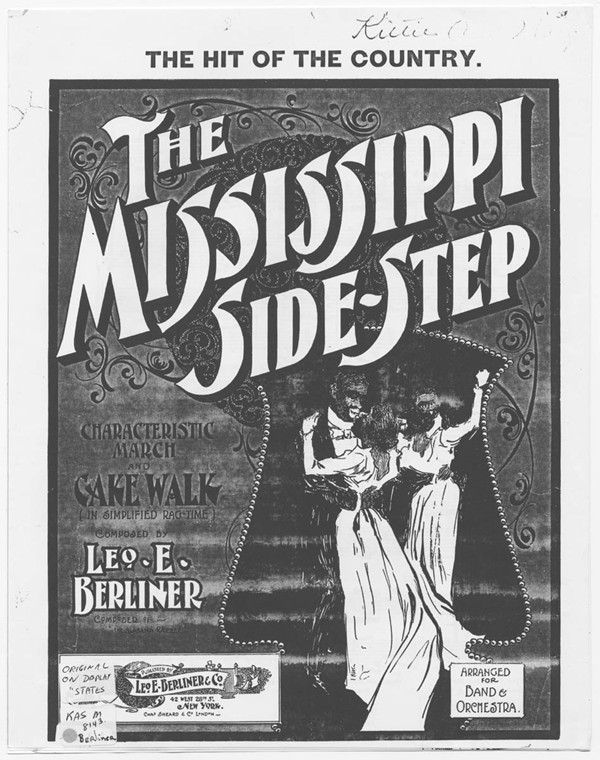
The Mississippi Side-Step: March and
Cake Walk. Leo E. Berliner. New
York: Berliner & Co, 1899.
[view
sheet music]
Source: Maine Music Box
[top]
|
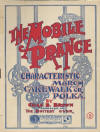 |
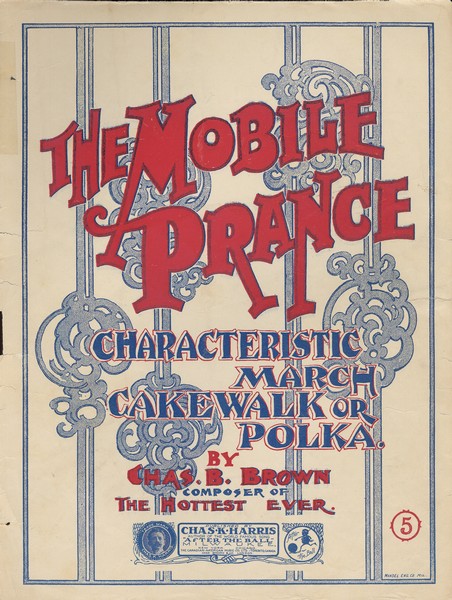
The Mobile Prance: Characteristic March,
Cakewalk or Polka. Chas B Brown.
Milwaukee, WI: Chas K Harris, 1901.
[view
sheet music]
Source: Lester
S Levy Sheet Music Collection
[top]
|
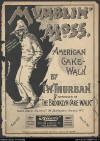 |
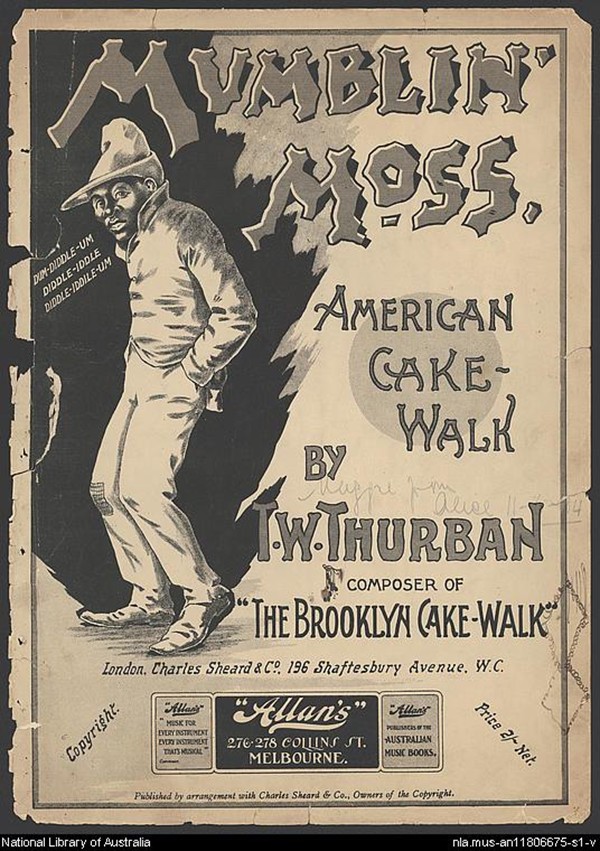
Mumblin' Moss: American Cake-Walk.
TW Thurban. Melbourne: Allan's, 1902.
[view
sheet music]
Source:
National
Library of Australia Digital
Collections [top]
|
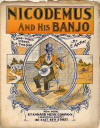 |
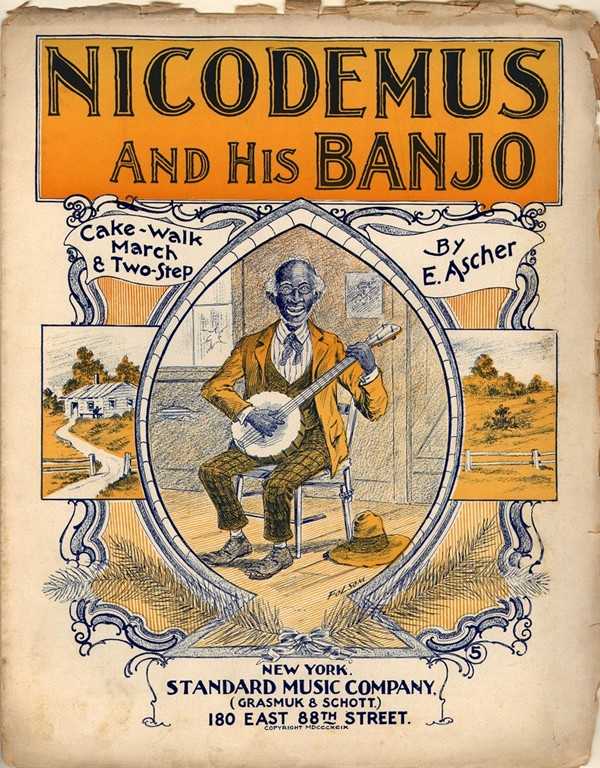
Nicodemus and His Banjo: Cake-walk March
& Two Step. E Ascher. New
York: Standard Music Company, 1899.
[view sheet music]
Source:
Historic
American Sheet Music, 1850-1920 (from
Duke University) [top]
|
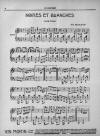 |
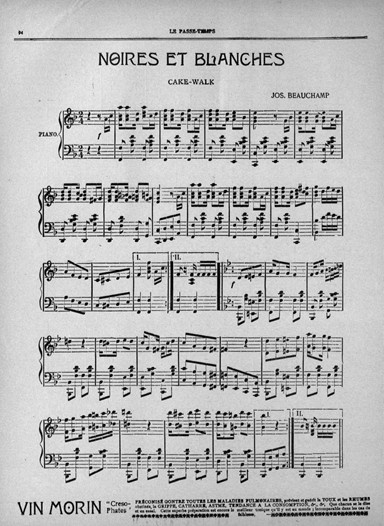
Noires et blanches: cake-walk.
Beauchamp. Jos. 1904.
[view sheet
music]
Source: Le Passe
Temps (Vol. 10, no 236 (9 avril
1904) at 94- 95) as digitized by the
National Library of Québec [top]
|
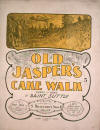 |
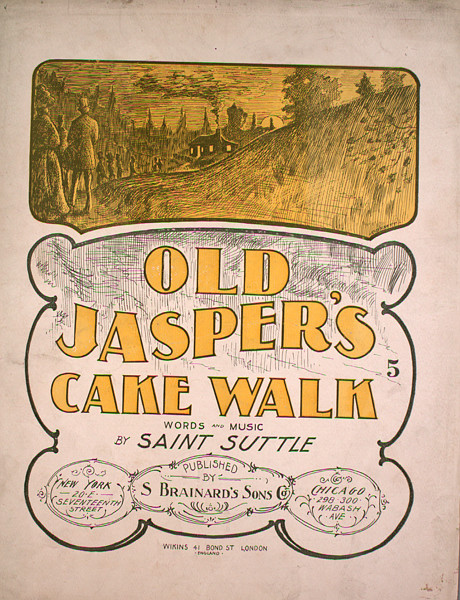
Old Jasper's Cake Walk. Saint
Suttle. New York: S Brainard's Sons Co,
1899.
[view
sheet music]
Source:Lester
S Levy Sheet Music Collection
[top]
|
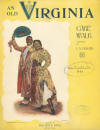 |
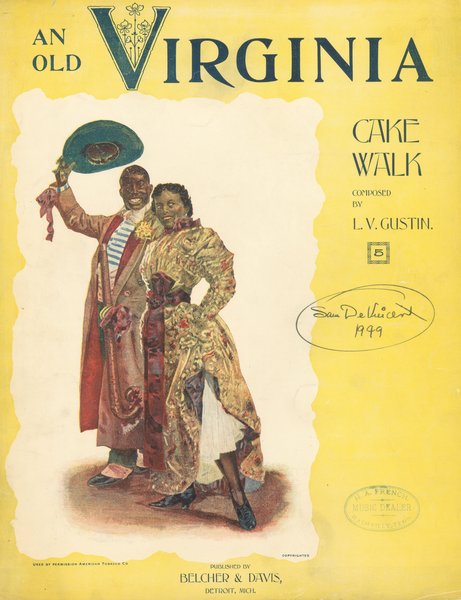
An Old Virginia Cake Walk.
Louise Gustin. Detroit, MI: Belcher
& Davis, 1899.
[view
sheet music]
Source: IN Harmony:
Sheet Music from Indiana [top]
|
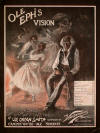 |
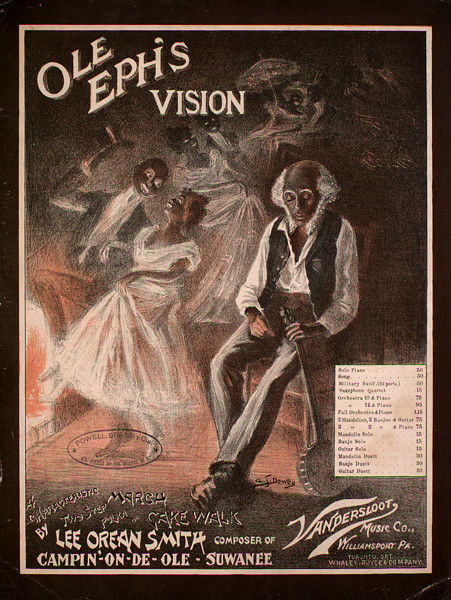
Ole Eph's Vision: A Characteristic March
(Two-Step Polka or Cake Walk). Lee
Orean Smith. Williamsport, PA: Vandersloot
Music Pub Co, 1899.
[view
sheet music]
Source: Lester
S Levy Sheet Music Collection
[top]
|
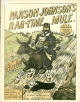 |
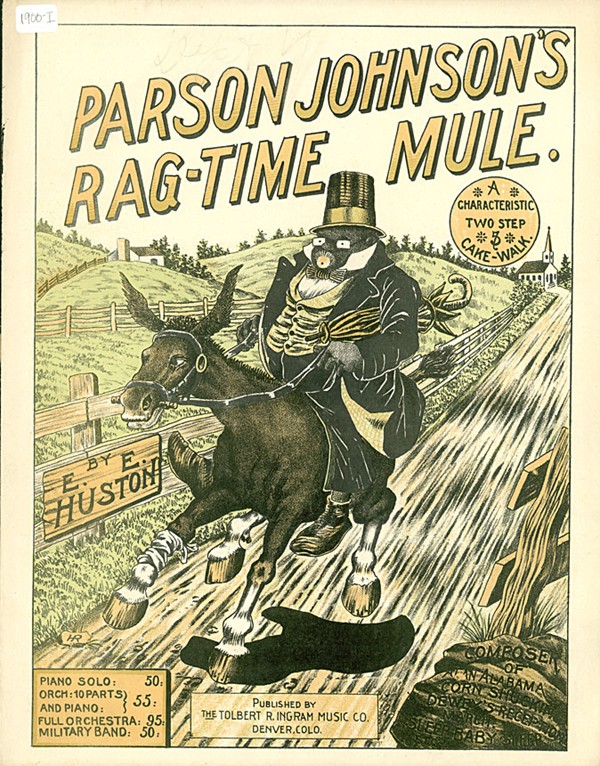
Parson Johnson's Rag-Time Mule: A
Characteristic Two Step and Cakewalk.
EE Huston. Denver, CO: Tolbert R Ingram Music
Co, 1900.
[view sheet music]
Source:
University of Colorado
Digital Sheet Music Collection
[top]
|
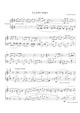 |
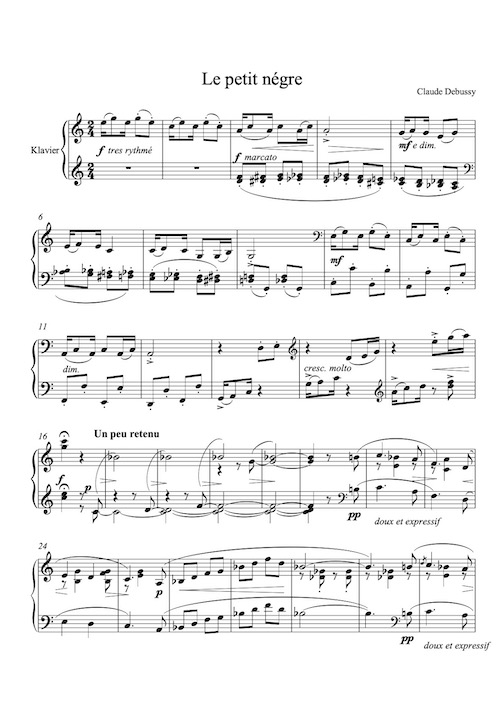
Le petite nègre:
cakewalk. Claude Debussy (1909).
[view sheet music] [listen
to performance by Ichiro Kaneko] [top]
|
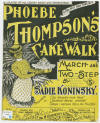 |
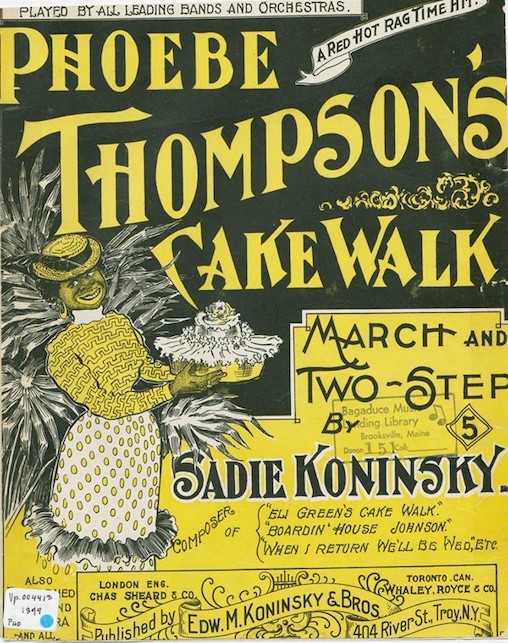
Phoebe Thompson's Cake Walk.
Sadie Koninsky. New York: Edw M Koninsky
& Bros, 1899.
[view
sheet music]
Source: Maine Music Box
[top]
|
 |
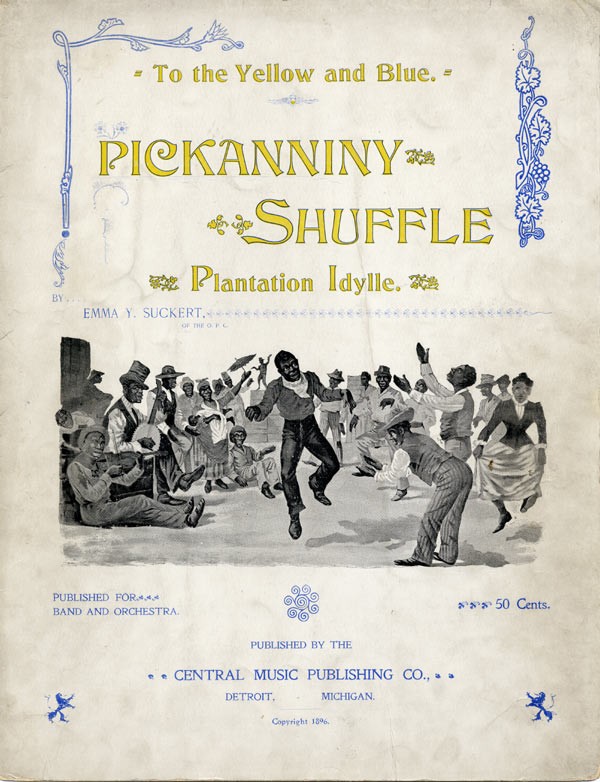
Pick*ninny Shuffle. Emma
Suckert. Detroit, MI: Central Music Pub Co,
1896.
[view
sheet music]
Source: The
E Azalia Hackley Collection, Detroit
Public Library [top]
|
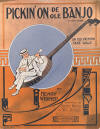 |
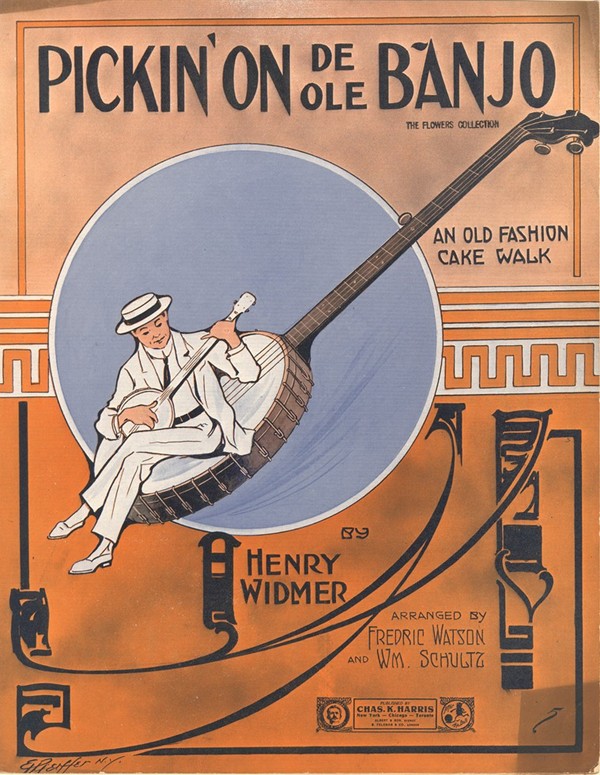
Pickin' On De Ole Banjo: Old Fashion Cake
Walk. Henry Widmer. New York: Chas
K Harris, 1915.
[view sheet music]
Source:
Historic
American Sheet Music, 1850-1920 (from
Duke University) [top]
|
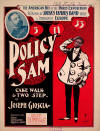 |
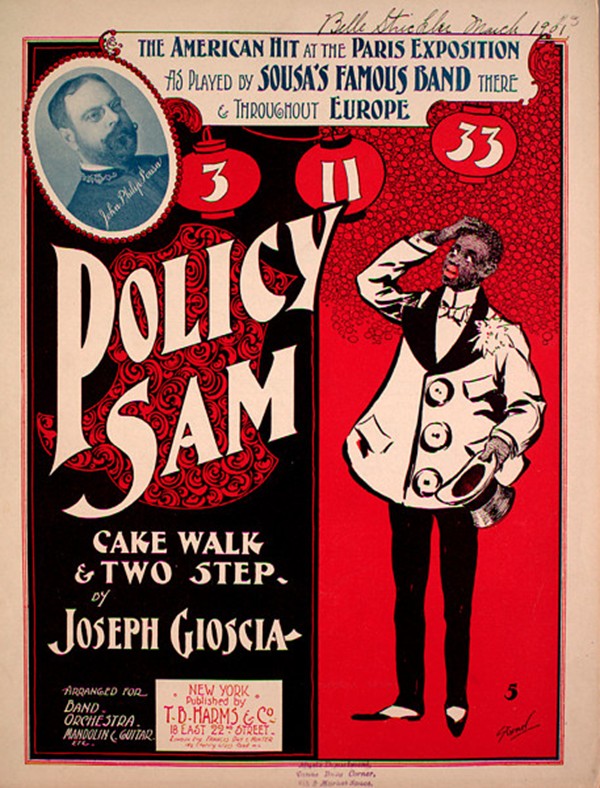
Policy Sam: Cake Walk & Two Step.
Joseph Gioscia. New York: TB Harms & Co,
1899.
[view
sheet music]
Source: Lester
S Levy Sheet Music Collection
[top]
|
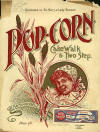 |
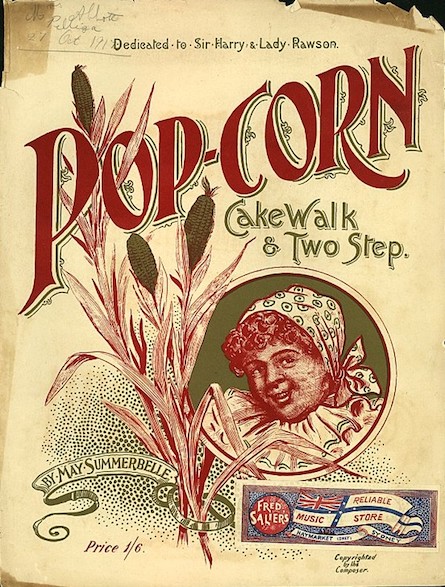
Pop-corn: Cake Walk & Two Step.
May Summerbelle. Australia?: sn, 189-?.
[view
sheet music]
Source:
National
Library of Australia Digital
Collections [top]
|
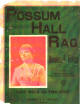 |
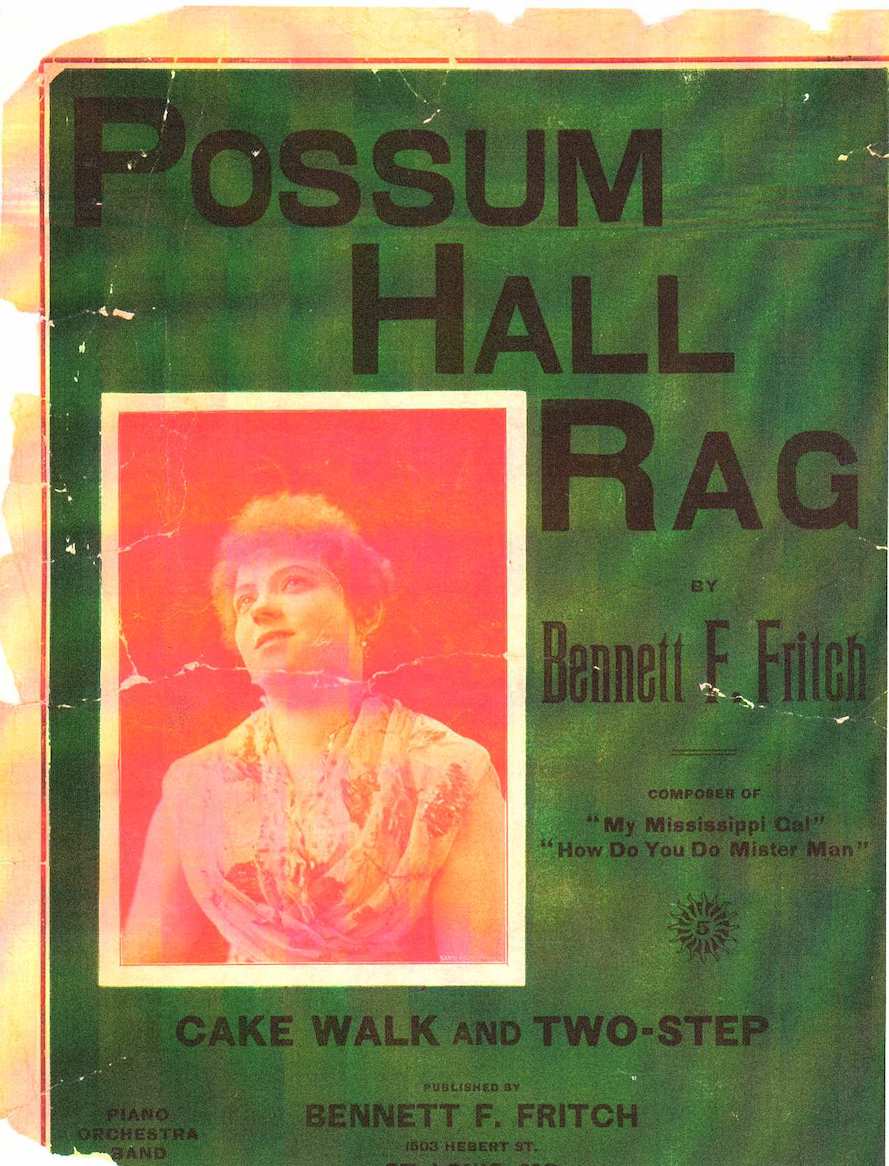
Possum Hall Rag: Cake Walk and Two-Step.
Bennett Fritch. Copyright: Bennett Fritch,
1899.
[view
sheet music]
Source: Personal copy [top]
|
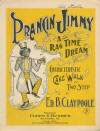 |
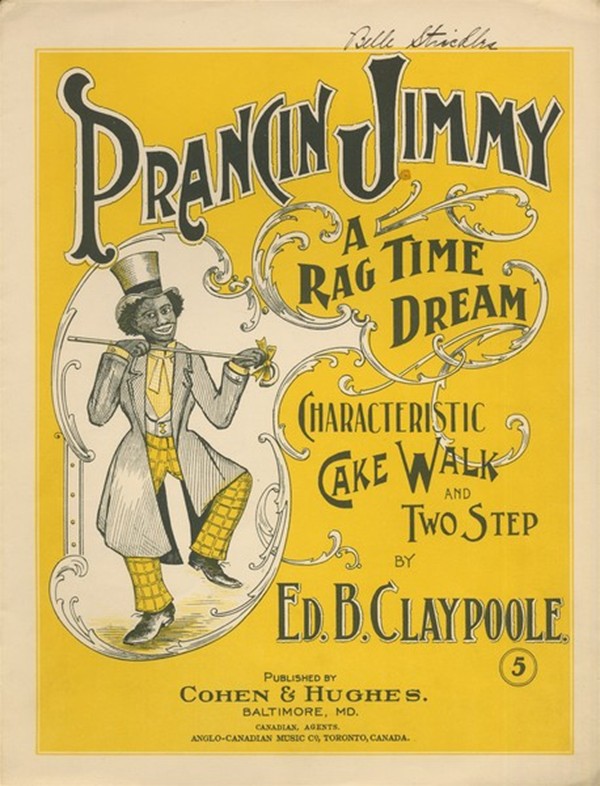
Prancin Jimmy: A Rag Time Dream:
Characteristic Cake Walk and Two Step.
EB Claypoole. Baltimore, MD: Cohen &
Hughes, 1899.
[view
sheet music]
Source:Lester
S Levy Sheet Music Collection [top]
|
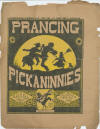 |
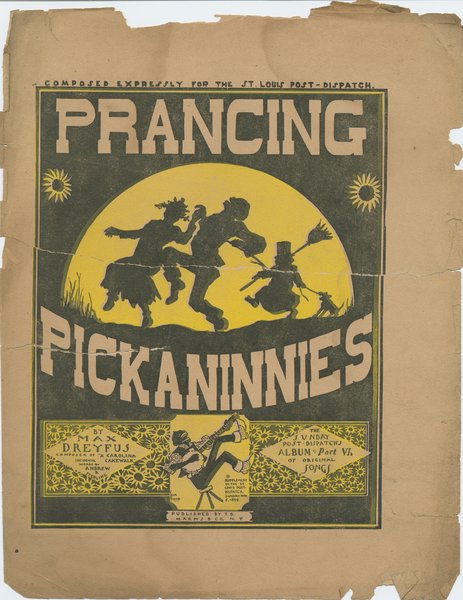
Prancing Pickaninnies: Cake Walk.
Max Dreyfus. St Louis, MO: St Louis
Post-Dispatch, 1899.
[view
sheet music]
Source: IN Harmony:
Sheet Music from Indiana [top]
|
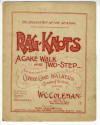 |
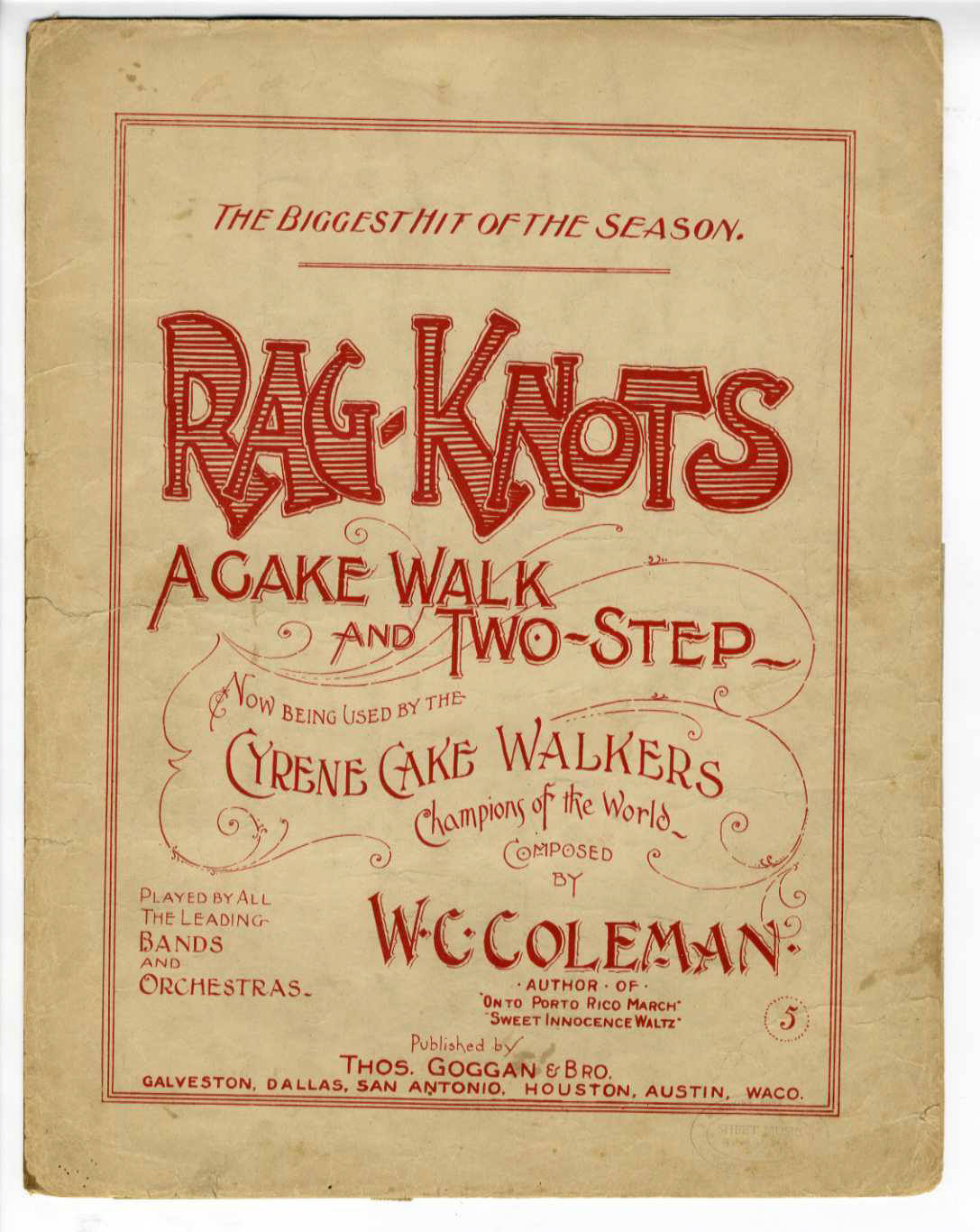
Rag Knots: A Cake Walk and Two-Step.
W.C. Coleman. Galveston, TX: Thos. Goggan
& Bro, 1899.
[view sheet
music]
Source: Digital copy
provided by Peter Persoff [top]
|
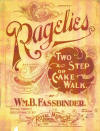 |
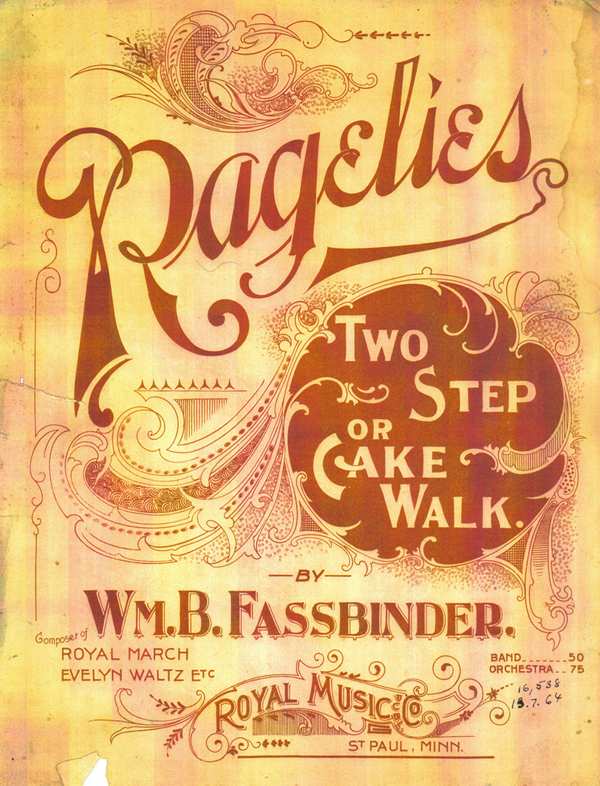
Ragelies: Two Step or Cake Walk.
WM Fassbinder. St Paul, MN: WM Fassbinder,
1899.
[view sheet
music]
Source: Copy from University
of Toronto Music Library [top]
|
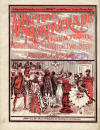 |
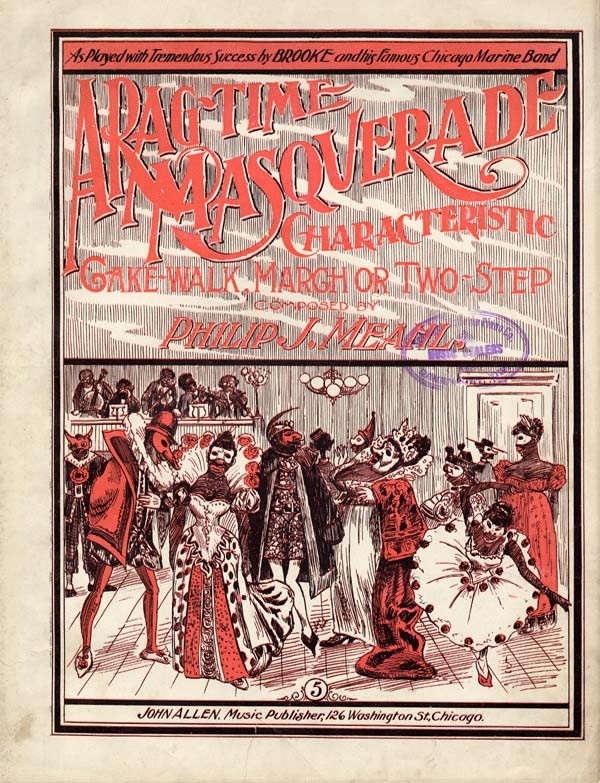
A Ragtime Masquerade: Cake Walk and Two
Step. Philip Meahl. Chicago, IL:
John Allen, 1900.
[view
sheet music]
Source: The
E Azalia Hackley Collection, Detroit
Public Library [top]
|
|
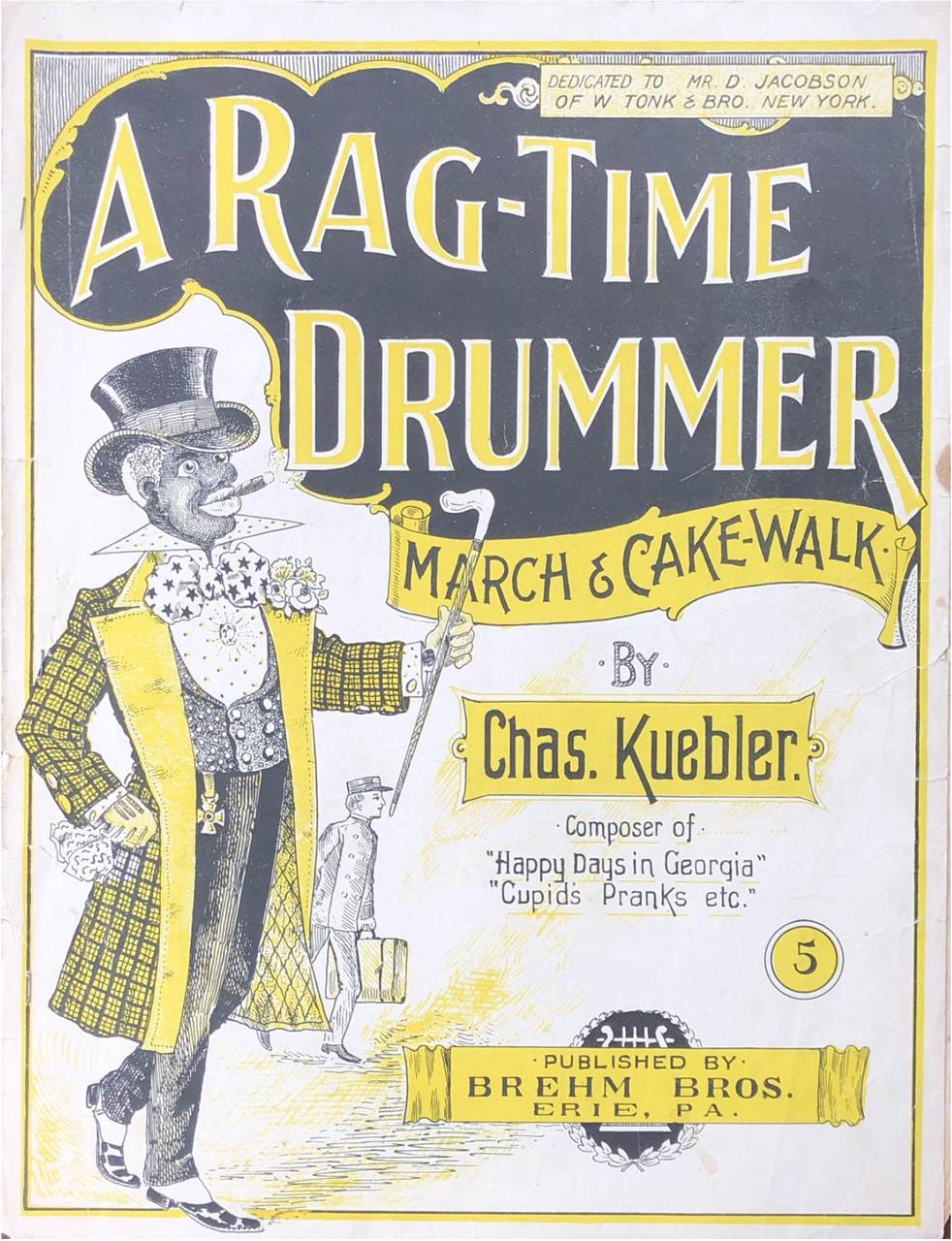
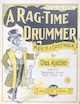
A Rag-Time Drummer: March & Cake
Walk. Charles Kuebler. Erie, PA:
Brehm Bros, 1901.
[view
sheet music]
Source: Adrien
Le Gallo (Let’s Rag)
|
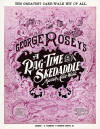 |
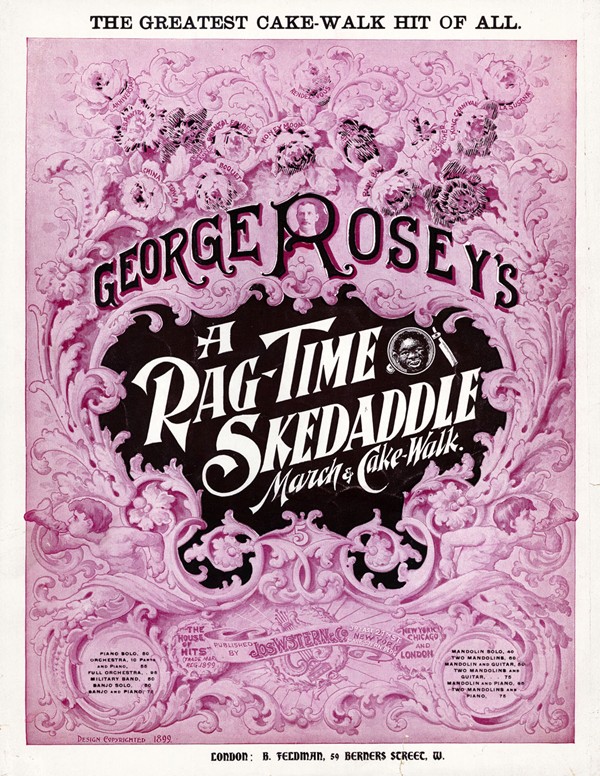
A Rag-Time Skedaddle: March & Cake
Walk. George Rosey. New York: JW
Stern, 1899.
[view sheet music]
Source:
Charles
H Templeton Sheet Music
Collection (MSU)
[top]
|
|
Rastus Johnson’s
Cake Walk. AE Bayler. New York: S
Brainard's Sons Co, 1899.
[view
sheet music]
Source: University
of South Florida Digital Commons [top]
|
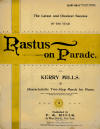 |
Rastus on Parade. Kerry
Mills. FA Mills, 1895.
[view sheet music]
Source:
Charles
H Templeton Sheet Music
Collection (MSU)
[top]
|
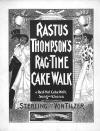 |
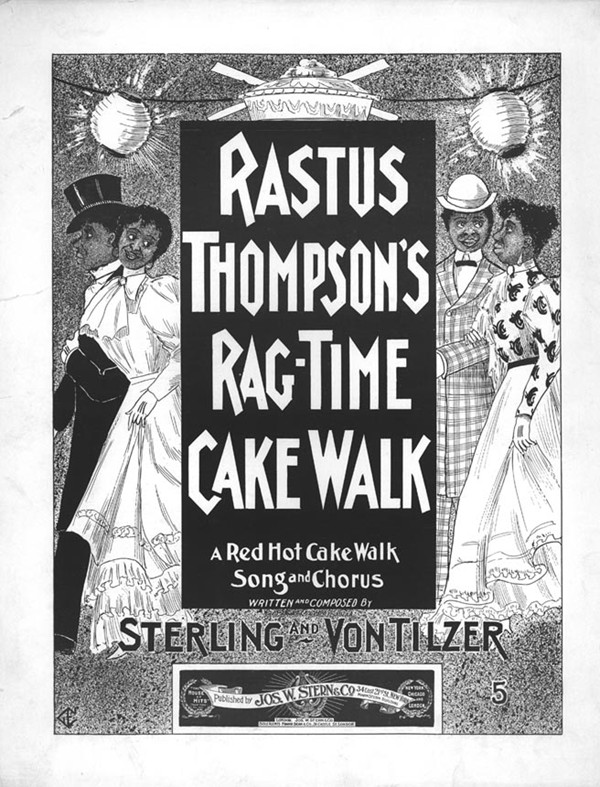
Rastus Thompson's Rag-Time Cake Walk.
Harry Von Tilzer (words by Andrew Sterling).
New York: Jos W Stern & Co, 1898.
[view
sheet music]
Source:
African-American Sheet
Music, 1850-1920 (from Brown
University) [top]
|
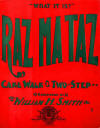 |
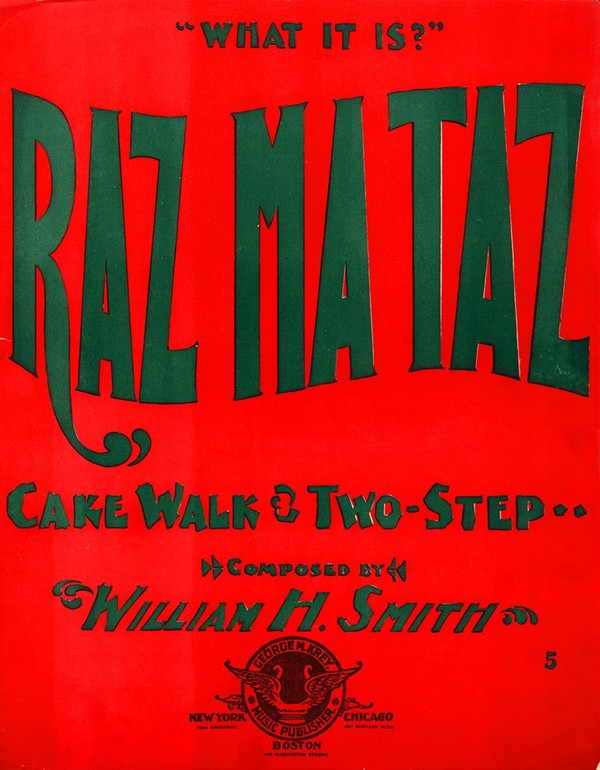
Raz Ma Taz: Cake Walk & Two-Step;
What it is? William Smith. New
York: George Krey, 1901.
[view sheet music]
Source:
Historic
American Sheet Music, 1850-1920 (from
Duke University) [top]
|
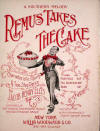 |
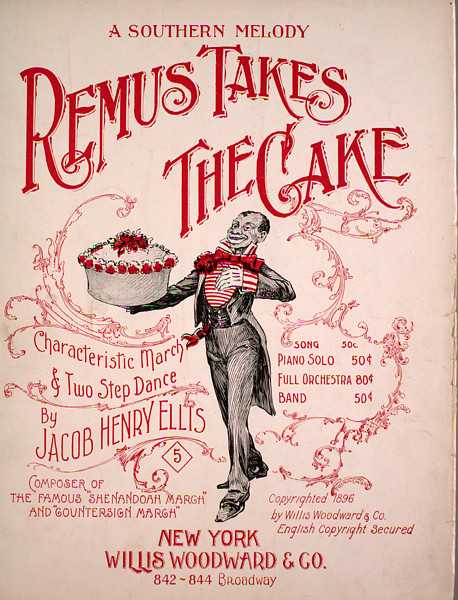
Remus Takes the Cake: Characteristic
March and Two Step Dance: A Southern
Melody. Jacob Henry Ellis. New
York: Willis Woodward & Co, 1896.
[view
sheet music]
Source: Lester
S Levy Sheet Music Collection [top]
|
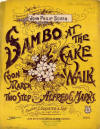 |
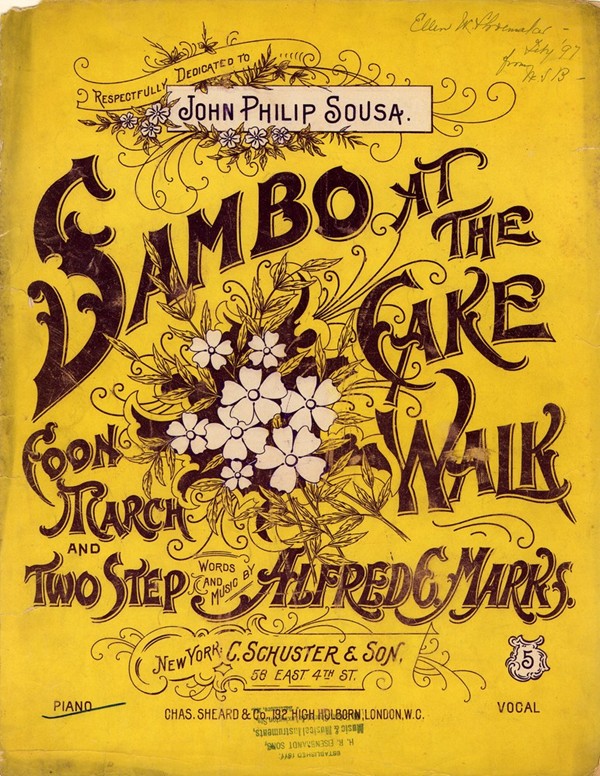
S*mbo at the Cake
Walk. Alfred Marks. New York: C
Schuster & Son, 1896.
[view sheet music]
Source:
Historic
American Sheet Music, 1850-1920 (from
Duke University) [top]
|
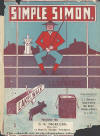 |
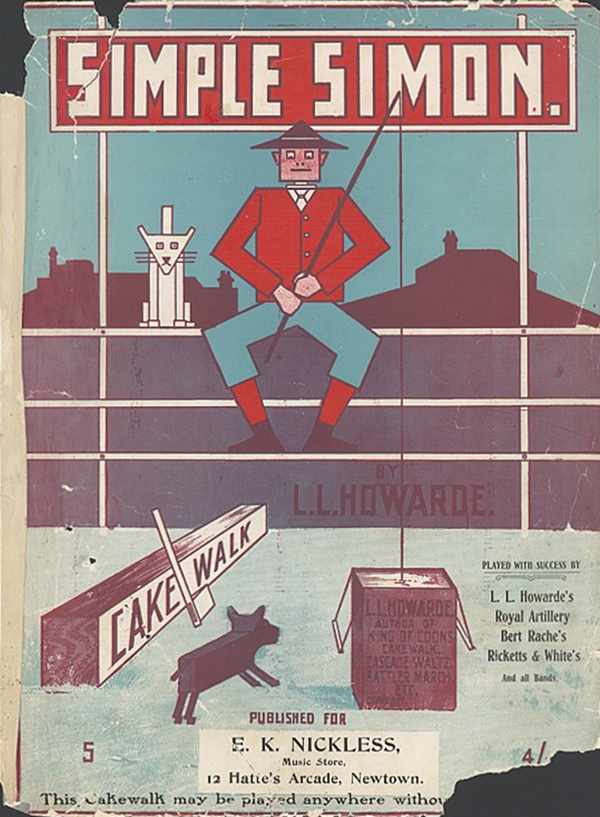
Simple Simon: Cake Walk. Louise
Howarde. Sydney: Mason's Music Stores, 1906.
[view
sheet music]
Source:
National
Library of Australia Digital
Collections [top]
|
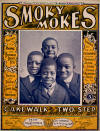 |
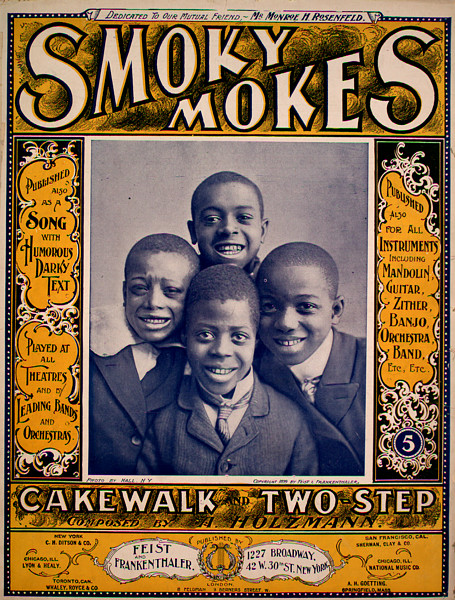
Smoky Mokes: Cake Walk and
Two Step. Abe Holzmann. New
York: Feist & Frankenthaler, 1899.
[view
sheet music]
Source: Lester
S Levy Sheet Music Collection [top]
|
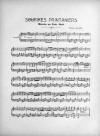 |
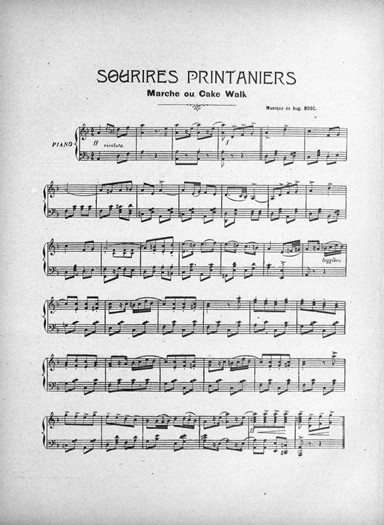
Sourires printaniers: marche ou cake
walk. Auguste Bosc. 1899.
[view sheet
music]
Source: Le
Passe Temps (Vol. 5, no 105 (1
avril 1899) at 73- 75) as digitized by the
National Library of Québec [top]
|
 |
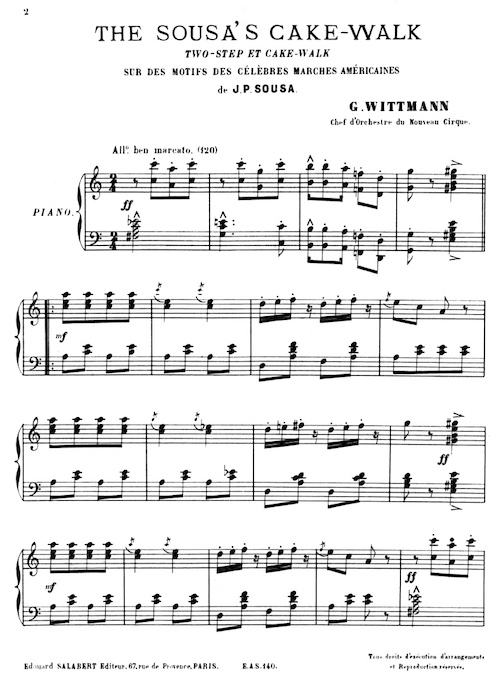
The Sousa's Cakewalk. G.
Wittman. Paris: Edward Salabert, 1902.
[view sheet music]
Source:
Le Ragtime Français [top]
|
 |
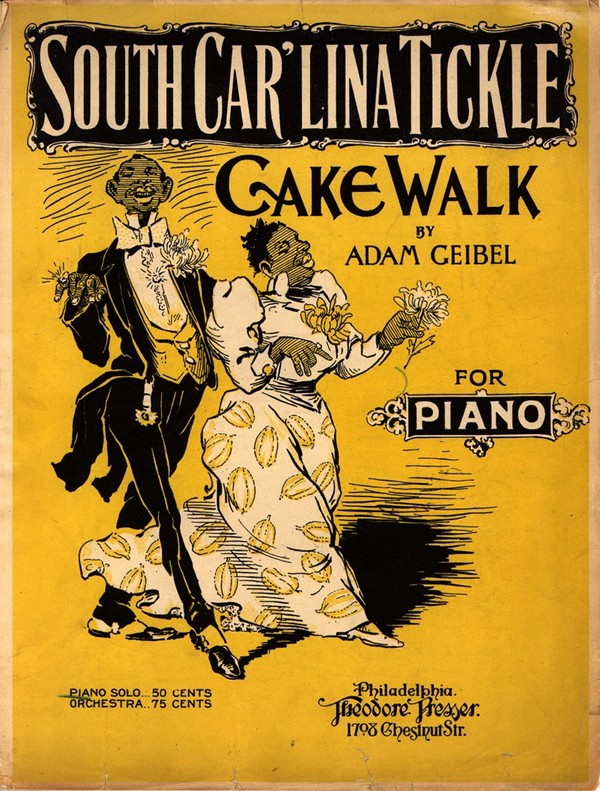
South Car'lina Tickle: Cake Walk.
Adam Geibel. Philadelphia, PA: Theodore
Presser 1898.
[view
sheet music]
Source:
Historic
American Sheet Music, 1850-1920 (from
Duke University) [top]
|
|
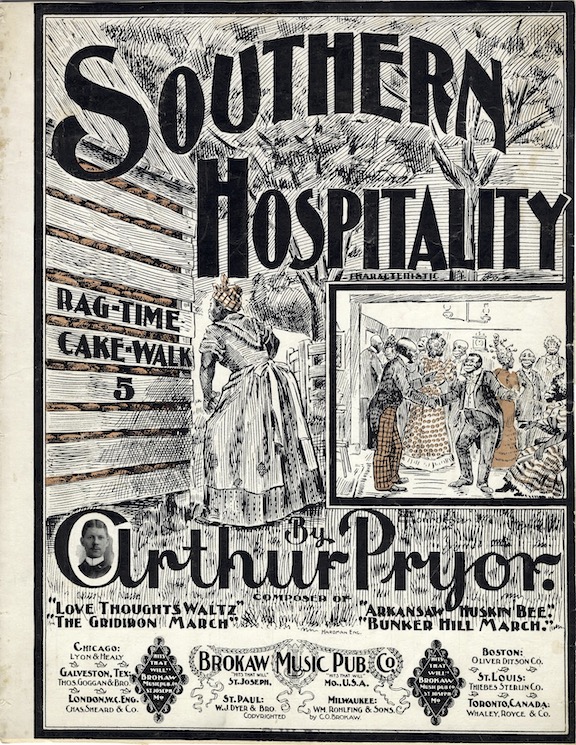
Southern Hospitality. Arthur
Pryor. St. Joseph, MO: Brokaw Music Pub Co,
1899.
[view
sheet music]
Source: University
of South Florida Digital Commons [top]
|
 |
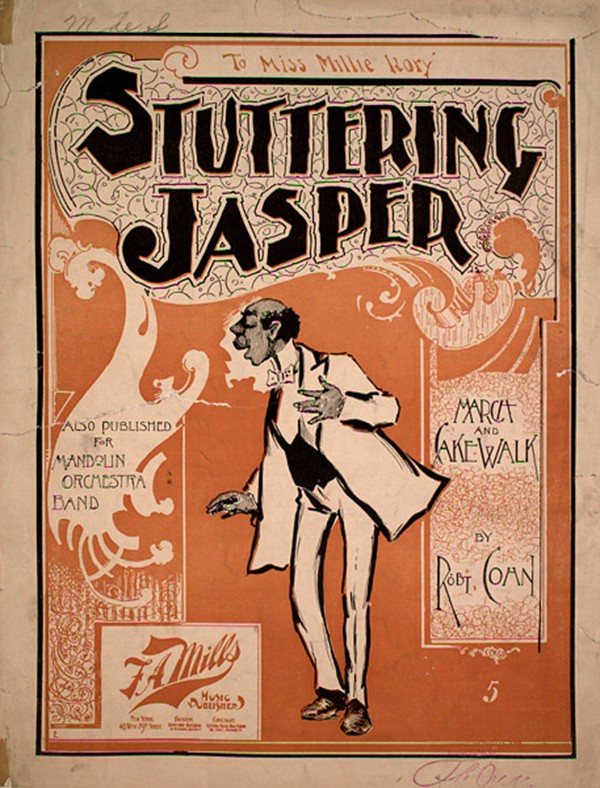
Stuttering Jasper: March and Cake Walk.
Robt. Cohn. New York: FA Mills, Music
Publisher, 1899.
[view
sheet music]
Source: Lester
S Levy Sheet Music Collection
[top]
|
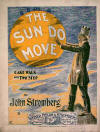 |
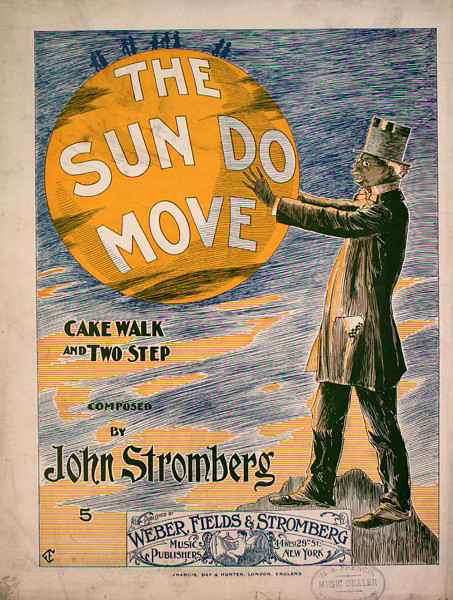
The Sun Do Move: Cake Walk and Two Step.
John Stromberg. New York: Weber, Fields &
Stromberg, 1899.
[view
sheet music]
Source: Lester
S Levy Sheet Music Collection [top]
|
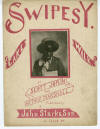 |
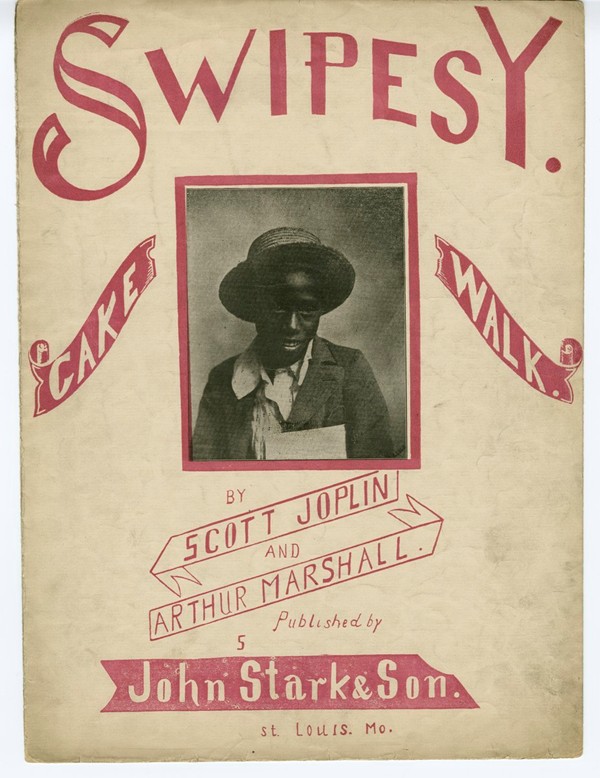
Swipesy Cake Walk. Scott Joplin
and Arthur Marshall. St Louis, MO: John
Stark and Son, 1900.
[view
sheet music]
Source: IN Harmony:
Sheet Music from Indiana [top]
|
|
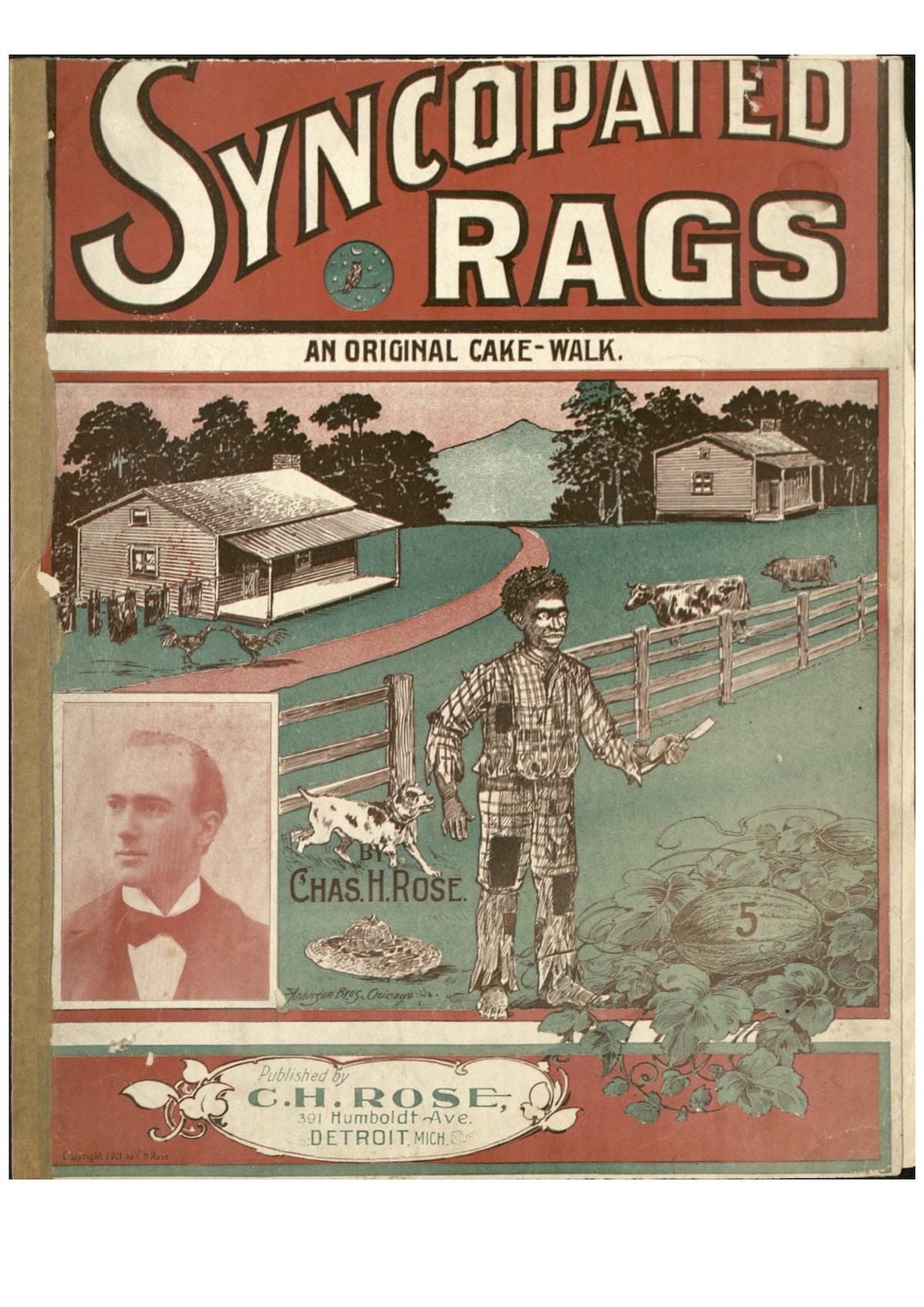
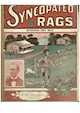
Syncopated Rags: An Original Cake Walk.
Charles H Rose. New York: Graves & Co,
1901.
[view sheet music]
Source: Let's Rag (Adrien Le
Gallo) [top]
|
|
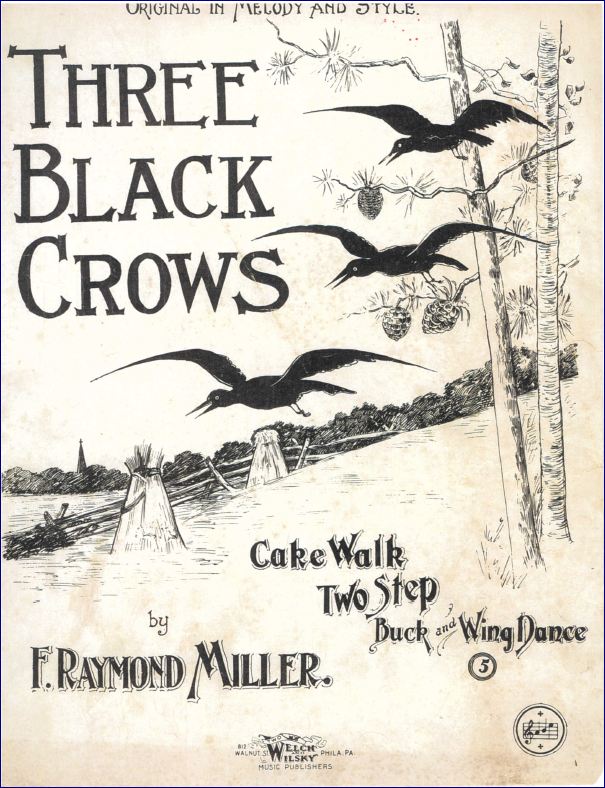
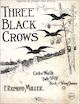
Three Black Crows: Cake Walk and Two Step.
Raymond Miller. Philadelphia, PA: Welch
Wilsky, 1899.
[view
sheet music]
Source: Personal copy [top]
|
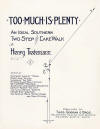 |
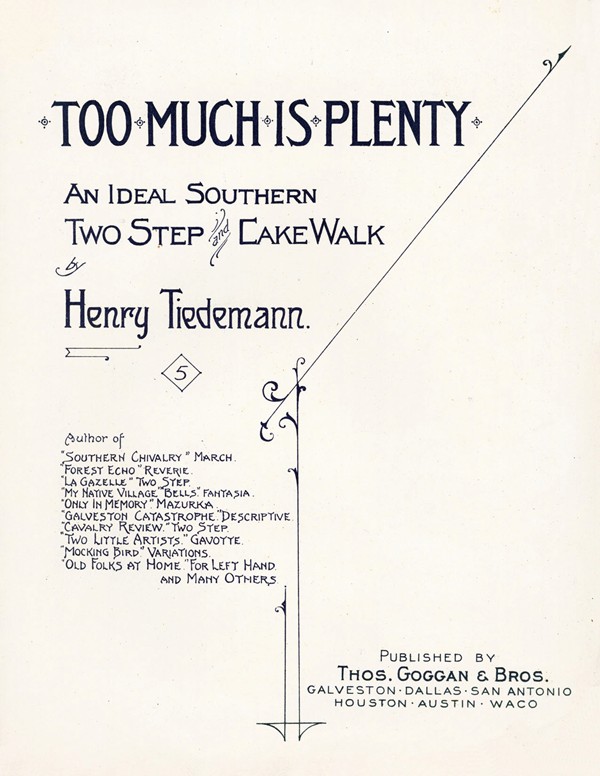
Too Much is Plenty: An Ideal Southern
Two-Step and Cake Walk. Henry
Tiedemann. Galveston, TX: Thos Goggan &
Bros, 1906.
[view sheet music]
Source:
Charles H
Templeton Sheet Music Collection
(MSU)
[top]
|
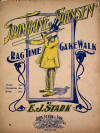 |
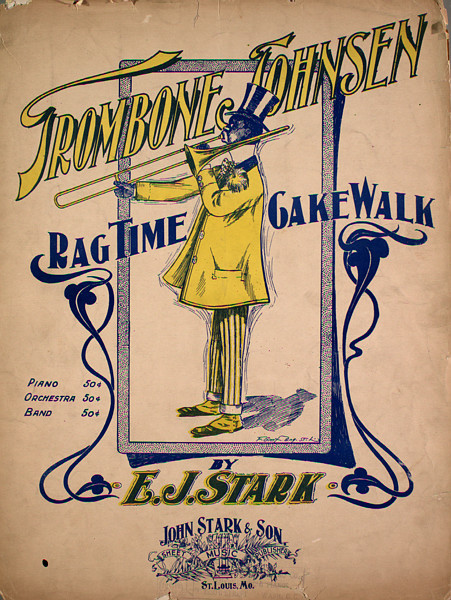
Trombone Johnsen: Rag Time
Cake Walk. EJ Stark. St Louis,
MO: John Stark & Son, Sheet Music
Publishers, 1902.
[view
sheet music]
Source: Lester
S Levy Sheet Music Collection
[top]
|
|
The Turkey Walk . GL Lowell.
Chicago, IL: S Brainards’ Sons, 1899.
[view
sheet music]
Source: University
of South Florida Digital Commons [top]
|
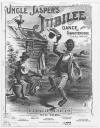 |
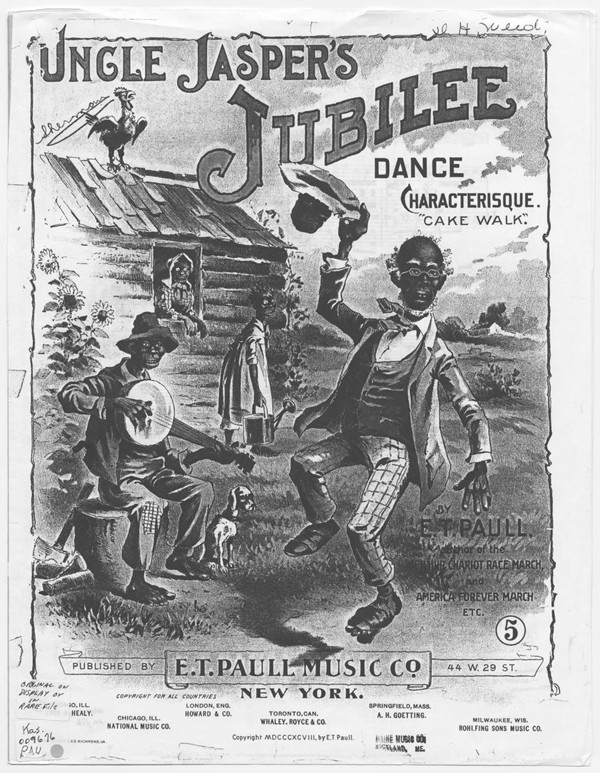
Uncle Jasper's Jubilee: Dance
Characteristique. ET Paull. New
York: ET Paull Music Co, 1898.
[view sheet music]
Source: Maine Music Box
[top]
|
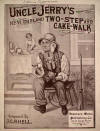 |
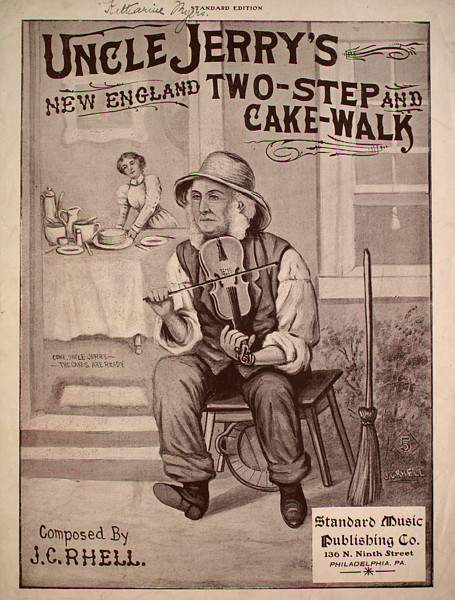
Uncle Jerry's New England Two-Step and
Cake-Walk. JC Rhell. Philadelphia,
PA: Standard Music Publishing Co, 1907.
[view
sheet music]
Source: Lester
S Levy Sheet Music Collection
[top]
|
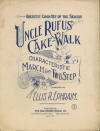 |
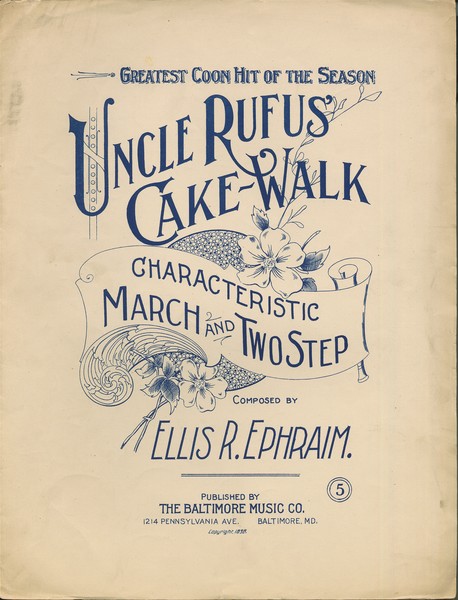
Uncle Rufus' Cake-Walk: Characteristic
March and Two Step. Ellis Ephraim.
Baltimore, MD: The Baltimore Music Co, 1898.
[view
sheet music]
Source: Lester
S Levy Sheet Music Collection
[top]
|
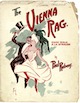 |
The Vienna Rag: Cake Walk á la "Strauss."
Paul Rubens. New York: Jos. W. Stern &
Co., 1905.
[view
sheet music]
Source: Charles
H Templeton Sheet Music
Collection (MSU)
[top]
|
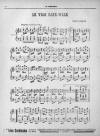 |
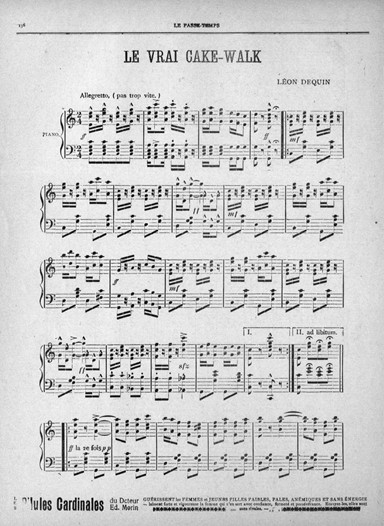
Le vrai cake-walk. Leon Dequin.
1904.
[view
sheet music] [listen to an .mp3]
Source: Le
Passe Temps (Vol. 10, no 239
(21 mai 1904) at 136-39) as digitized by
the National Library of Québec [top]
|
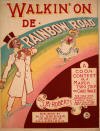 |
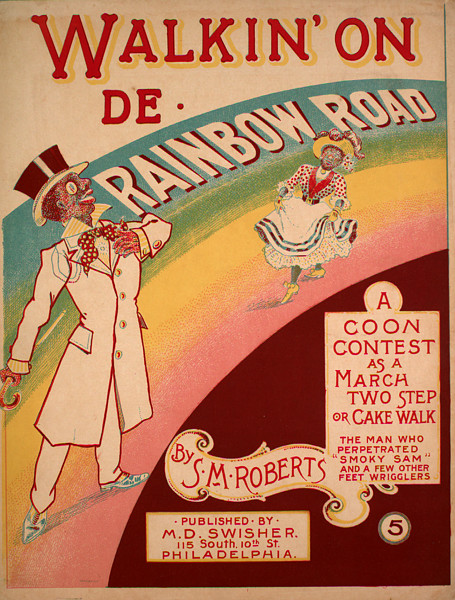
Walkin' on de Rainbow Road. SM
Roberts. Philadelphia, PA: MD Swisher, 1899.
[view
sheet music]
Source: Lester
S Levy Sheet Music Collection
[top]
|
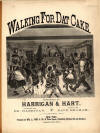 |
Walking for Dat Cake. David
Braham (lyrics by Edward Harrigan). New
York: William A Pond, 1877.
[view
sheet music]
Source:
Historic
American Sheet Music, 1850-1920 (from
Duke University) [top]
|
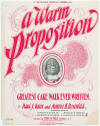 |
A Warm Proposition: Cake Walk.
Paul Knox and Monroe Rosenfeld. Brooklyn,
NY: Chas W Held, 1899.
[view
sheet music]
Source: Maine Music Box
[top]
|
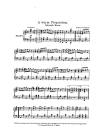 |
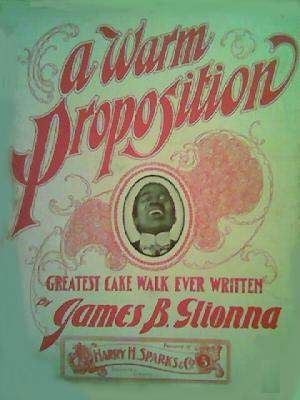
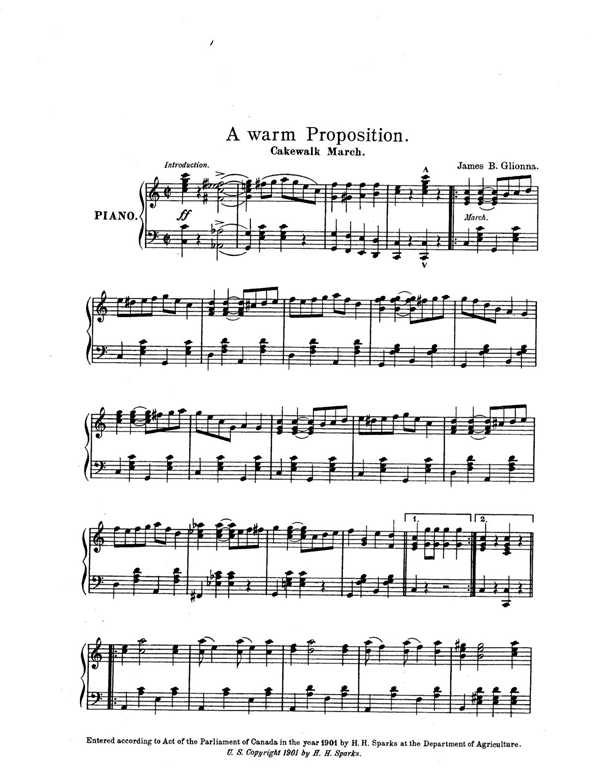
A Warm Proposition: Greatest Cake Walk
Ever. James Glionna. Toronto,
ON: HH Sparks, 1901.
[view sheet
music]
Source: Toronto Reference
Library Microfiche [top]
|
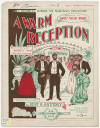 |
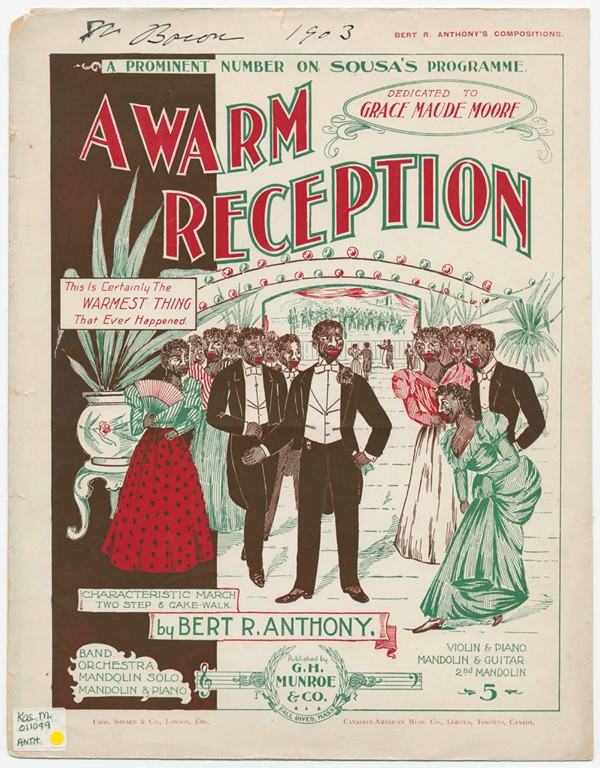
A Warm Reception: Characteristic March,
Two-Step and Cake-Walk. Bert
Anthony. Fall River, MA: GH Munroe & Co
Place Pub, 1899.
[view
sheet music]
Source: Maine Music Box
[top]
|
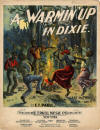 |
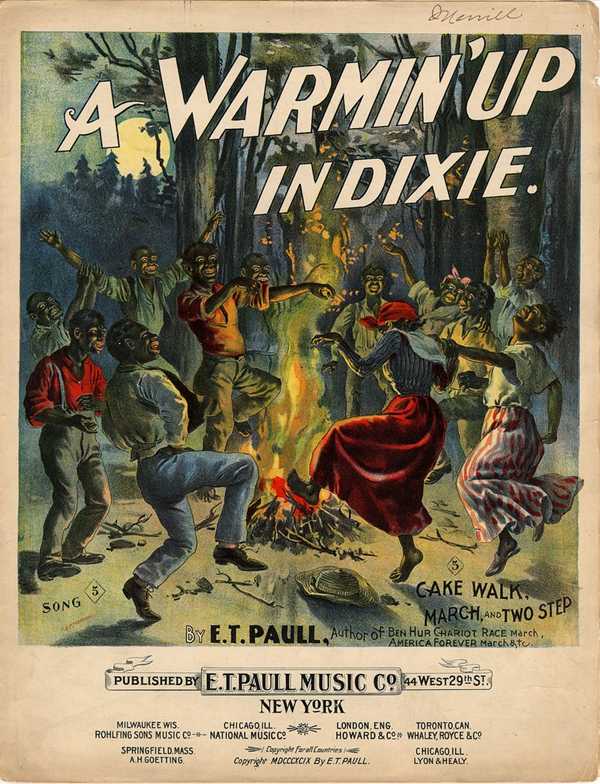
A Warmin' Up In Dixie: Cake Walk, March
and Two Step. ET Paull. New
York: ET Paull, 1899.
[view sheet music]
Source:
Historic
American Sheet Music, 1850-1920 (from
Duke University) [top]
|
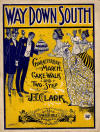 |
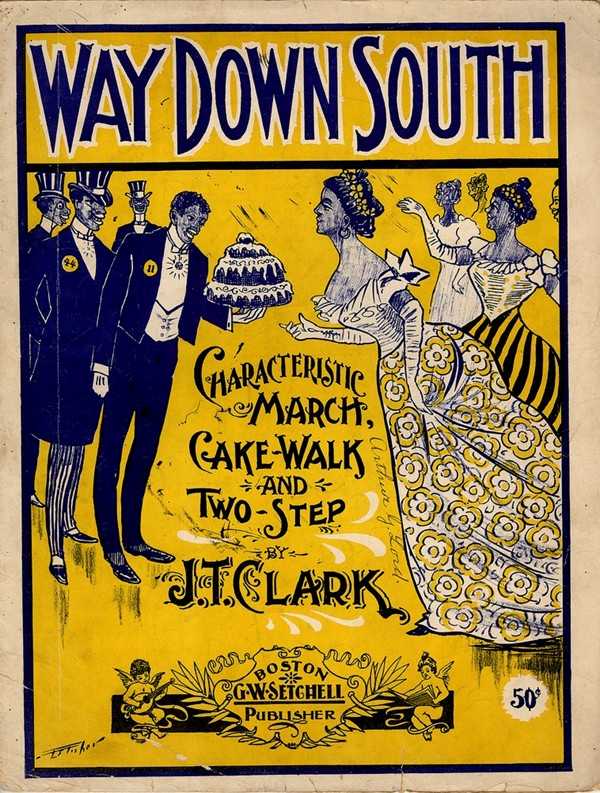
Way Down South: Characteristic March,
Cake-Walk and Two-Step. LS
Fisher. Boston, MA: GW Setchell, 1899.
[view sheet music]
Source:
Historic
American Sheet Music, 1850-1920 (from
Duke University) [top]
|
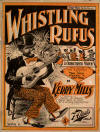 |
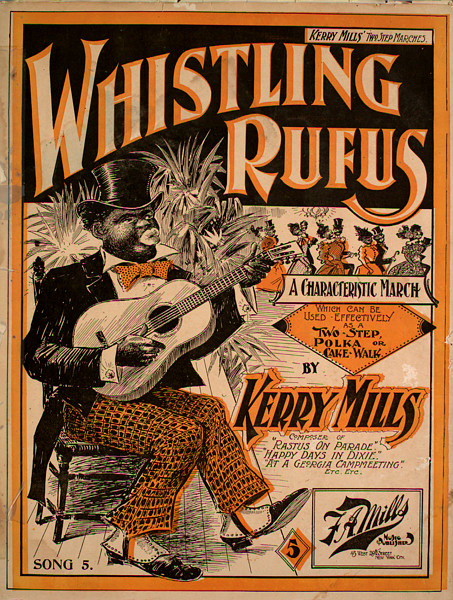
Whistling Rufus: A Characteristic March.
Kerry Mills. New York: FA Mills, 1899.
[view
sheet music]
Source: Lester
S Levy Sheet Music Collection
[top]
|
 |
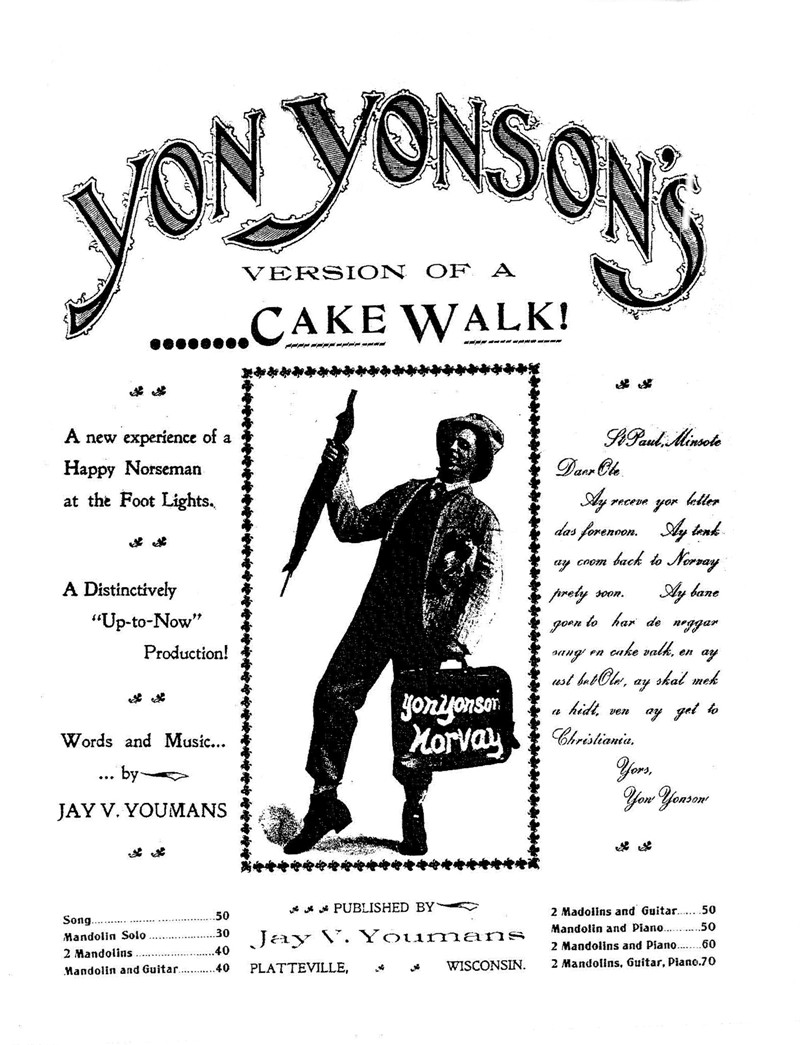
Yon Yonson's Version of a Cake-Walk.
Jay Youmans. Platteville, WI: Jay Youmans,
1899.
[view
sheet music]
Source: Photocopy from University
of Wisconsin-Madison Library [top]
|
I am currently looking for copies of the following
pieces, set out in rough chronological order; if I
obtain copies, I will digitize them and add them to
the table above:
- 1903: Boston Banjo Band: Cake Walk Two Step.
MC Ives. London: WH Broome, 1903 [check Google] [Source: NLA].
4) Bibliography [top]
- Berlin, Edward A. Ragtime:
A Musical and Cultural History.
Berkeley, CA: University of California Press, 1980.
- Emery, Lynne Fauley. Black Dance in the
United States from 1619 to Today. 2nd
rev ed. Princeton, NJ: Princeton Book Company, 1988.
- Fletcher, Tom. The Tom Fletcher Story: 100
Years of the Negro in Show Business. New
York: Burdge and Co, 1954.
- Gottschild, Brenda Dixon. The Black Dancing
Body: A Geography from C**n to Cool. New
York: Palgrave Macmillan, 2003.
- Haskins, James. Black
Dance in America: A History Through its People.
New York: Harper Trophy, 1990 [Internet Archive version].
- Hitchcock, H Wiley and Pauline Norton. "Cakewalk,"
Grove Music Online, ed. L. Macy (Accessed 02
April 2006), <http://www.grovemusic.com.myaccess.library.utoronto.ca>
- Jasen, David, ed. Cakewalks, Two-Steps and
Trots for Solo Piano: 34 Popular Works from the
Dance-Craze Era. Mineola, NY: Dover
Publications, 1997. Publication
details.
- Jasen, David & Gene Jones. That
American Rag: The Story of Ragtime from Coast to
Coast. New York: Schirmer Books, 2000 [Internet Archive version].
- Long, Richard. Black Dance: The Black
Tradition in American Modern Dance. New
York: Rizzoli, 1989 [Internet Archive version].
- Lotz, Rainer. German Ragtime &
Prehistory of Jazz. Chigwell, England:
Storyville, 1985.
- McKinley, Ann. "Debussy and American Minstrelsy"
(1986) 14(3) The Black Perspective in Music
249 (JSTOR).
- Morgan, Thomas & William
Barlow. From Cakewalks to Concert Halls: An
Illustrated History of African American Popular
Music from 1895 to 1930. Washington, DC:
Elliott & Clark, 1992 [Internet Archive version].
- "Ragtime" in Encyclopedia of Music
in Canada. Historica Foundation of
Canada, 2006. Available online.
- Septoff, L. "C**n Songs and Cakewalks: Ragtime
Antecedents" (1983) 3 Jazz Research Papers
(NAJE) 106.
- Sutton, A. Cakewalks, Rags and Novelties:f
The International Ragtime Discography
(1894-1930).
- Walker, Edward Samuel. English Ragtime: A
Discography. Woodthorpe, England: Edward
S Walker, 1971.
- Ware, Chris, ed. The Ragtime Ephemeralist
(information here).
[top]
|
|