|
|
Scott Joplin — The
King of Ragtime Composers
Featuring the Maple
Leaf Rag (1899) by Scott Joplin and other Joplin
Rags
By Ted Tjaden
(originally published June 2006 and
updated periodically)
Recordings available on this page (see below):
|
Maple Leaf Rag (performed by Ted Tjaden)
|
Sheet music available on this page:
|
See below to download or
view the sheet music for ragtime compositions
by Scott Joplin.
|
Recommended reading:
|
Edward Berlin, King of Ragtime: Scott
Joplin and his Era, 2nd ed. (New
York: Oxford University Press, 2016) [book
details from edwardaberlin.com/works.htm].
|
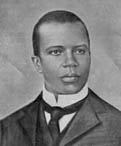
Scott Joplin is regarded by most as the "King" of
Ragtime Writers, in part due to his early success with
the best-selling Maple Leaf Rag (below)
but more importantly due to the enduring nature and
quality of his ragtime compositions. This page sets out
information on Scott Joplin in the following topics:
1) Introduction
2) Life of Scott Joplin
3) Sheet music of Scott Joplin
compositions
4) Recordings of Scott
Joplin compositions
5) Bibliography
1) Introduction
Although classic ragtime piano is a relatively narrow
aspect of music, most people have heard of Scott Joplin,
or if not, they have heard some of his more well known
compositions, including The Entertainer (below) or The Maple Leaf
Rag (below).
 |
|
Although the popularity of the Maple
Leaf Rag made Joplin a relatively
well-known composer, perhaps more so after
his death, it was the enduring quality of
his compositions that have cemented his
reputation as the "King of Ragtime Writers."
John Stark, the main publisher for the "Big
3" ragtime composers (Scott Joplin, James Scott and Joseph Lamb), was
prone to fanciful puffery in his sales
brochures for the rags he published, but
there is something to be said for Stark's
descriptions of these rags:
We have advertised these as classic
rags, and we mean just what we say. They
are the perfection of type. "The glass
of fashion and the mold of form." "Age
cannot whither or custom stale their
infinite variety". They have lifted
ragtime from its low estate and lined it
up with Beethoven and Bach" (Stark ad,
page 23, in Ragtime Review
(Vol
1, No 2: January 1915).
|
Jasen and Tichenor (1987:83)
describe Joplin's compositions in these terms:
He combined the traditions of Afro-American music
folk music with nineteenth-century European
romanticism; he collected the black Midwestern Folk
rag ideas as raw material for the creation of original
strains. Thus, his rags are the most heavily
pentatonic, with liberal use of blue notes and other
outstanding features that characterize black folk
music. In this creative synthesis, . . . the
traditional march became the dominant form, and the
result was a new art form, the Classic rag – a unique
conception which paradoxically both forged the way for
early serious ragtime composition, and, at the same
time, developed along insular lines, away from most
other ragtime playing and composing.
Fortunately, Joplin's rags have been widely recorded
(see below) and published and there
is much commentary on his music available. The launch of
the movie The
Sting in 1973, which featured a number of
Scott Joplin compositions as part of the soundtrack, was
responsible for extending the ragtime revival of the
1950's to the present day (with Joplin's The
Entertainer, featured in the movie, making
it in the "Top 10" of the "Songs of the Century" as
determined by the Recording Industry of America and the
National Endowment of the Arts). Ironically, the movie
was set during the Depression, about 10 to 20 years
after ragtime's heyday, making the music of Joplin
chosen for the movie slightly anachronistic.
2) Life of
Scott Joplin (1868 ~ 1917)
Fortunately, much has already been written about the
life of Scott Joplin. I highly recommend Edward Berlin's
King of Ragtime: Scott Joplin and his Era
(NY: Oxford University Press, 1995) as being the
definitive biography on Scott Joplin (Berlin has his own
webpage here).
Berlin has also prepared a brief online biography of
Scott Joplin for the Scott Joplin
International Ragtime Foundation). Another useful
research resource on Scott Joplin is Nancy Ping-Robbins'
Scott Joplin: A Guide to Research (New
York: Garland Pub, 1998), which contains 1,268 separate
bibliographic entries or citations for information on
Joplin and the ragtime era. Because so much has already
been written about Scott Joplin, I set out below only
some of the more significant events in his life:
The Early Years and Family Life
- Most references cite November 24, 1868, as the date
Scott Joplin was born, but research by Berlin (1995:4-5) suggests that
this date, based on what is likely the faulty memory
of Joplin's widow, may be in error. Census data
surrounding Joplin's age is also inconsistent and
hence inconclusive. Despite this, Joplin's date of
birth is likely sometime in 1868, give or take a small
period of time. In his online biography of Scott
Joplin, Berlin suggests that Joplin was most
likely born sometime between June 1867 and mid-January
1868.
- Joplin grew up in a musical family, likely initially
in northeastern Texas. He had an older brother
(Monroe) and a younger brother (Robert) and three
younger siblings. At some point, the family moved to Texarkana,
possibly as early as 1875 when Scott Joplin would have
been around 7 years old (Berlin, 1995:7). Brother Robert
himself became a well known dancer and vaudevillian
(Berlin, 1995:7).
- Joplin showed some promise as a youth on the piano
and took lessons from various local piano teachers. Of
note, most biographers emphasize the influence that
Julius Weiss, a German piano teacher, had on shaping
Joplin's early musical influences (Berlin, 1995:7; Jasen
and Jones, 2000:26). For a good overview of
Joplin's early life, see Addison Reed's chapter
entitled "Scott Joplin: Pioneer" in JE Hasse, ed, Ragtime:
Its History, Composers, and Music. New
York: Schirmer Books, 1985:117-36.
- Scott Joplin formed a vocal quartet that performed
in Texarkana; in addition, Joplin appears to have
played piano there in dance halls and taught guitar
and mandolin (Berlin, 1995:7).
- It appears that Joplin left Texarkana sometime in
his teens, likely pursuing life on the saloon and
honky-tonk circuit throughout Texas, Louisiana,
Missouri, Illinois, and Kentucky as a pianist (Berlin,
1995:8). Berlin raises
the possibility that Joplin lived in Sedalia,
Missouri, during this time and even went to
Lincoln High School, an all black school in that city
(Berlin, 1995:8).
- In 1891, Joplin was part of the Texarkana Ministrels
that faced some controversy at a performance in
Texarkana that summer where it turned out that part of
the proceeds were being raised for Jefferson
Davis, the former President of the Confederate
States of America and supporter of slavery (Berlin, 1995:9-10).
- It is believed that Joplin would have been in
Chicago for the Chicago
World's Fair in 1893, which is where ragtime as
a musical form began to develop and be known to a
wider white audience (Berlin, 1995:11). Berlin
reports that Joplin met Otis Saunders, another ragtime
pianist, at the Fair and the two of them went to St
Louis and then Sedalia when the Fair ended in October
1893. (Berlin, 1995:9-12).
Time in Sedalia (circa 1894 to 1901)
- Joplin lived in Sedalia from approximately 1894 to
1901, after which he moved to St Louis. Berlin (1995:13-23) describes
Sedalia at that time as a thriving city with
opportunities for blacks despite it being a largely
segregated community. The city housed the George
R Smith College for black students where it is
believed that Joplin took music courses (Jasen and Tichenor, 1987:82).
Sedalia also hosted the black Queen City Cornet Band
and a number of honky-tonks along Main Street.
- It is likely that Joplin toured a fair bit during
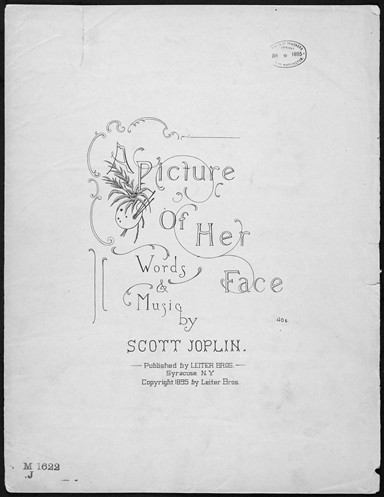
this time with his Texas Medley Quartette. Berlin (1995:26) notes that two of
Joplin's early songs, Please Say You Will
(below) and A Picture
of Her Face (below)
(both from 1895) were published in New York state,
likely as a result of a tour to that region by the
Texas Medley Quartette.
- Berlin also notes that since Joplin had three pieces
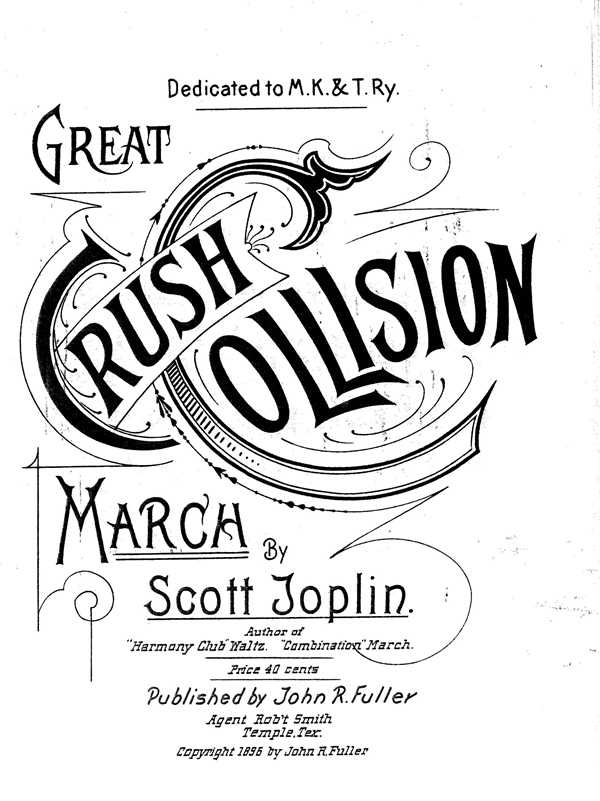
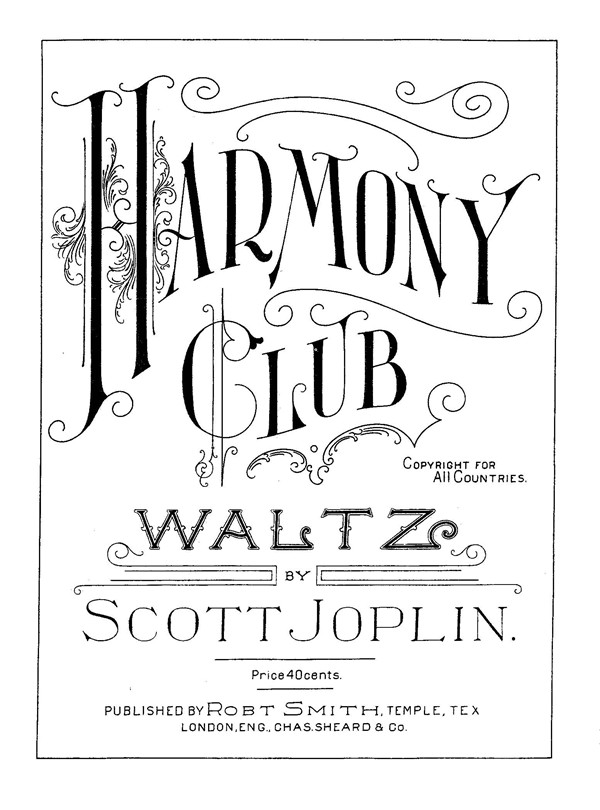
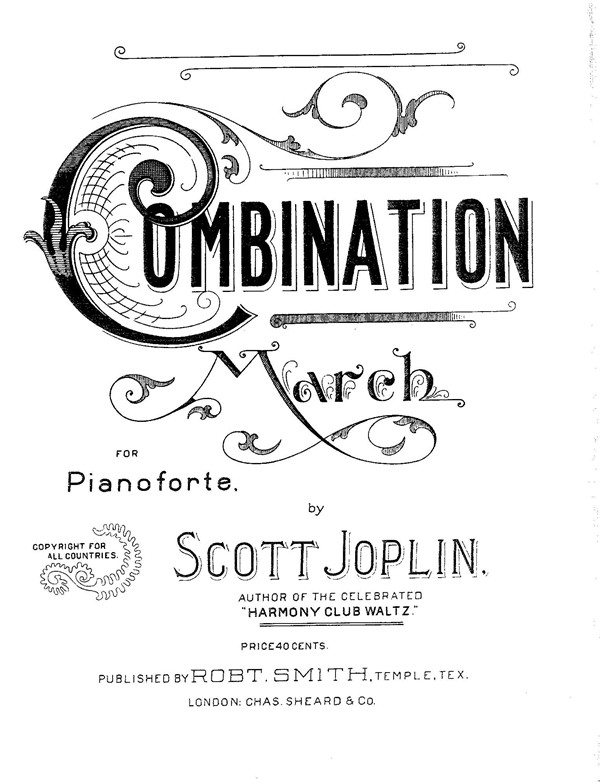
published in Texas (The Great Crush Collision
March, Harmony Club Waltzes,
and Combination March, all available below), so it is likely
that Joplin also spent time in Temple, Texas, likely
on tour (1995:27). It is
not clear whether Joplin himself witnessed the "Great
Crush Collision" of trains staged on September 15,
1896 (which resulted inadvertently in the death of
three spectators), but Joplin's composition named
after this event was published one month later (more
information on the historical "collision" event is
available here
and here).
- It appears that Joplin taught piano to students and
was also a mentor to a number of up and coming
ragtimers, including Arthur Marshall, Scott Hayden and
Brun Campbell (Berlin, 1995:31).
Despite this, most authors suggest that Joplin was
likely not much of an entertainer on the keyboard and
was considered only a competent pianist, especially
when compared to the theatrics of many of the
contemporary "rag thumpers" of the time (Jasen and Tichenor, 1987:85-86).
- Sedalia was also home to two black social clubs, the
Black 400 Club and the Maple Leaf Club, that hosted
dances and social activities, some of which included
white residents as guests. (Berlin, 1995:34-44) provides a
fascinating look at the history of these clubs, their
competition with each other, their role in promoting
ragtime music, and their ultimate demise in early 1900
when they were shut down by the city.
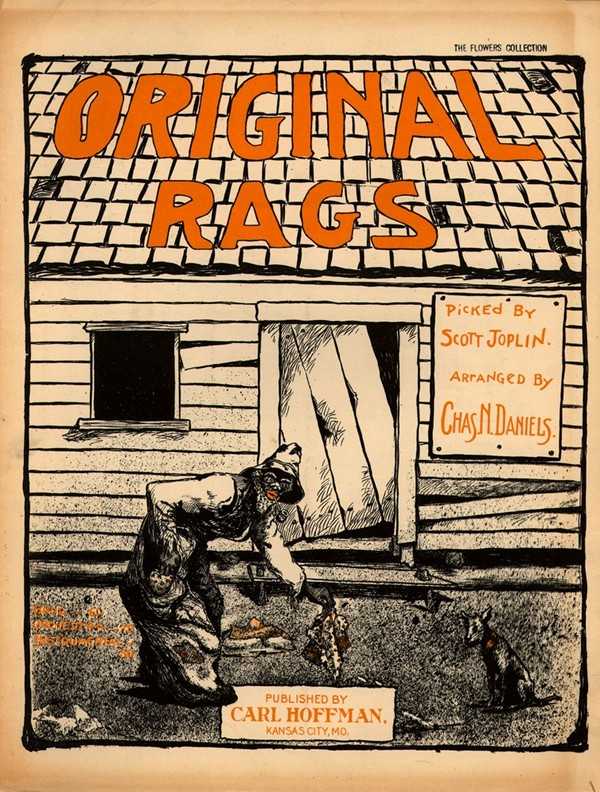
- Berlin (1995:47)
documents that Joplin likely had written Original
Rags (below) as early as
1897 and had tried unsuccessfully to publish that
piece, along with Maple Leaf Rag (below) and possibly Sunflower
Slow Drag (below),
in 1898 with AW Perry & Son in Sedalia. Joplin was
successful in having Original Rags
published by Carl Hoffman (Kansas City) (Jasen and Jones, 2000:27), but
Berlin (1995:48) doubts
that Charles Daniels actually arranged Original
Rags (as is indicated on the cover, here).
- Joplin's most famous composition, the Maple
Leaf Rag (below), was
published by John Stark, then of Sedalia. Many
commentators have noted the importance to Joplin of
Stark granting a one-percent royalty for the
composition since the composition subsequently sold
very well, possibly as high as one half-million copies
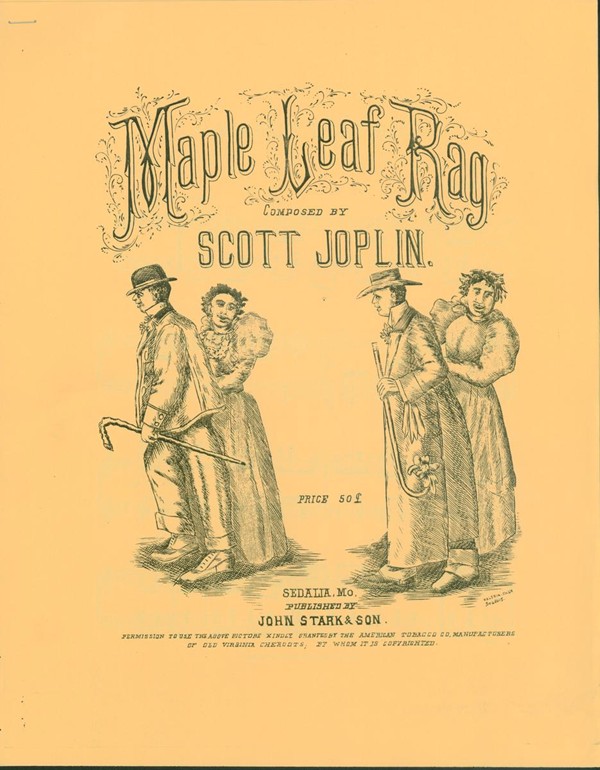
(Berlin, 1995:58). The
original cover of Maple Leaf Rag (below) was an advertisement from the
American Tobacco Company portraying the famous
vaudevillians, Bert
Williams and George Walker (and their dance
partners and future wives).
- One of the many "myths"
surrounding Joplin and his work is the naming of The
Maple Leaf Rag and whether it was named
after the Maple Leaf Club in Sedalia. One theory is
that there is a Canadian connection to the composition
(since the
maple leaf was a recognized national symbol in
Canada since at least the mid 1850's with the Maple
Leaf Forever, available here
in PDF, being composed in 1867, for example). One
possible theory, I think unlikely, is that Joplin
named the piece to commemorate the Underground Railway
to Canada (discussed here
in Ragtime Music in Canada)
(Berlin, 1995:61).
Another theory connected to the composition, or at
least to the Maple Leaf Club, is that the "Maple Leaf
Club," which was owned by Will and Walker Williams who
were from London, Ontario, was named for Canada's
symbol: Timothy McGee, The Music of Canada.
New York: WW Norton, 1985. Berlin, on the other hand,
has a much more practical explanation: Sedalia was a
city whose streets were lined with maple trees and
there was a current vogue in town to name things after
leaves and trees: Berlin, 1995:62.
Joplin also used arboreal and floral themes for naming
a number of his subsequent rags.
- During the time Joplin was in Sedalia, he is
believed to have married Belle Hayden, the widow of
Scott Hayden's brother: Berlin, 1995:84. However, the
couple separated around 1903 shortly after the death
of their infant daughter.
- Berlin (1995:85) notes
that on his departure from Sedalia in 1901, Joplin
"was well known locally as both a pianist and
composer, was quickly gaining nationwide fame as the
composer of the Maple Leaf Rag, and was soon
to be known as "the king of ragtime writers."
Time in St Louis (circa 1901 to 1907)
- Compared to Sedalia, St Louis in 1901 was a much
larger and more vibrant city. Berlin notes that Joplin
first moved to the city's red-light district which was
"a major center for the early development of black
Midwestern ragtime" (1995:89).
- This was a prolific time for Joplin, with a number
of his compositions being published in St Louis by
John Stark, who had also moved to St Louis.
- In 1903, Joplin filed a copyright application for an
opera called Guest of Honor, which was
briefly performed on tour, but unfortunately, Joplin
was unable to cover the payroll after a certain point,
and his possessions, including the score to the opera,
were seized, and to this date, no known copy of Guest
of Honor has survived (Berlin, 1995: Chapter 7).
- In 1904, the St
Louis World Fair (the Louisiana Purchase
Exposition) brought a number of ragtime pianists to
the area. It would have been an exciting time to hear
ragtime piano (although the Fair was not without
controversy because of the continuing discrimination
that blacks faced). Berlin, for example, describes a
"cutting contest" between Tom Turpin and Louis Chauvin
(Chauvin won) (1995:134).
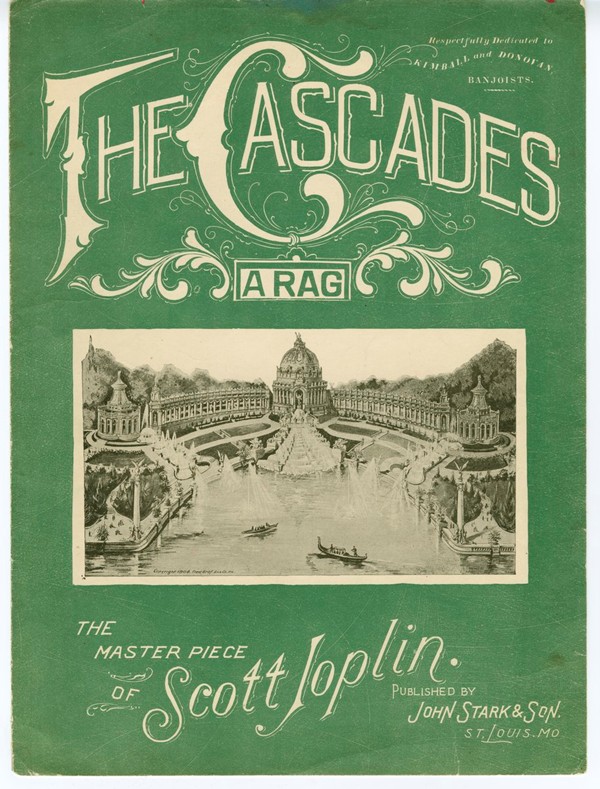
- It is likely that Joplin wrote The Cascades
(below) to commemorate the
Cascades Gardens at the World Fair, pictured on the
cover of his sheet music (see below).
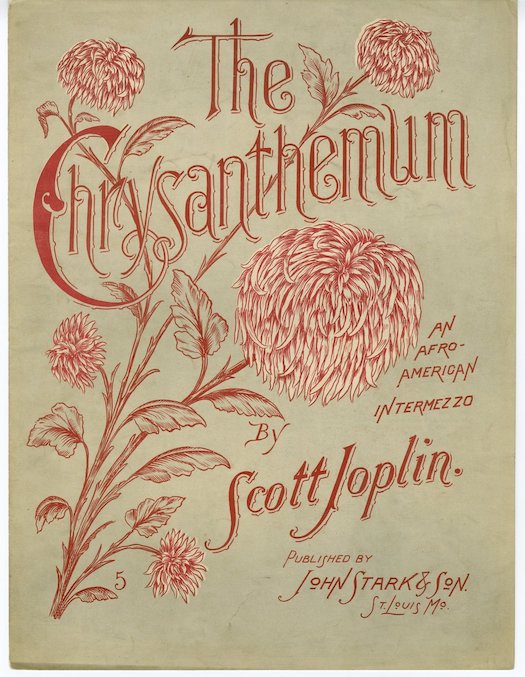
- Also in 1904, Joplin met a 19-year old woman,
Freddie Alexander, to whom he dedicated The
Chrysanthemum (below).
They were married shortly thereafter on June 14, 1904.
After the marriage, the couple went to Sedalia where
Joplin performed. However, his new wife took sick and
eventually died of pneumonia on September 10, 1904.
Berlin (1995:208) has an
interesting theory that Joplin may have memorialized
Freddie in the main character in his opera Treemonisha.
- During the two and one half years following the
death of Freddie, Berlin (1995:161)
notes that Joplin's output was significantly
diminished with the publication of only three new rags
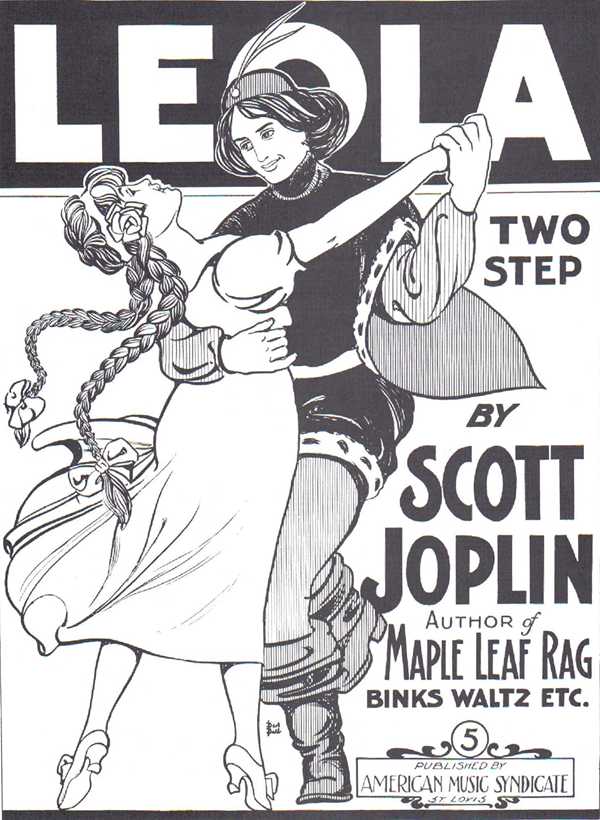
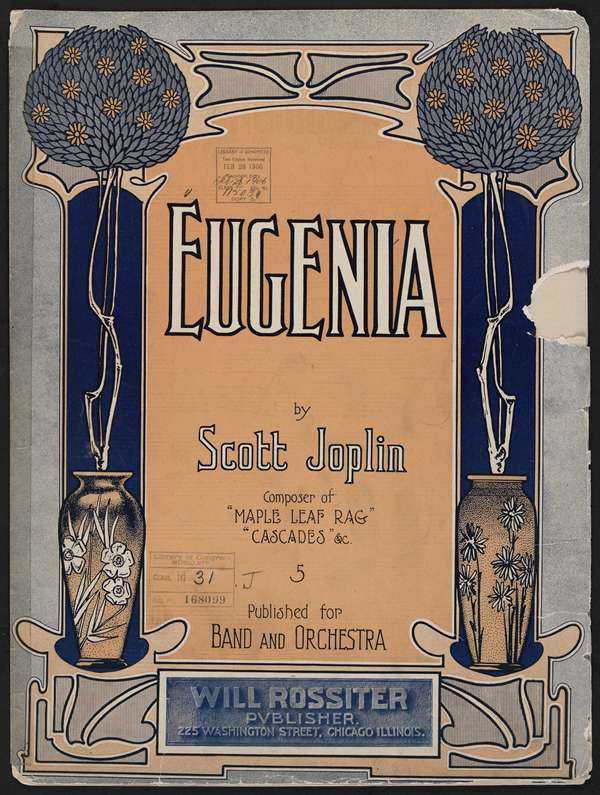
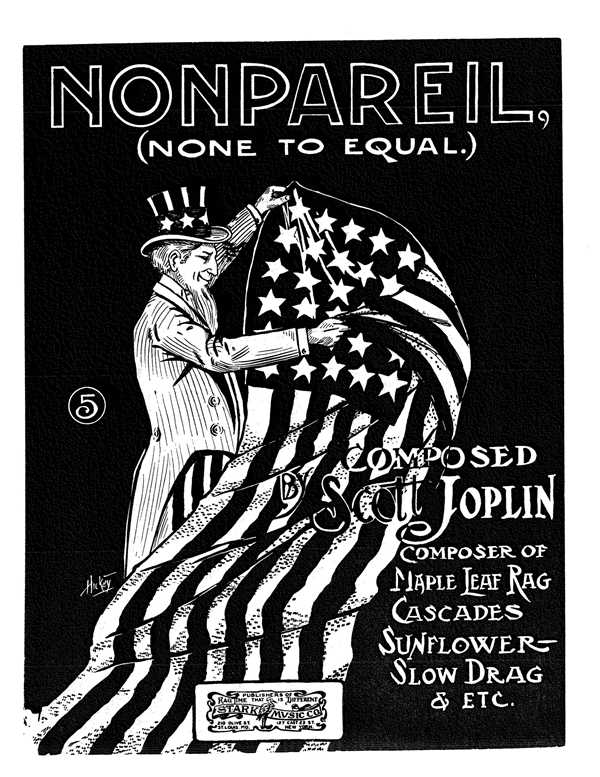
(Leola, Eugenia, and The
Nonpareil, all below),
Bethena (below)
and a number of less successful compositions.
- In 1905, John Stark opened an office in New York
(Berlin, 1995:151).
However, it appears that Stark found the sheet music
industry in New York cutthroat and extremely
competitive since he only lasted in New York until
1910 (Berlin, 1995:195).
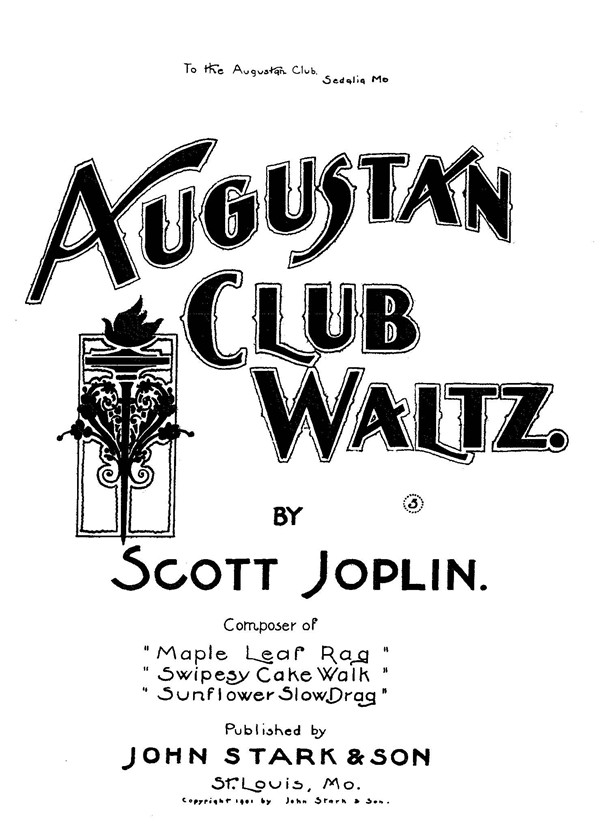
- Trivia: Joplin's Augustan Club Waltzes
(below) should have been
spelled "Augustain" after the
Augustain Club in Sedalia (Berlin, 1995:79-80). In addition,
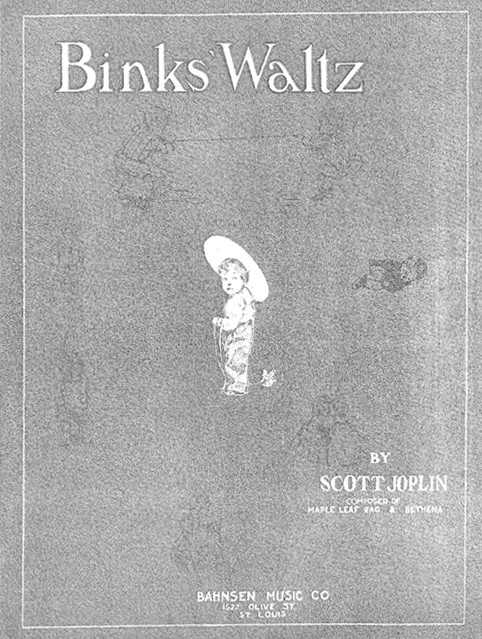
Joplin's Bink's Waltz (below) should have been named
"Bing's" waltz, the nickname of the boy in whose honor
the piece was composed (Berlin, 1995:149).
Time in New York (1907 to 1917)
- Joplin moved to New York, likely in the summer of
1907.
- Berlin (1995:223-25)
discusses detailed research regarding Lottie Joplin,
who Joplin "married" (likely in a common law marriage)
sometime in the late 1910's. Lottie also ran a
boarding house and appears to have managed some of
Joplin's late career, being a partner in Scott Joplin
Music Publishing Ltd, which published Magnetic
Rag in 1914 (below).
Lottie survived Scott Joplin's death and
continued to be involved in the affairs of his estate
by renewing copyrights in his compositions. Berlin
discusses some of the litigation surrounding Joplin's
estate in Chapter 13 of his book.
- Joplin made contact with several new publishers in
New York, including:
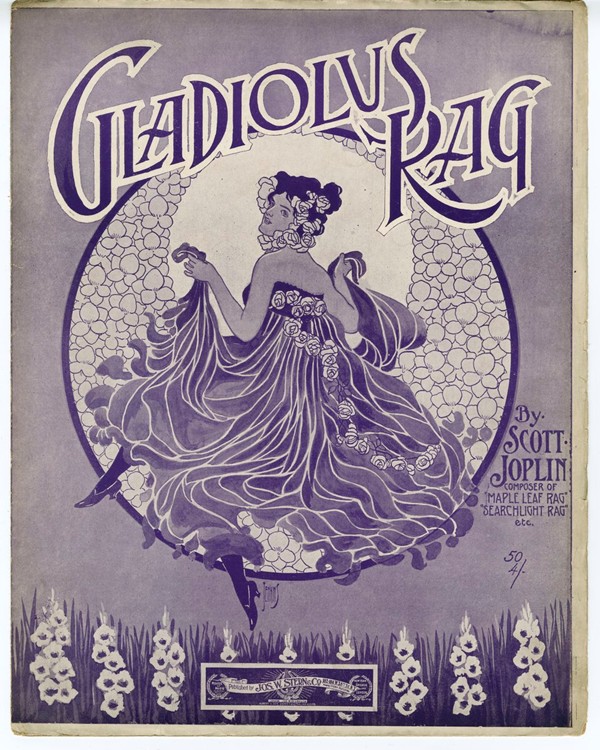
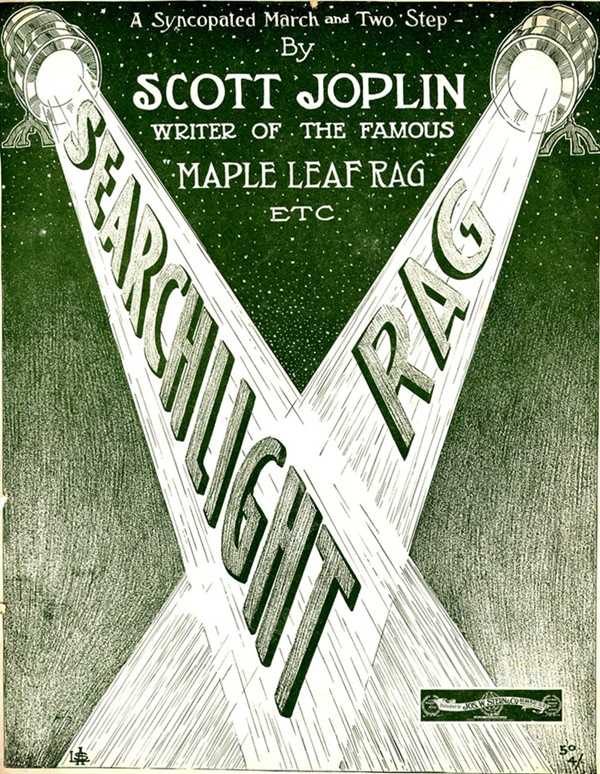
- Joseph Stern, who published Gladious Rag
(1907) (below), Searchlight
Rag (1907) (below),
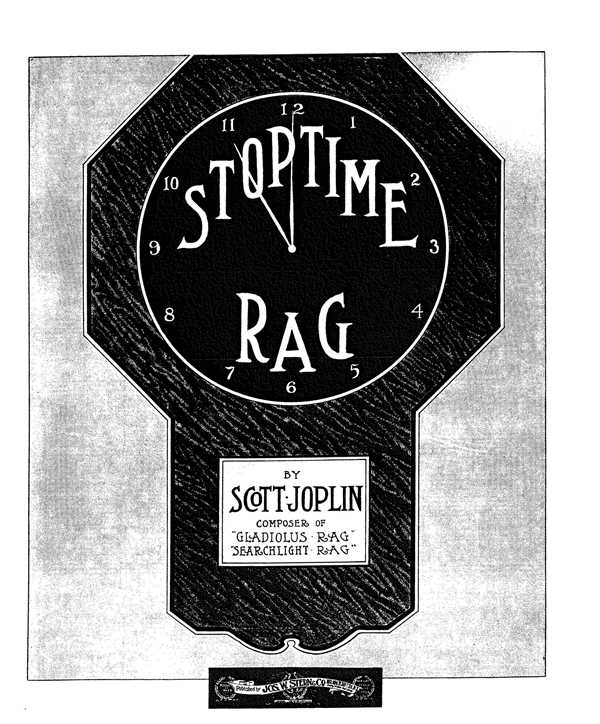
Stoptime Rag (1910) (below) and Scott
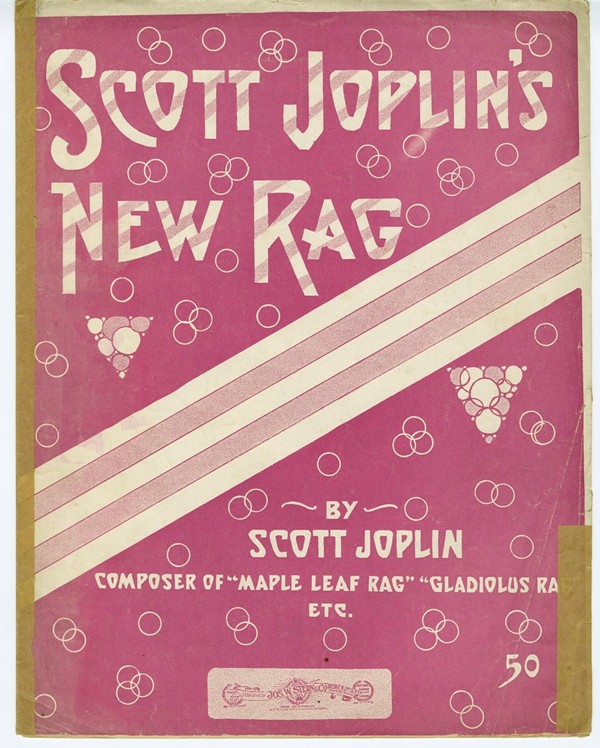
Joplin's New Rag (1912) (below);
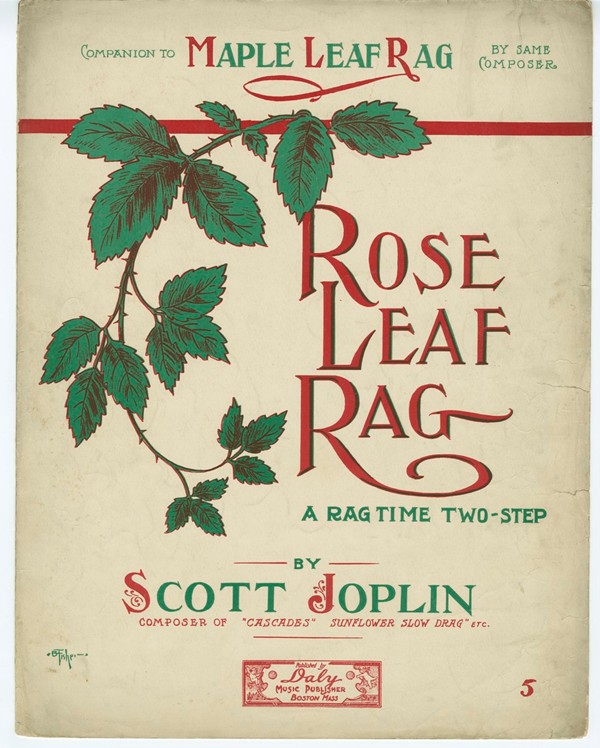
- Joseph Daly, who published Rose Leaf Rag
(1907) (below); and,
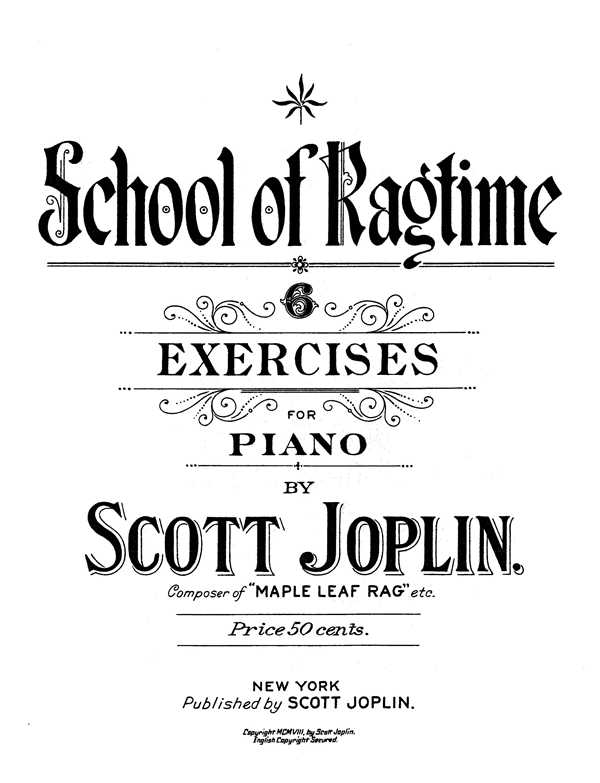
- Seminary Music, who was the selling agent for
Joplin's piano exercises entitled School of
Ragtime (1908) (below)
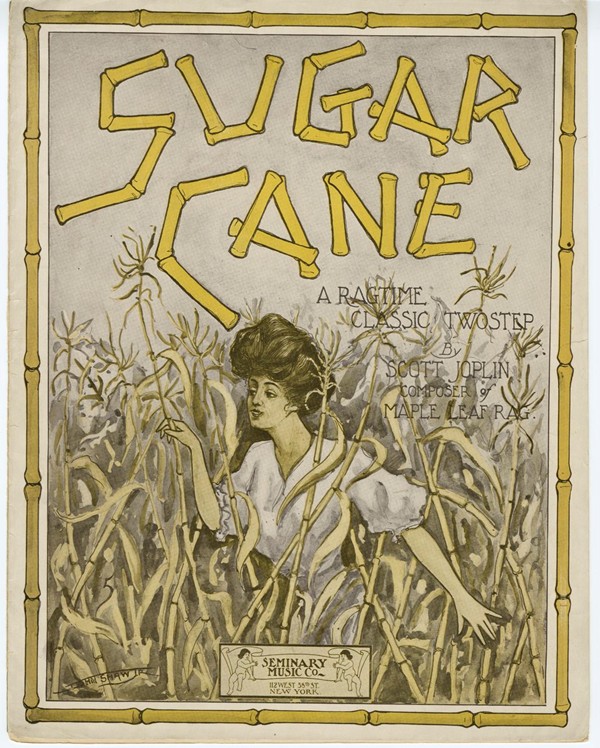
and who also published Sugar Cane
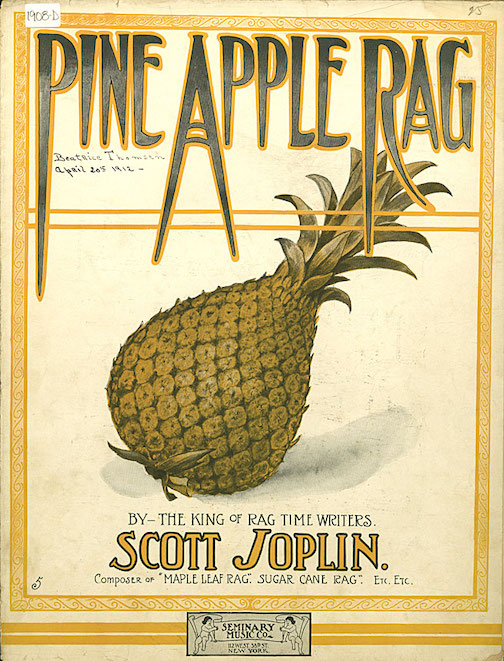
(1908) (below), Pine
Apple Rag (1908) (below),
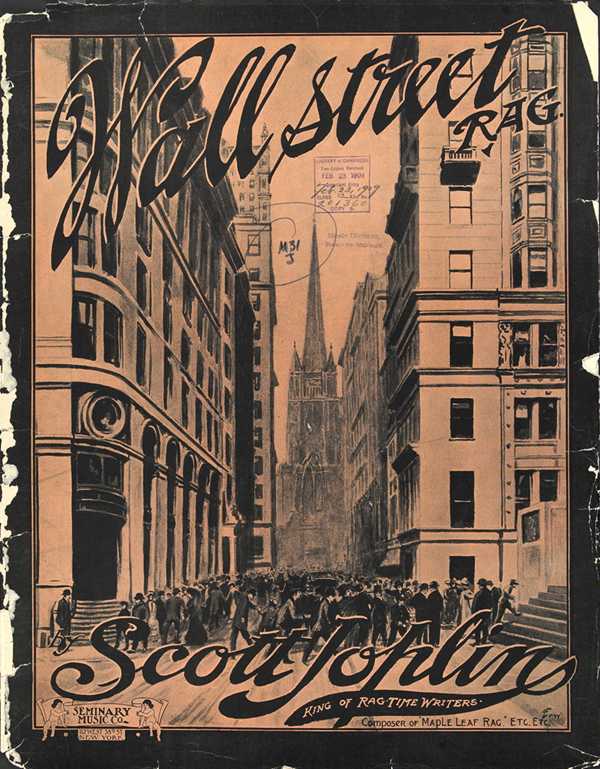
Wall Street Rag (1909) (below),
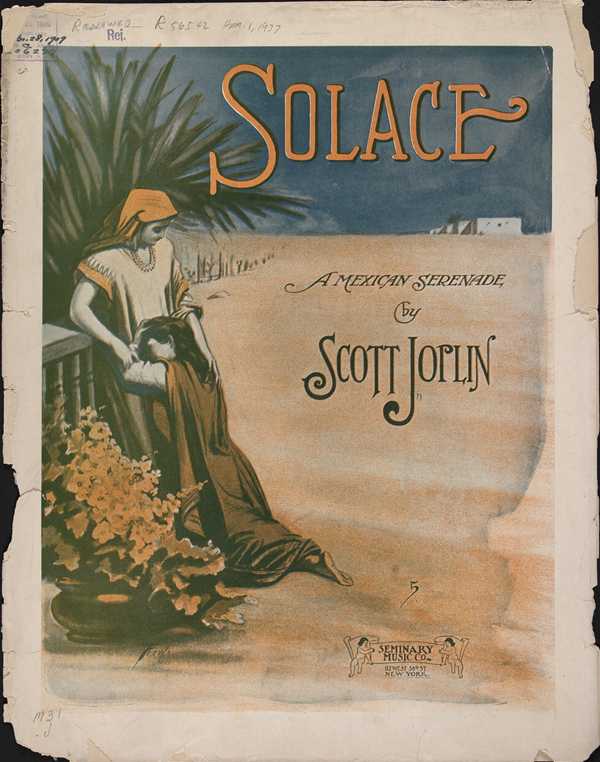
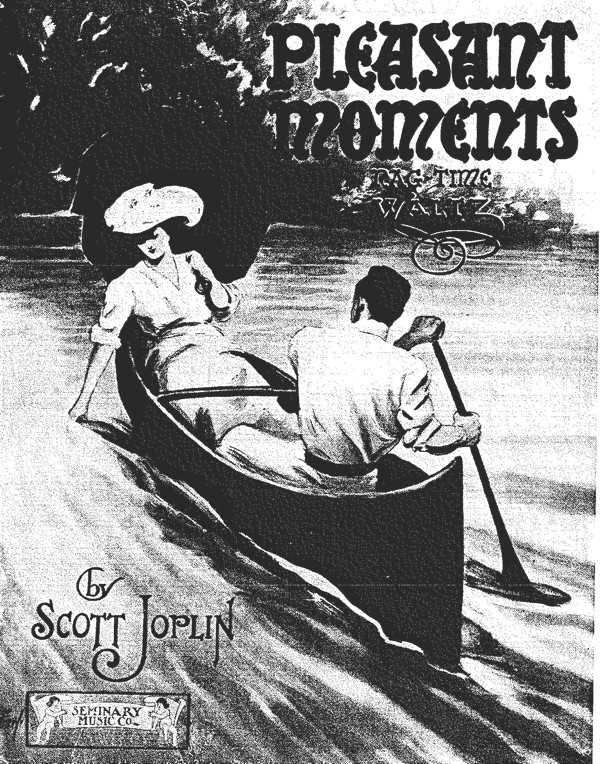
Solace: A Mexican Serenade (1909) (below), Pleasant
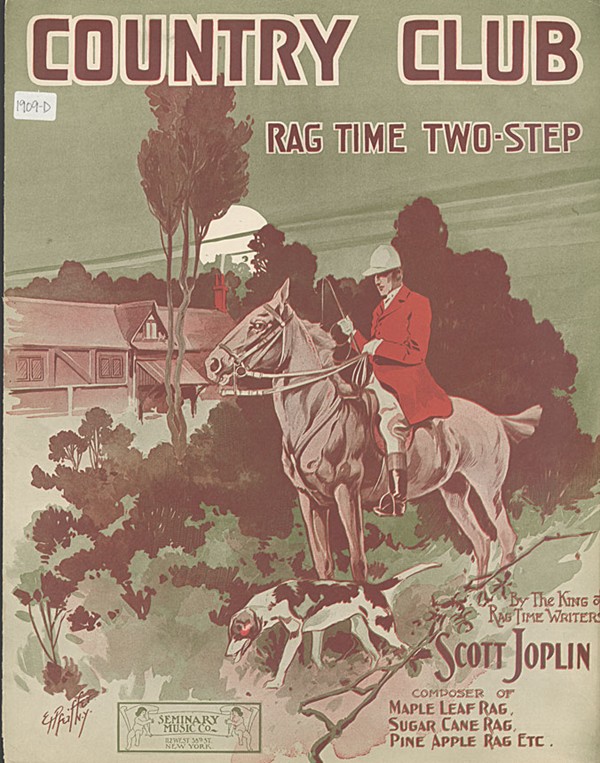
Moments: Ragtime Waltz (1909) (below), Country Club
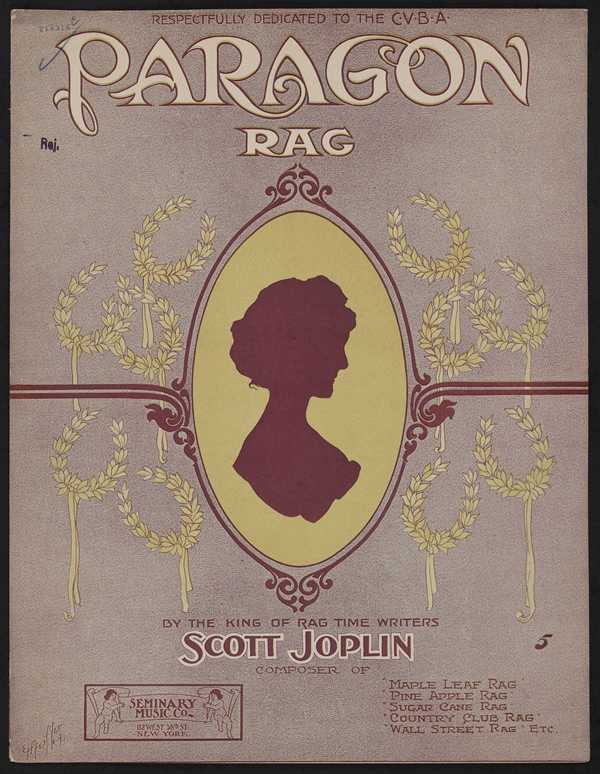
(1909) (below), Paragon
Rag (1909) (below),
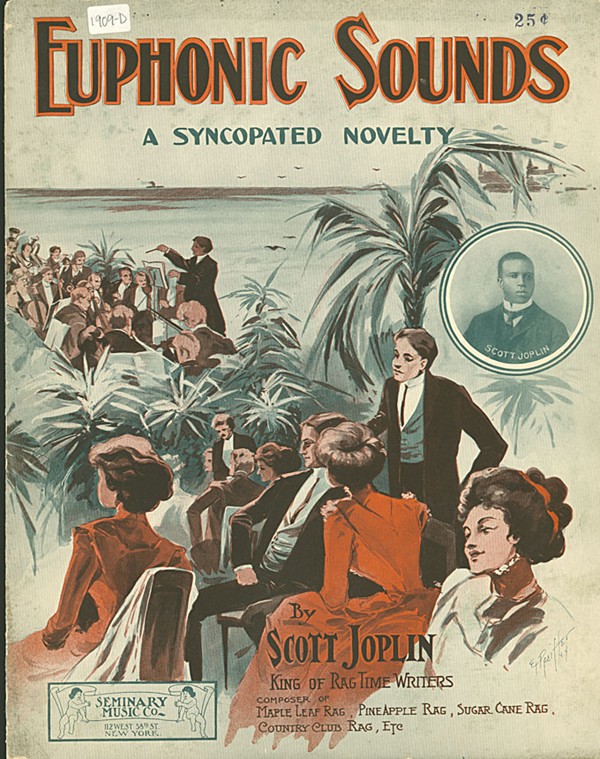
and Euphonic Sounds (1909) (below).
- It is likely that Joplin explored publishers other
than John Stark due in part to a growing rift between
the two men regarding Stark's reluctance to pay
royalties (Berlin, 1995:186).
- Late in 1907, it is believed that Joplin met with Joseph Lamb in Stark's New York
store (Berlin, 1995:173).
Later Lamb visited Joplin and played several of his
rags. It is likely that Joplin played an influential
role in having Lamb's compositions published with
Stark. Evidence of this is Joplin being named as
"arranger" of Sensation (available here), although it is
likely that Lamb wrote and arranged the piece himself.
- Despite his increasingly declining health, life in
New York was relatively good for Joplin, where he was
enjoying some public success (Berlin, 1995: 192):
In New York, he displayed a renewed vigor. In a
span of two and a half years he had sixteen
publications: twelve independent rags, one
collaborative rag, one syncopated waltz, one
habanera and one instruction manual. Many of these
publications were artistic successes, both
developing ideas introduced earlier and pointing to
new directions in ragtime.
- It is believed that Joplin finished his opera, Treemonisha
(see below), in
1910. He apparently approached a number of publishers,
including Stark, Seminary and Joseph Stern, each of
whom rejected his 230-page score. Joplin eventually
published the opera himself in 1911 (Berlin, 1995:198). More
information on Treemonisha is available
here;
the Library of Congress also has an online essay by
Paula Marie Seniors on Treemonisha here.
|
|
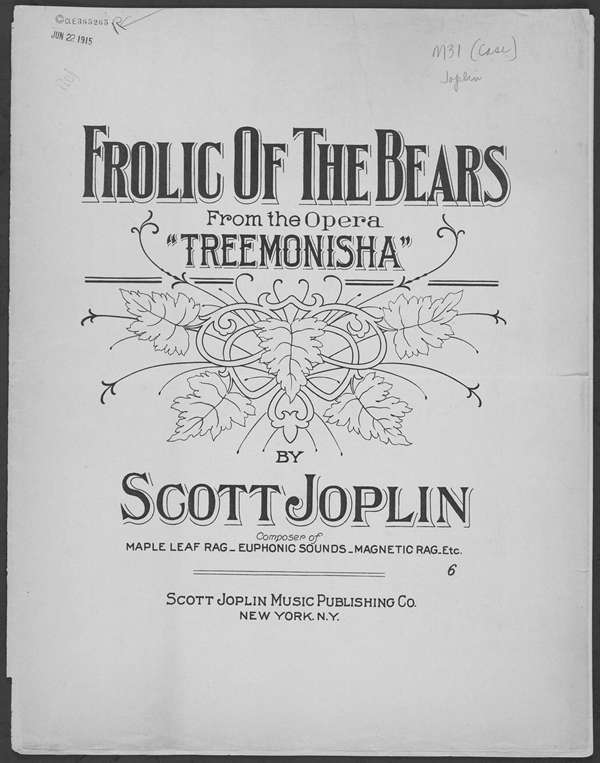
Left: Cover page of dance "Frolic of
the Bears" from Treemonisha.
|
- Joplin was described as depressed and morose by
William Sullivan, a white Canadian who was taking
piano lessons from Joplin in New York from about 1910
to 1912: Berlin (1995:213).
Apparently he was depressed over money, health and the
difficulties he was facing in getting Treemonisha
staged.
- Joplin's later rags became much more complex and
sophisticated, including Euphonic Sounds
(below), Paragon Rag
(below) and Stoptime
Rag (below), and
his final rag, Magnetic Rag (below). Berlin (1995:220) describes his
later works as "stretching the boundaries." For a
detailed analysis of Joplin's late rags, see Guy
Waterman's chapter entitled "Joplin's Late Rags: An
Analysis" in JE Hasse, ed, Ragtime: Its
History, Composers, and Music. New York:
Schirmer Books, 1985:232-42.
- Berlin (1995:233)
effectively summarizes Joplin's last years in New
York, a time when his compositions were growing in
complexity at the same time his health was seriously
declining:
Though the 46-year old Joplin was almost at the end
of his career, in seriously declining health, he was
not declining as a musician. He was still master of
his craft, at the height of his creative powers. He
was continuing to respond to his musical
environment, thinking in new ways, creating a new
type of ragtime. This was a growing, dynamic
composer betrayed by a failing body.
- Joplin became quite sick in early 1917 and entered
Bellevue Hospital. On February 3, 1917, he was
transferred to the mental ward of Manhattan State
Hospital. He died there on April 1, 1917, at the age
of approximately 49 from "demential paralytica" likely
caused by syphillis: Berlin (1995:238).
- Stark published Reflection Rag (below), which Joplin likely
wrote in around 1907, as a tribute to Joplin after
Joplin died (Berlin, 1995:240).
- Joplin also achieved posthumous fame in a number of
other ways, including the staging of Treemonisha
on Broadway and other venues (including a performance to be scheduled in
Toronto by Volcano Theatre likely sometime in
2022), having his music featured in the 1973 movie
The
Sting, being awarded a special
Bicentennial Pulitzer Prize in 1976 for his
contribution to American music, having Billy Dee
Williams portray him in a 1977
movie about his life, and having his portrait
issued on an American stamp in 1983.
3) Sheet Music
of Scott Joplin Compositions
The sheet music below of Scott Joplin compositions is
set out roughly chronologically into the following three
sections: (a) Joplin rags, marches and
waltzes; (b) compositions on which
Joplin collaborated or arranged; and (c) Joplin songs.
a) Joplin
Rags, Marches and Waltzes
 |
Scott Joplin. The
Great Crush Collision March. Temple,
TX: John R Fuller, 1896.
[view sheet
music] [top]
|
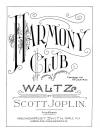 |
Scott Joplin. Harmony Club Waltzes.
Temple, TX: Robert Smith, 1896.
[view sheet
music] [top]
|
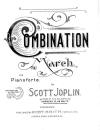 |
Scott Joplin. Combination
March. Temple, TX: Robert Smith,
1896.
[view
sheet music] [top]
|
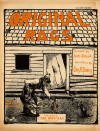 |
Scott Joplin. Original
Rags. Kansas City, MO: Carl Hoffman
Music, 1899.
[view sheet music]
Source: Duke
University, Historic American Sheet Music
[top]
|
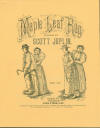 |
Scott Joplin. Maple
Leaf Rag. Sedalia, MO: John Stark
& Son, 1899.
[view
sheet music]
Source: Indiana
University Sheet Music Collections [top]
|
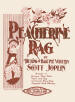 |
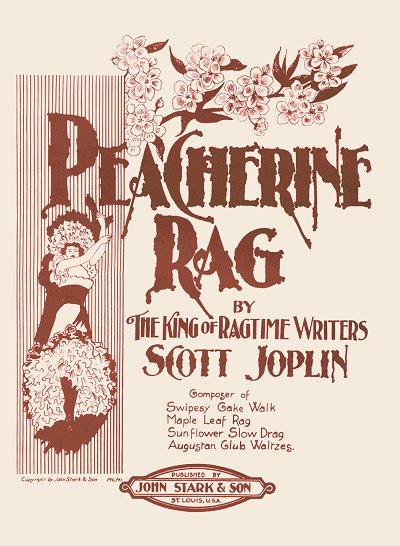
Scott Joplin. Peacherine Rag. St
Louis, MO: John Stark & Son, 1901.
[view sheet
music] [top]
|
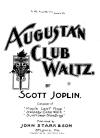 |
Joplin, Scott. Augustan
Club Waltzes. St Louis, MO: John
Stark & Son, 1901.
[view sheet
music] [top]
|
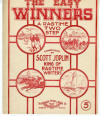 |
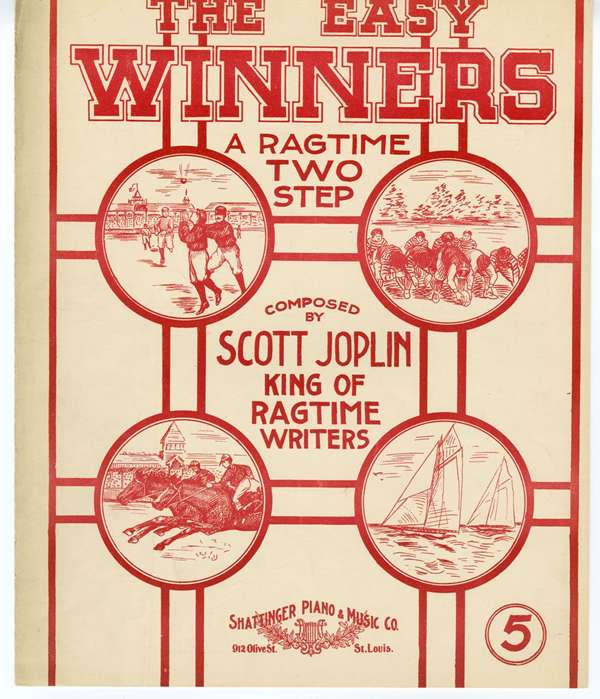
Scott Joplin. The Easy Winners: A Ragtime
Two Step. St Louis, MO: Scott
Joplin, 1901.
[view
sheet music]
Source: Indiana
University Sheet Music Collections [top]
|
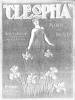 |
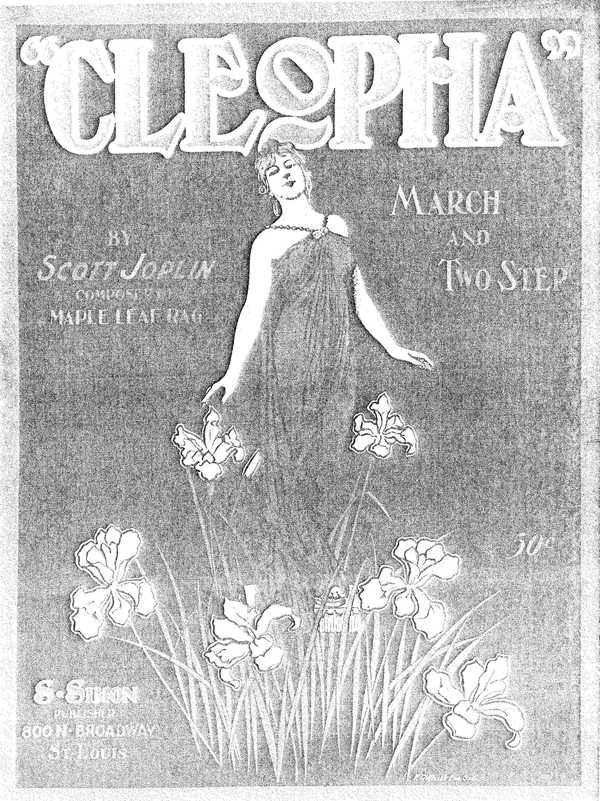
Scott Joplin. Cleopha. St Louis,
MO: S Simon, 1902.
[view sheet
music] [top]
|
 |
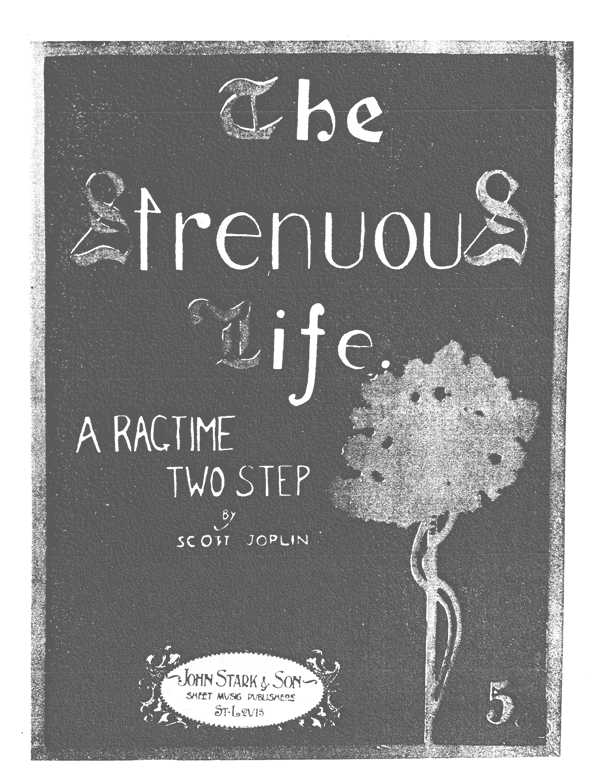
Scott Joplin. The Strenuous Life.
St Louis, MO: John Stark & Son, 1902.
[view
sheet music] [top]
|
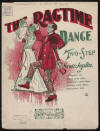 |
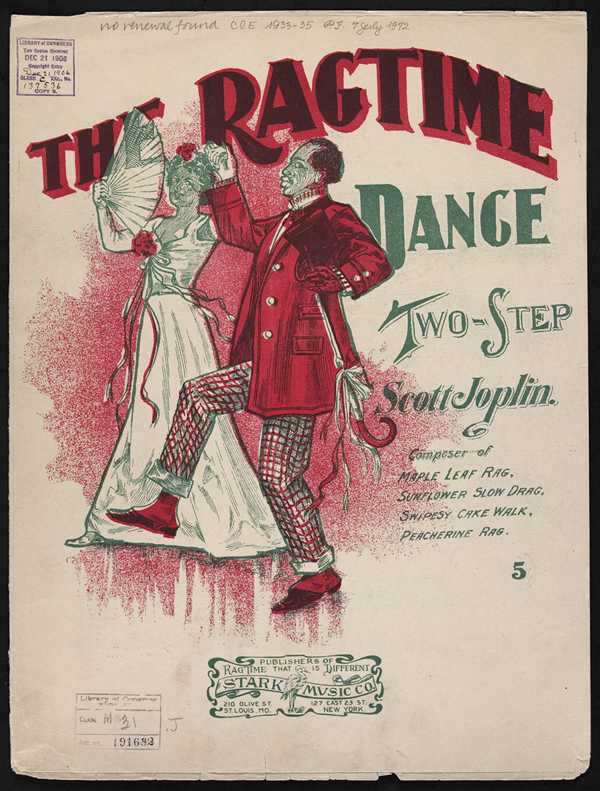
Scott Joplin. The Ragtime Dance Two Step.
St Louis, MO: John Stark & Son, 1906.
[view
sheet music]
Source: Cover from Library of
Congress, Music Division [top]
|
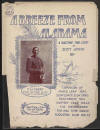 |
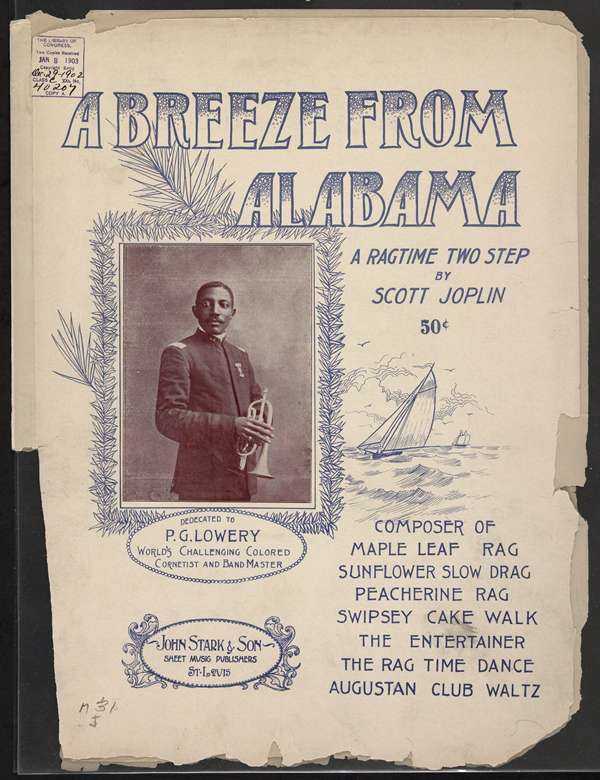
Scott Joplin. A Breeze From Alabama.
St Louis, MO: John Stark & Son, 1902.
[view
sheet music]
Source: Cover from Library of
Congress, Music Division
[top]
|
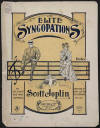 |
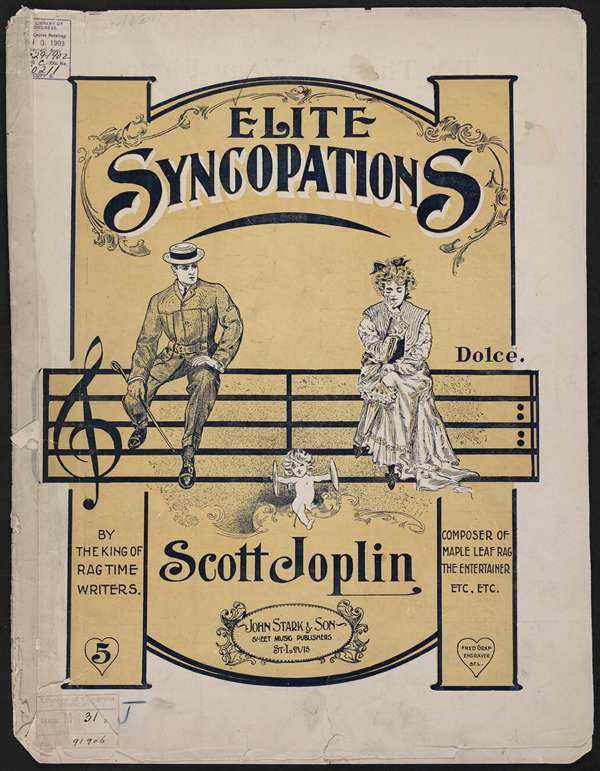
Scott Joplin. Elite Syncopations.
St Louis, MO: John Stark & Son, 1902.
[view sheet
music]
Source: Cover from Library of
Congress, Music Division
[top]
|
 |
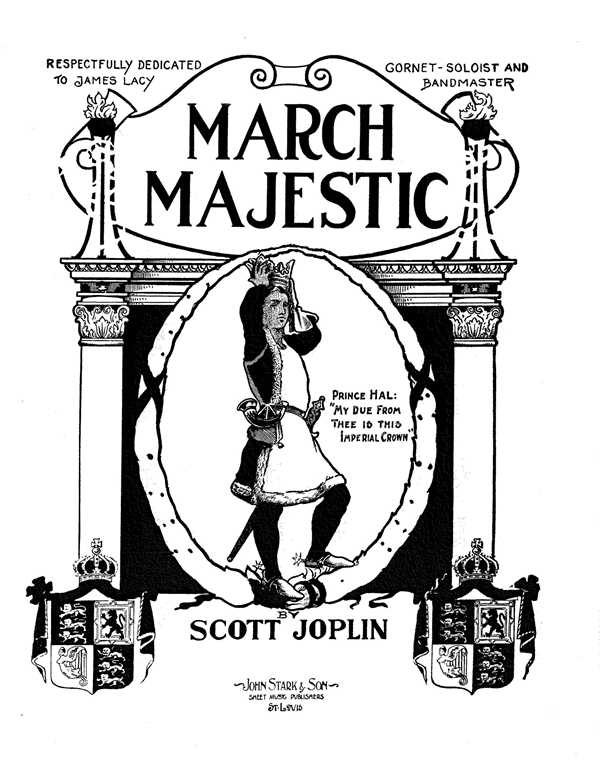
Scott Joplin. March
Majestic. St Louis, MO: John
Stark & Son, 1902.
[view sheet
music] [top]
|
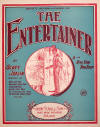 |
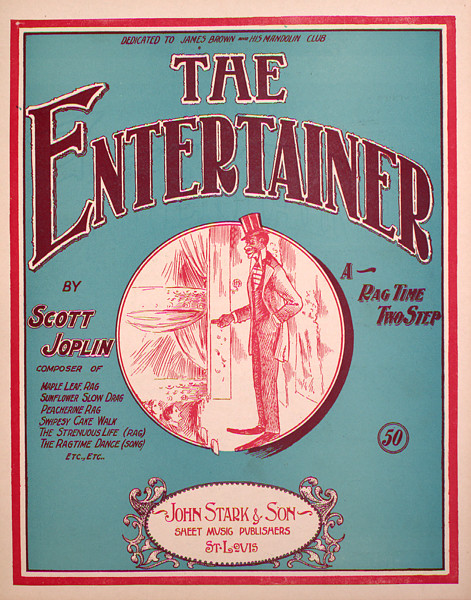
Scott Joplin. The Entertainer. St
Louis, MO: John Stark & Co, 1902.
[view
sheet music]
Source: Johns
Hopkins University Levy Collection [top]
|
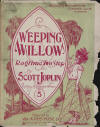 |
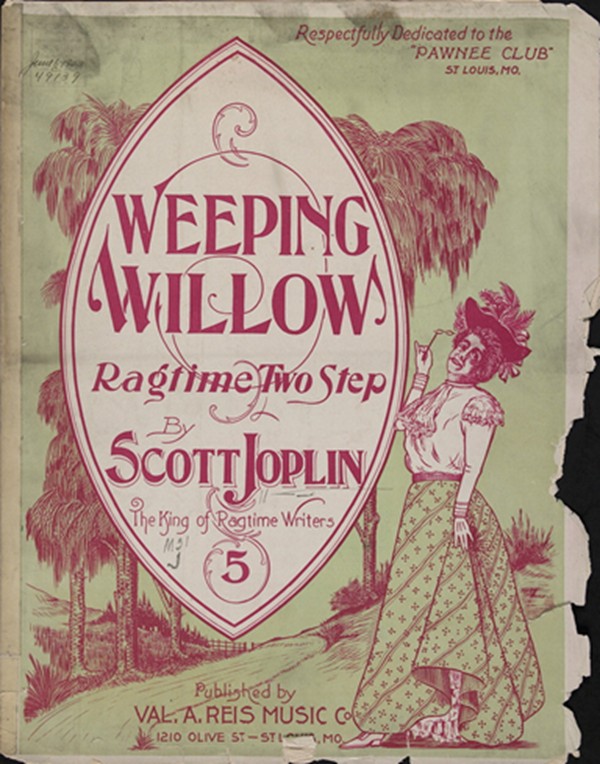
Scott Joplin. Weeping Willow. St
Louis, MO: Val A Reis Music Co, 1903.
[view sheet
music]
Source: Cover from Library of
Congress, Music Division
[top]
|
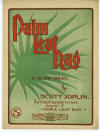 |
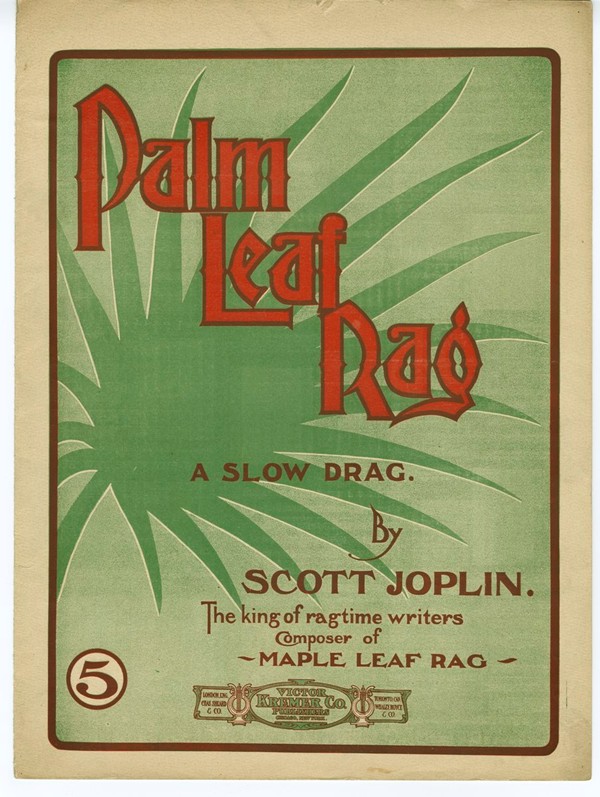
Scott Joplin. Palm Leaf Rag: A Slow Drag.
New York: Victor Kremer Co, 1903.
[view
sheet music]
Source: Indiana
University Sheet Music Collections [top]
|
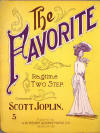 |
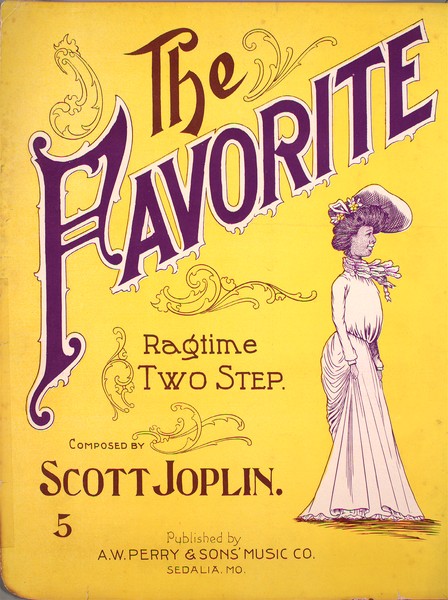
Scott Joplin. The Favorite.
Sedalia, MO: AW Perry & Sons, 1903.
[view
sheet music]
Source:Johns
Hopkins University Levy Collection
[top]
|
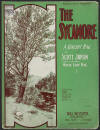 |
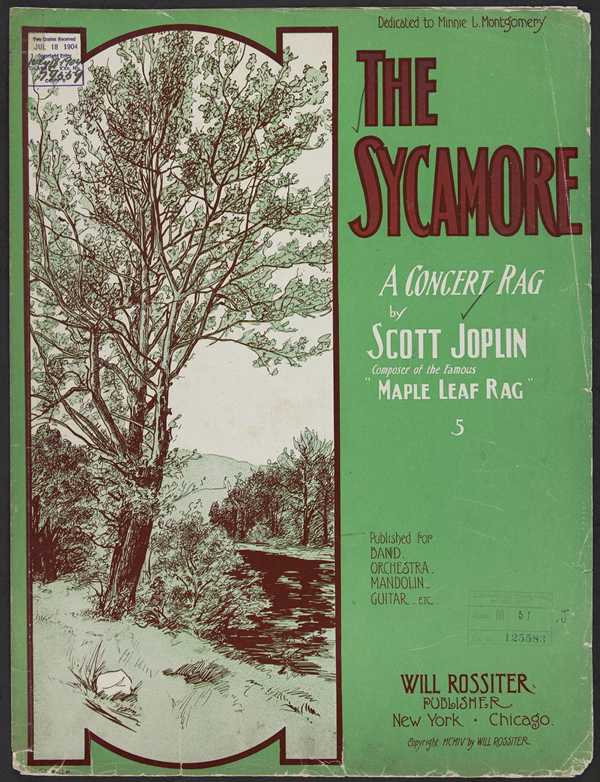
Scott Joplin. The Sycamore: A Concert Rag.
Chicago, IL: Will Rossiter, 1904.
[view sheet
music]
Source: Cover from Library of
Congress, Music Division
[top]
|
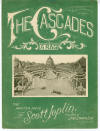 |
Scott Joplin. The
Cascades: A Rag. St Louis, MO: John
Stark & Son, 1904.
[view
sheet music]
Source: Indiana
University Sheet Music Collections [top]
|
 |
Scott Joplin. The
Chrysanthemum. St Louis, MO:
John Stark & Son, 1904.
[view
sheet music]
Source: Indiana
University Sheet Music Collections [top]
|
 |
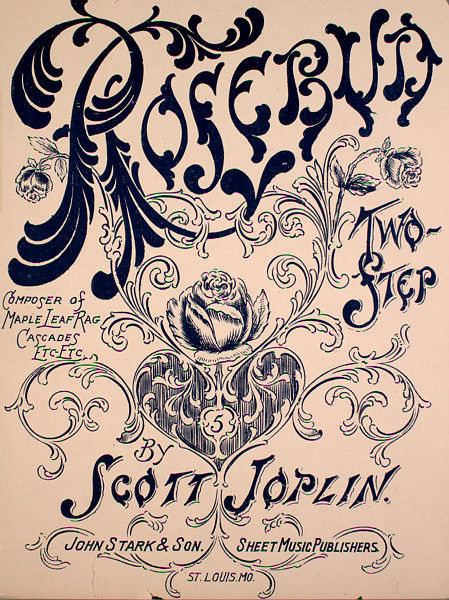
Scott Joplin. Rosebud March. St
Louis, MO: John Stark & Son, 1905.
[view
sheet music] [top]
|
 |
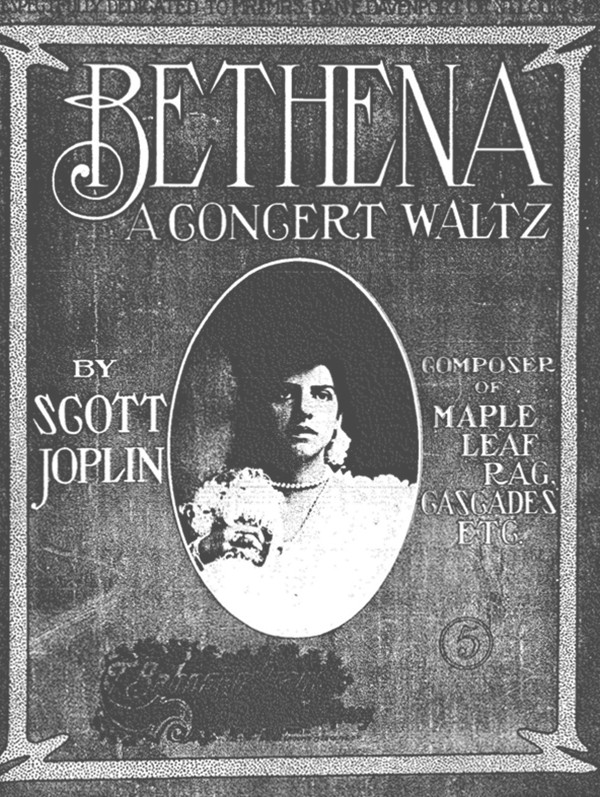
Joplin, Scott. Bethena:
A Concert Waltz. St Louis, MO:
Bahnsen Music Co Ltd, 1905.
[view sheet
music] [top]
|
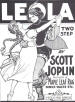 |
Scott Joplin. Leola.
St Louis, MO: American Music Syndicate, 1905.
[view sheet
music] [top]
|
 |
Joplin, Scott. Binks'
Waltz. St Louis, MO: Bahnsen Music
Co Ltd, 1905.
[view sheet
music] [top]
|
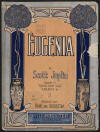 |
Scott Joplin. Eugenia. Chicago,
IL: Will Rossiter, 1906.
[view sheet
music]
Source: Cover from Library of
Congress, Music Division
[top]
|
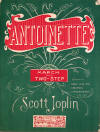 |
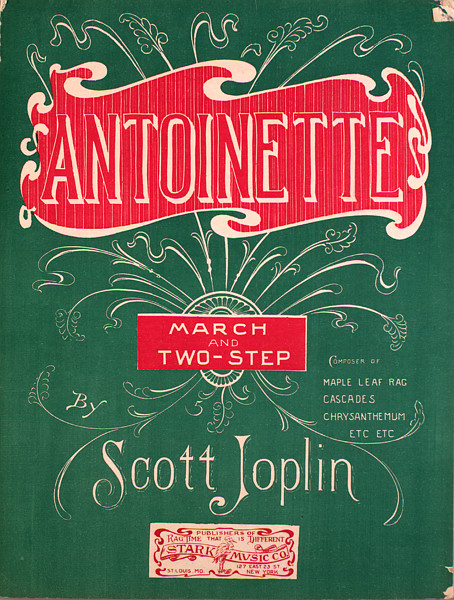
Scott Joplin, Antoinette. March and
Two-Step. St Louis, MO: Stark Music
Co, 1906.
[view
sheet music]
Source: Johns
Hopkins University Levy Collection
[top]
|
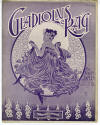 |
Scott Joplin. Gladiolus
Rag. New York: Joseph W Stern, 1907.
[view
sheet music]
Source: Indiana
University Sheet Music Collections [top]
|
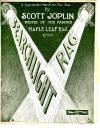 |
Scott Joplin. Searchlight
Rag. New York: Joseph W Stern, 1907.
[view
sheet music]
Source: Duke
University, Historic American Sheet Music [top]
|
 |
Scott Joplin. The Nonpareil. St
Louis, MO: Stark Music Co, 1907.
[view sheet
music] [top]
|
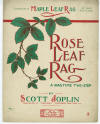 |
Scott Joplin. Rose
Leaf Rag. Boston, MA:
Jos M Daly Music Pub Co, 1907.
[view
sheet music]
Source: Indiana
University Sheet Music Collections [top]
|
 |
Scott Joplin. School
of Ragtime. New York: Scott Joplin,
1908.
[view
sheet music] [top]
|
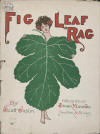 |
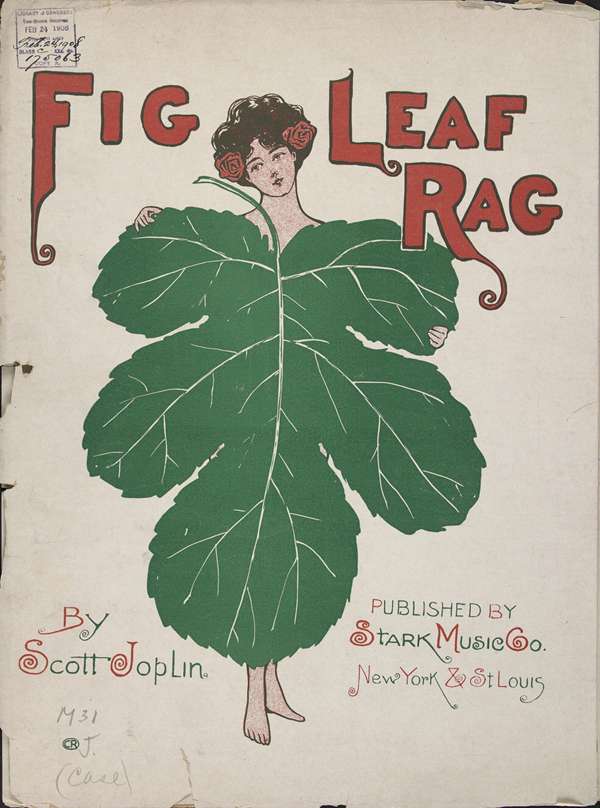
Scott Joplin. Fig Leaf Rag. St
Louis, MO: Stark Music Co, 1908.
[view sheet
music]
Source: Cover from Library of
Congress, Music Division
[top]
|
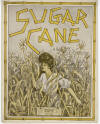 |
Scott Joplin. Sugar
Cane. New York: Seminary Music Co,
1908.
[view
sheet music]
Source: Indiana
University Sheet Music Collections [top]
|
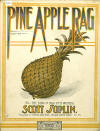 |
Scott Joplin. Pine
Apple Rag. New York: Seminary Music
Co, 1908.
[view
sheet music]
Source: Johns
Hopkins University Levy Collection [top]
|
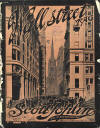 |
Scott Joplin. Wall
Street Rag. New York: Seminary Music
Co, 1909.
[view sheet
music]
Source: Cover from Library of
Congress, Music Division
[top]
|
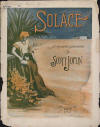 |
Scott Joplin. Solace:
A Mexican Serenade. New York:
Seminary Music Co, 1909.
[view sheet
music]
Source: Cover from Library of
Congress, Music Division
[top]
|
 |
Joplin, Scott. Pleasant
Moments: Ragtime Waltz. New York:
Seminary Music Co, 1909.
[view sheet
music] [Listen
to Connorized Roll purportedly played by
Scott Joplin] [top]
|
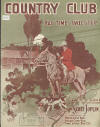 |
Scott Joplin. Country
Club. New York: Seminary Music Co,
1909.
[view
sheet music]
Source: Library of
Congress, Music Division
[top]
|
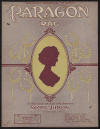 |
Scott Joplin. Paragon
Rag. New York: Seminary Music
Co, 1909.
[view sheet
music]
Source: Cover from Library of
Congress, Music Division
[top]
|
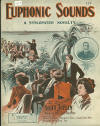 |
Scott Joplin. Euphonic
Sounds. New York: Seminary Music Co,
1909.
[view
sheet music]
Source: Library of
Congress, Music Division
[top]
|
 |
Scott Joplin. Stoptime
Rag. New York: Joseph W Stern, 1910.
[view sheet
music] [top]
|
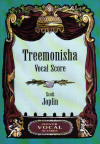 |
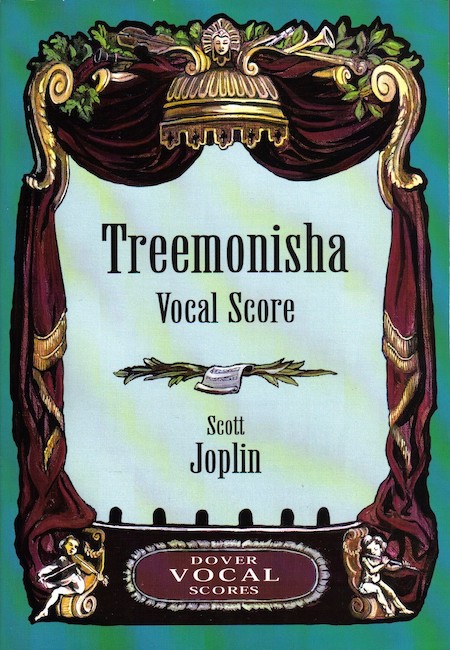
Scott Joplin. Treemonisha.
New York: Scott Joplin, 1911.
[view
preface and Table of Contents] (5
pages, PDF). The Library of Congress has the
complete score online, available here.
The vocal score to the left
can be purchased here
[top]
|
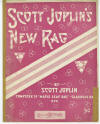 |
Scott Joplin. Scott
Joplin's New Rag. New York: Joseph W
Stern, 1912.
[view
sheet music]
Source: Indiana
University Sheet Music Collections [top]
|
 |
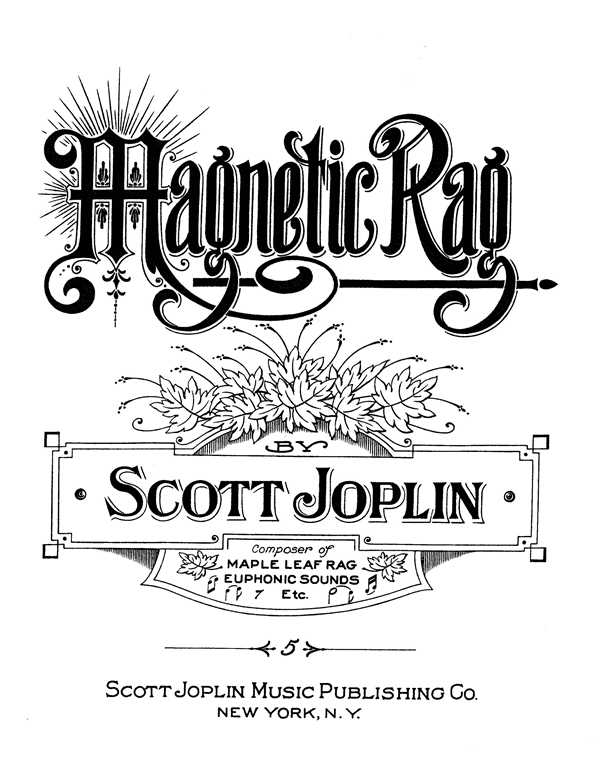
Scott Joplin. Magnetic
Rag. New York: Scott Joplin Music
Publishing Co, 1914.
[view
sheet music] [top]
|
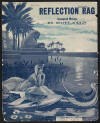 |
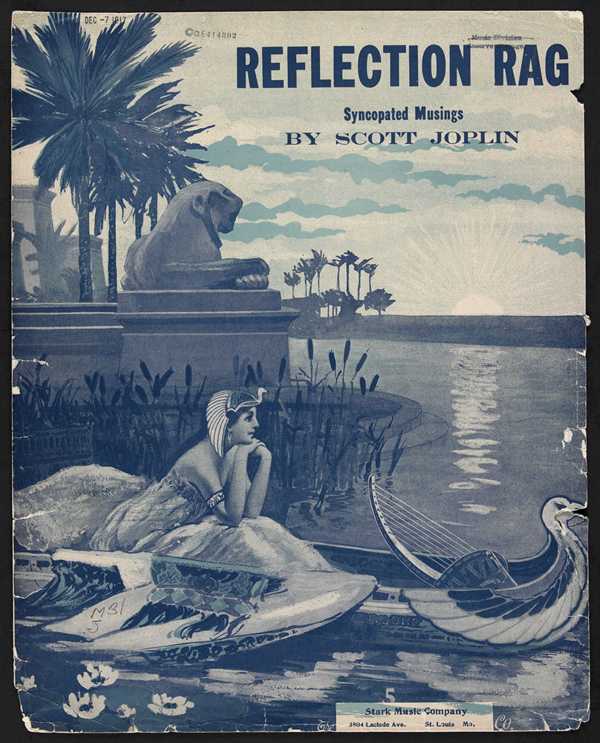
Scott Joplin. Reflection
Rag. St Louis, MO: Stark Music Co,
1917.
[view sheet
music]
Source: Cover from Library of
Congress, Music Division
[top]
|
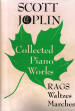 |
Scott Joplin. Silver Swan Rag.
Trust of Lottie Joplin Thomas, 1971.
Work still protected by
copyright. Available in Vera Brodsky
Lawrence, ed., Scott Joplin: Complete
Piano Works (New York: New York
Public Library, 1971).
|
b) Joplin
Collaborations and Arrangements
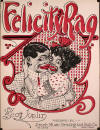 |
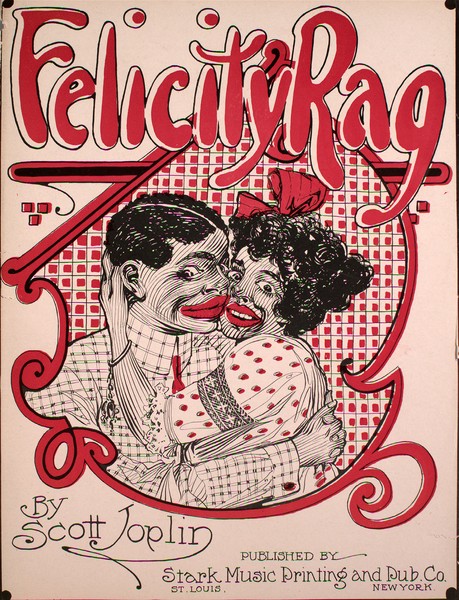
Scott Joplin (and Scott Hayden). Felicity
Rag. St Louis, MO: Stark Music Co,
1911.
[view
sheet music]
Source: Johns
Hopkins University Levy Collection [top]
|
 |
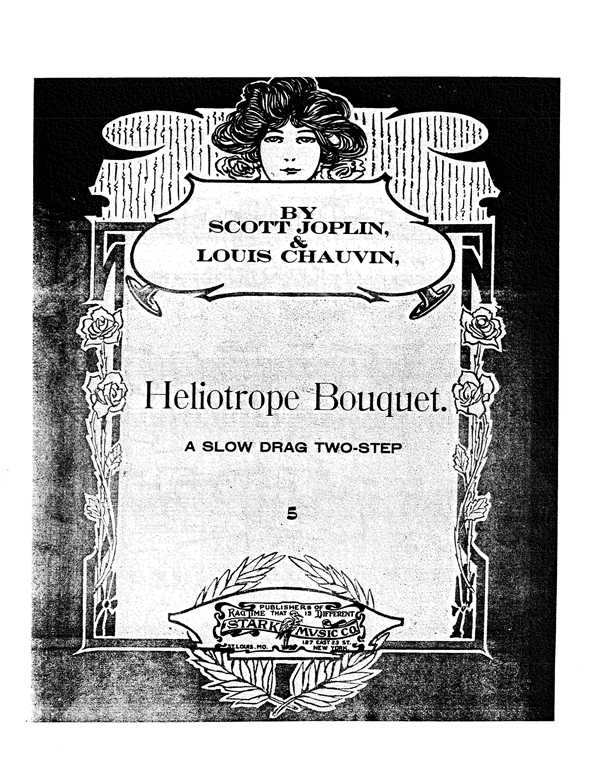
Scott Joplin (and Louis Chauvin). Heliotrope
Bouquet: A Slow Drag Two-Step. St
Louis, MO: Stark Music Printing and Pub Co,
1907.
[view sheet
music] [top]
|
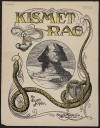 |
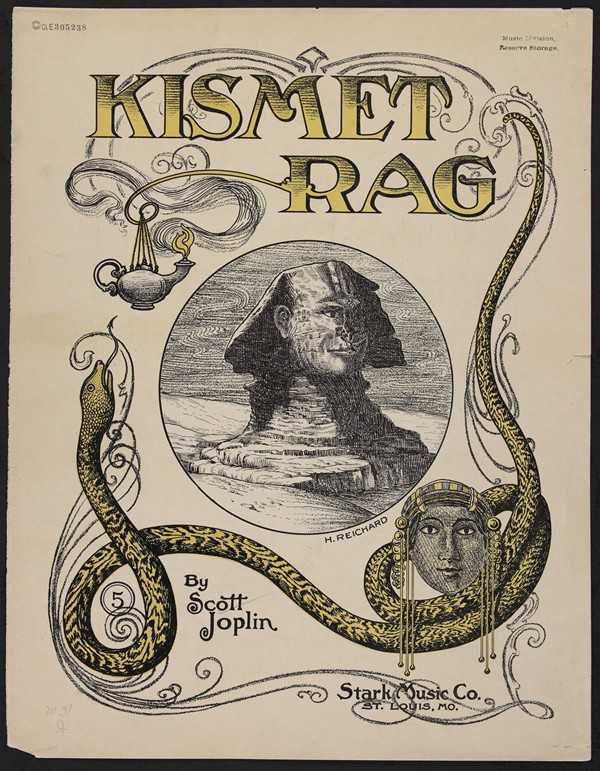
Scott Joplin (and Scott Hayden). Kismet
Rag. St Louis, MO: Stark Music
Company, 1913.
[view sheet
music]
Source: Cover from Library of
Congress, Music Division
[top]
|
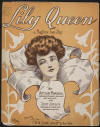 |
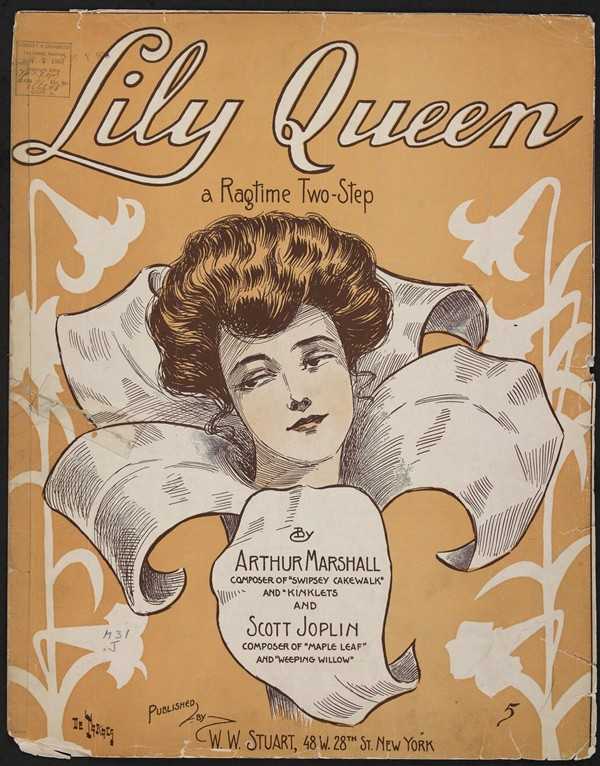
Scott Joplin (and Arthur Marshall). Lily
Queen. New York: Willis Woodward,
1907.
[view sheet
music]
Source: Cover from Library of
Congress, Music Division
[top]
|
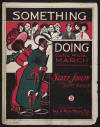 |
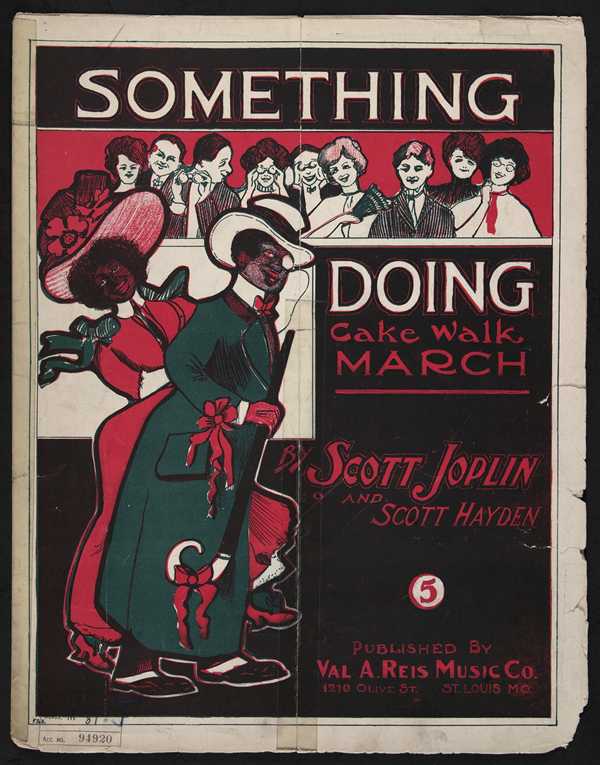
Scott Joplin (and Scott Hayden). Something
Doing. St Louis, MO: Val A Reis
Music Co, 1903.
[view
sheet music]
Source: Cover from Library of
Congress, Music Division [top]
|
 |
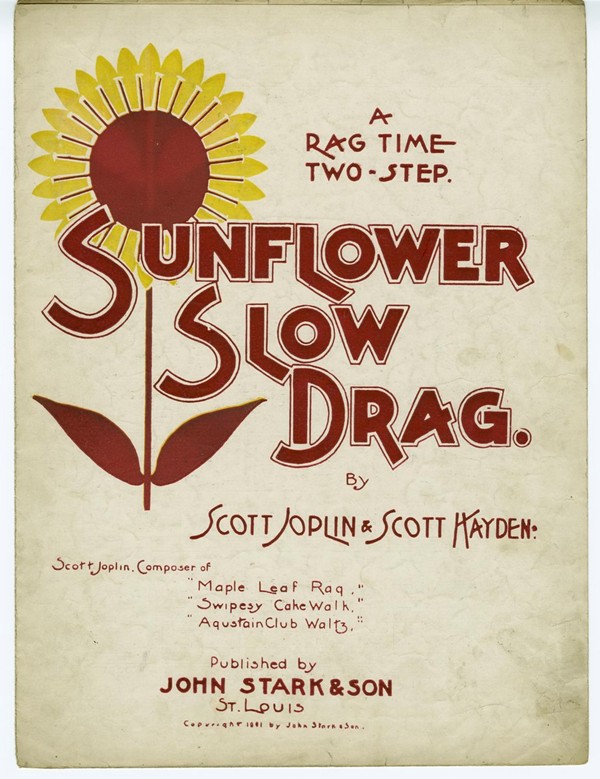
Scott Joplin (and Scott
Hayden). Sunflower Slow Drag. St
Louis, MO: John Stark and Son, 1900.
[view
sheet music]
Source: Indiana
University Sheet Music Collections [top]
|
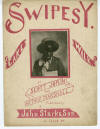 |
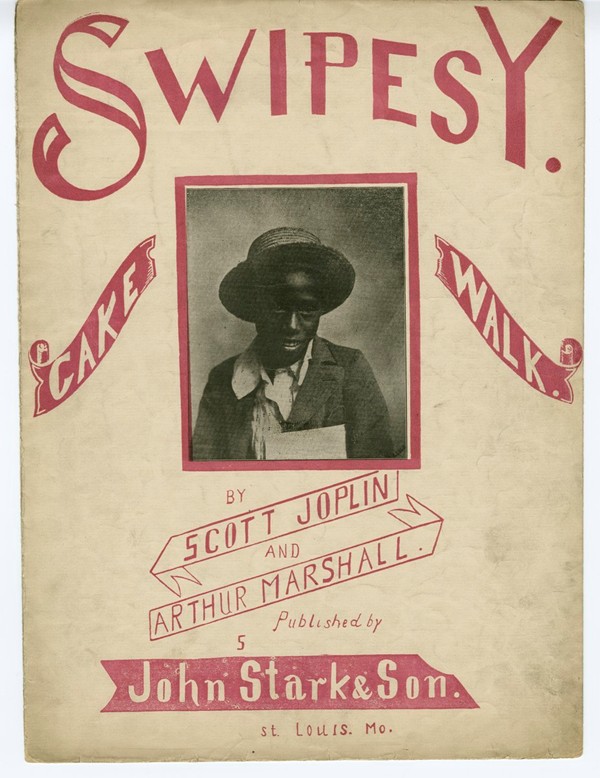
Scott Joplin (and Arthur
Marshall). Swipesy Cake Walk. St
Louis, MO: John Stark and Son, 1900.
[view
sheet music]
Source: Indiana
University Sheet Music Collections [top]
|
c) Joplin
Songs
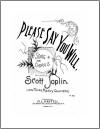 |
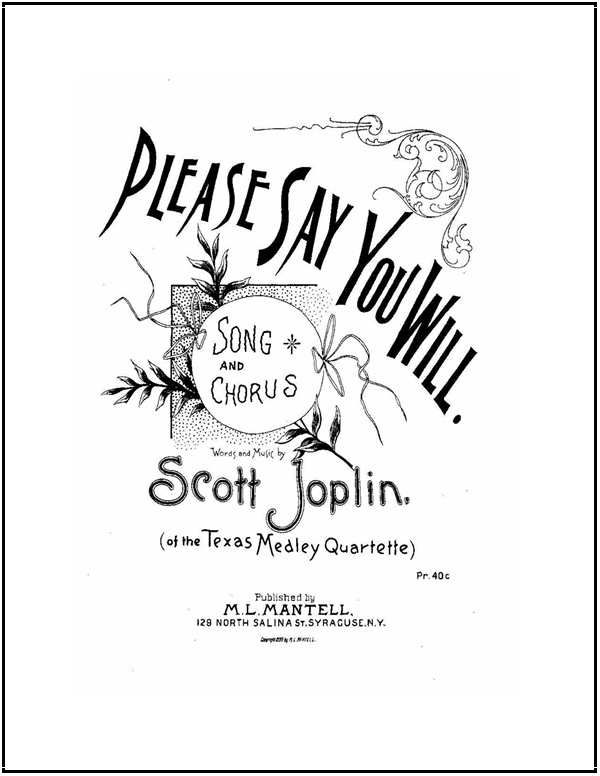
Scott Joplin. Please
Say You Will. Syracuse, NY: ML
Mantell, 1895.
[view
sheet music]
Source: Photocopy from the New York
State Library [top]
|
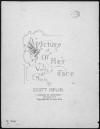 |
Scott Joplin. A Picture Of Her Face.
Syracuse, NY: Scott Joplin, 1895.
[view sheet music]
Source: Library of
Congress, Music Division
[top]
|
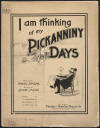 |
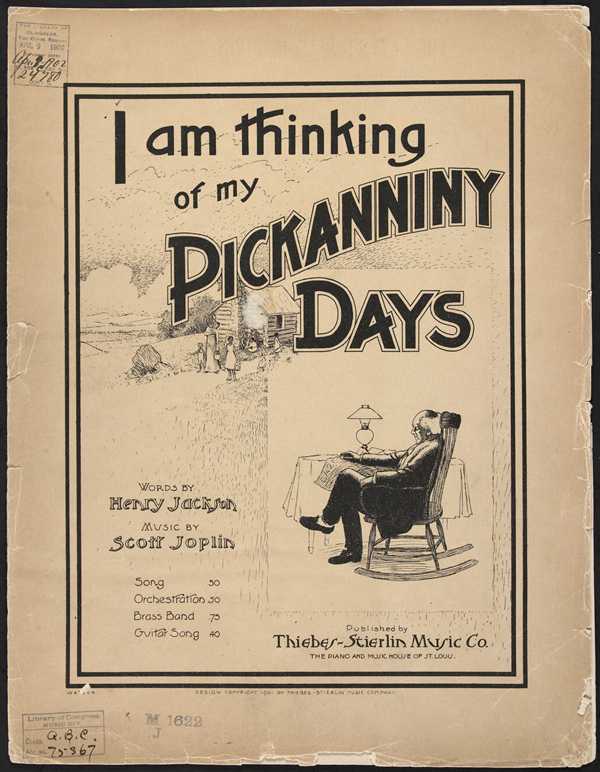
Scott Joplin. I Am Thinking of My
P*ckaninny Days (lyrics by Henry
Jackson). St Louis, MO: Thiebes Sterlin Music
Co, 1901.
[view sheet music]
Source: Library of
Congress, Music Division
[top]
|
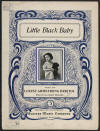 |
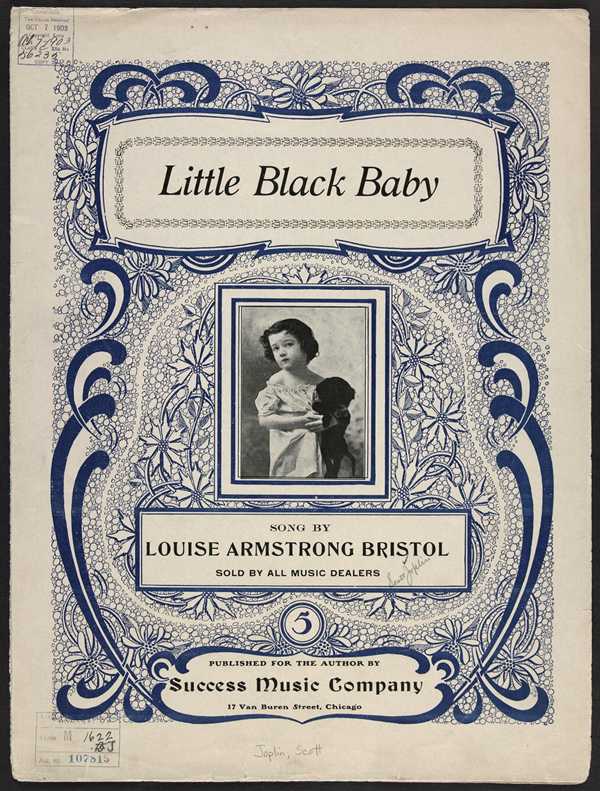
Scott Joplin. Little Black Baby
(lyrics by Louis Armstrong Bristol). Chicago,
IL. 1903.
[view sheet music]
Source: Library of
Congress, Music Division
[top]
|
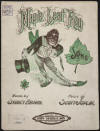 |
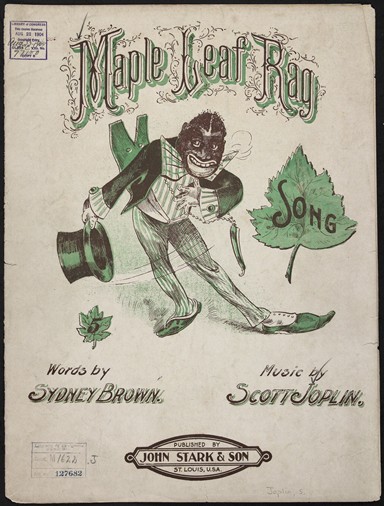
Scott Joplin. Maple Leaf Rag
(song) (words by Sydney Brown). St Louis, MO:
John Stark & Son, 1903.
[view sheet music]
Source: Library of
Congress, Music Division
[top]
|
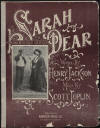 |
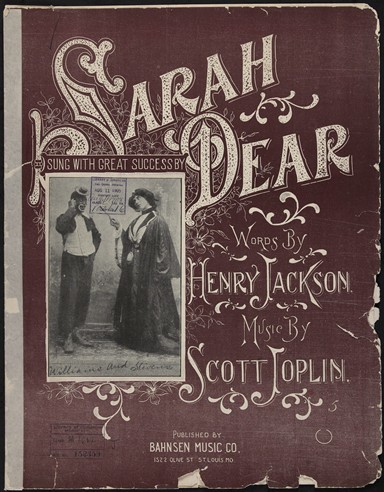
Scott Joplin. Sarah Dear (lyrics
by Henry Jackson). St Louis, MO: Bahnsen Music
Co, 1905.
[view sheet music]
Source: Library of
Congress, Music Division
[top]
|
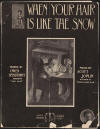 |
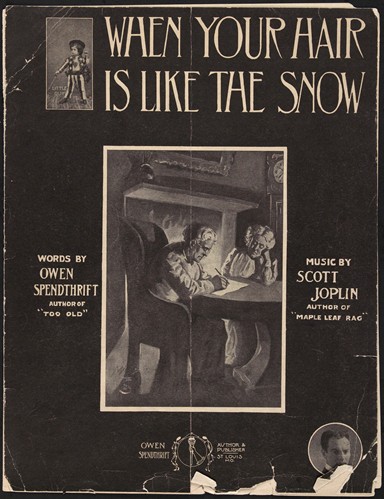
Scott Joplin. When Your Hair is Like the
Snow (words by Owen Spendthrift). St
Louis, MO: Owen Spendthrift, 1907.
[view sheet music]
Source: Library of
Congress, Music Division
[top]
|
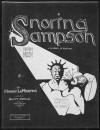 |
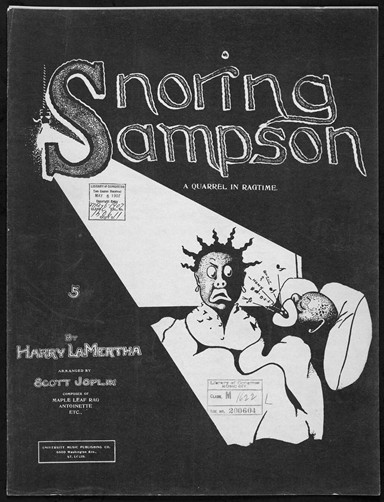
Scott Joplin, arranger. Composed by Harry
LaMertha. Snoring Sampson: A Quarrel in
Ragtime. St Louis, MO: University
Music Publishing Co, 1907.
[view sheet music]
Source: Library of
Congress, Music Division
[top]
|
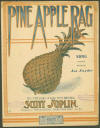 |
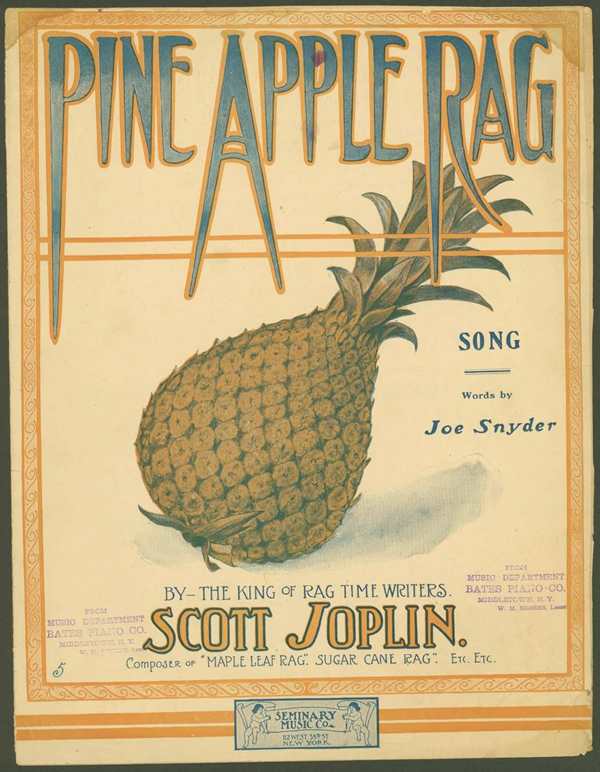
Scott Joplin. Pine
Apple Rag (song) (J Snyder). New
York, 1910.
[view
sheet music]
Source: University
of Mississippi Libraries [top]
|
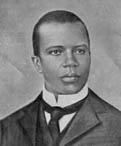 |
Scott Joplin. Lovin' Babe. 1911.
|
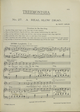 |
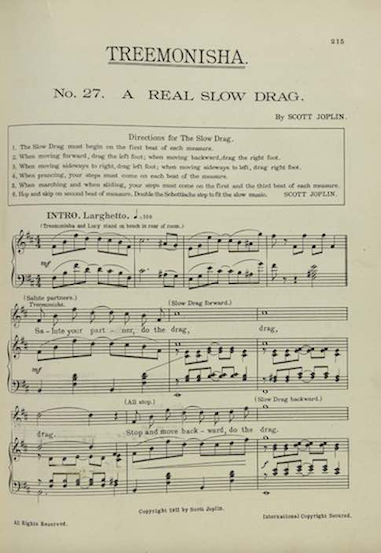
Scott Joplin. A Real Slow Drag. 1913
(excerpt from Treemonisha).
[view sheet music] [orchestral version]
Source: Library of
Congress, Music Division
[top]
|
|
|
Scott Joplin. Frolic
of the Bears. New York: Scott
Joplin Music Publishing Co, 1915.
[view sheet music]
Source: Library of
Congress, Music Division
[top]
|
4) Recordings of Scott Joplin Compositions
Set out below is an experimental .MP3 of me playing
Joplin's Maple Leaf Rag. I hope to add more
recordings in the future.
There are also a number of widely available commercial
recordings of Scott Joplin compositions:
Commercial Recordings of Scott
Joplin Compositions:
Set out below is only a select list of Joplin
recordings; there are many, many more available.
- Guido Nielsen, Scott Joplin: The Complete,
Rags, Marches, Waltzes & Songs.
Basta Records, 2004. Purchase details here.
- John Arpin, John Arpin Plays Scott Joplin,
Vol 1 and 2. Purchase details here.
- Joshua Rifkin, Scott Joplin Piano Rags.
Nonesuch Records, 1990. Purchase details here.
- Richard Zimmerman, Scott Joplin: His
Complete Works. Bescol Records, 1994.
Purchase details here.
I hope to shortly order the
following CD from Deutsche Grammophon, a recording
from 2005 of Joplin's Treemonisha:
- Gunther Schuller, conductor. Treemonisha
(Deutsche Grammophon). Purchase details here.
MIDI Recordings of Scott Joplin Compositions
A number of ragtime music enthusiasts have made MIDI
recordings of Scott Joplin compositions available for
free on the Internet:
5) Bibliography
- Berlin, Edward. "A Biography of Scott Joplin (c
1867-1917)" (1998) (available online here).
- Berlin, Edward. "Eleanor Stark: From Moszkowski to
Classic Ragtime" in Music, American Made: Essays
in Honor of John Graziano. Sterling Heights, MI:
Harmonie Park Press, 2011.
- Berlin, Edward. King
of Ragtime: Scott Joplin and His Era, 2nd ed.
New York: Oxford University Press, 2016 [book details
from edwardaberlin.com/works.htm].
- Berlin, Edward. Ragtime: A Musical and Cultural
History. Berkeley, CA: University of California
Press, 1980.
- Blesh, Rudi & Harriet Grossman Janis. They
All Played Ragtime, 4th ed. New York: Oak
Publications, 1966 [Internet Archive version].
- Curtis, Susan. Dancing to a
Black Man's Tune. Columbia, MO: University of
Missouri Press, 1994 [Internet Archive version].
- Frew, Timothy. Scott Joplin
and the Age of Ragtime. New York: Friedman
Fairfax, 1996.
- Jasen, David & Gene Jones."Chapter 1: Scott
Joplin" in Black Bottom Stomp: Eight Masters of
Ragtime and Early Jazz. New York: Rutledge,
2002.
- Jasen, David & Gene Jones. That
American Rag: The Story of Ragtime from Coast to
Coast. New York: Schirmer Books, 2000 [Internet Archive version].
- Jasen, David & Trebor Jay
Tichenor. Rags and Ragtime: A Musical History.
New York: Dover Publications, 1978 [Internet Archive version].
- Ping-Robbins, Nancy. Scott
Joplin: A Guide to Research. New York: Garland
Pub, 1998.
- Reed, Addison. "Scott Joplin:
Pioneer" in JE Hasse, ed, Ragtime: Its History,
Composers, and Music. New York: Schirmer Books,
1985:117-36 [Internet Archive version].
- Total Joplin: The Complete
Works of Scott Joplin (CD-ROM, Sunhawk, 1996).
Introduction by Trebor Tichenor. Introduces the user
to the life and music of America's ragtime composer
Scott Joplin. Includes the complete collection of
scores and digitally restored sheet music covers,
rarely published Williams-Walker prints, a multimedia
review of Joplin's life, and more than five hours of
classic ragtime hits.
- Waterman, Guy. "Joplin's Late Rags: An Analysis" in
JE Hasse, ed, Ragtime: Its History, Composers, and
Music. New York: Schirmer Books, 1985:232-42 [Internet Archive version].
[top]
|
|